
384 - At 54 - He Thought He Was Slowing Down - Then He Qualified for Two World Champs
Follow the Purple Patch Podcast at:
APPLE PODCASTS - SPOTIFY- AMAZON MUSIC - GOOGLE PODCASTS - YOUTUBE
Welcome to the Purple Patch Podcast!
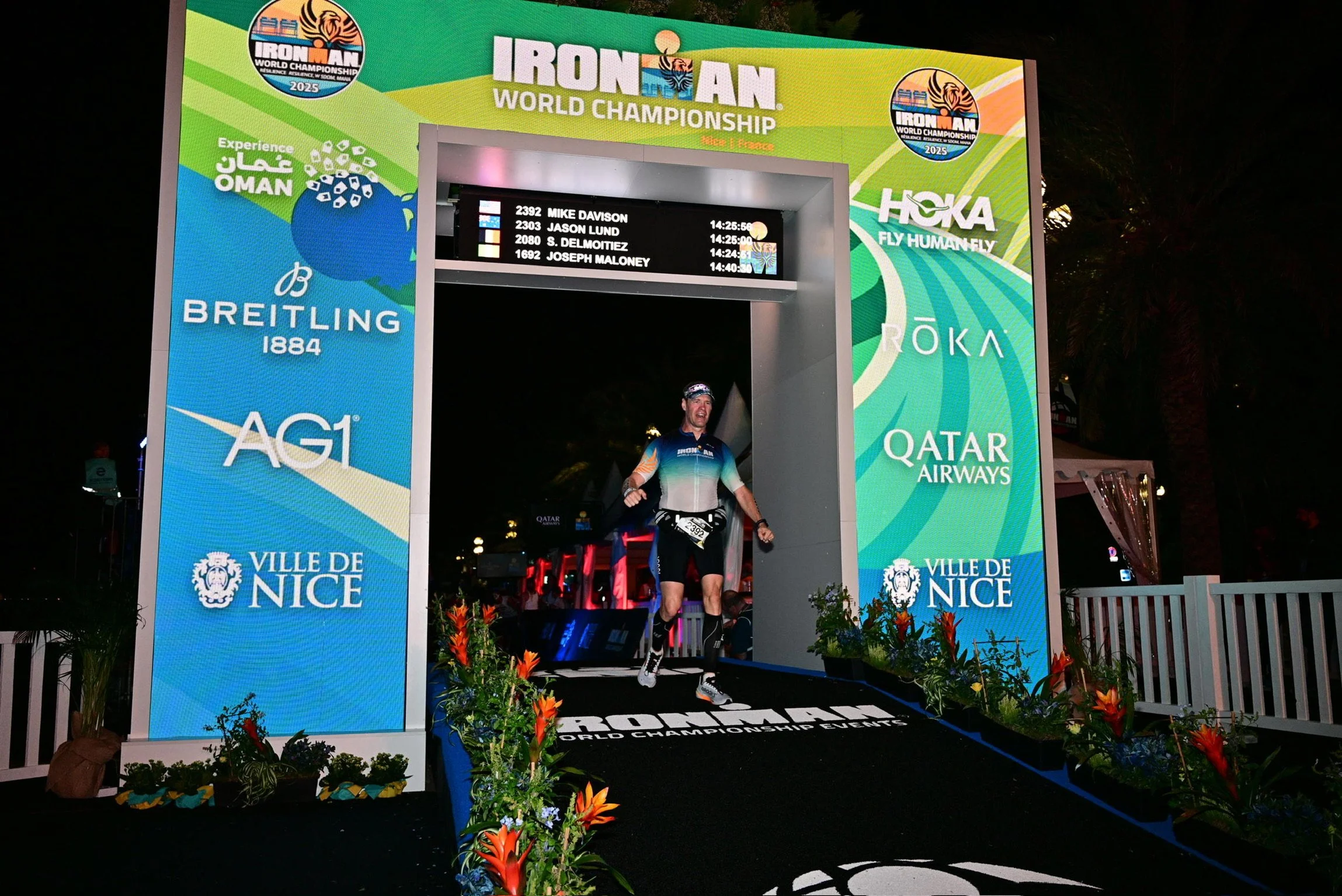
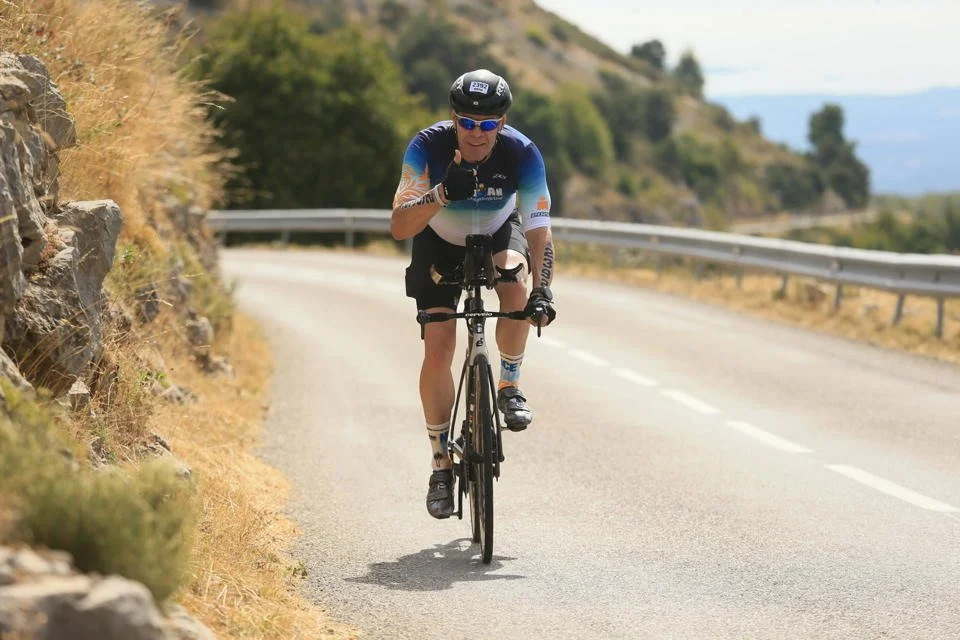
On this episode, Mike Davison, a long-time Triathlete and member of Purple Patch's Tri Squad, shares his journey of athletic success and personal growth. Despite initial plateaus and challenges, including long COVID, Mike leveraged Purple Patch's coaching and resources to improve his performance. He emphasizes the importance of a growth mindset, true coaching, and community support. Mike highlights specific strategies like integrating blood testing, optimizing nutrition, and adapting training plans to race conditions. His story underscores the value of coaching beyond just training plans and the impact of a supportive community on overall well-being and athletic success. If you have any questions about the Purple Patch program, feel free to reach out at info@purplepatchfitness.com.
Episode Timecodes:
00:1:20 - Episode Promo
1:48-3:52 - Episode Intro
3:59-end - Meat & Potatoes
Purple Patch and Episode Resources
Check out our world-class coaching and training options:
Book a complementary needs assessment coaching call:
https://calendly.com/coaches-purplepatch/offseason-assessment-call
Tri Squad: https://www.purplepatchfitness.com/squad
1:1 Coaching: https://www.purplepatchfitness.com/11-coached
Run Squad: https://www.purplepatchfitness/com/run-squad
Strength Squad: https://www.purplepatchfitness.com/strength-1
Live & On-Demand Bike Sessions: https://www.purplepatchfitness.com/bike
Explore our training options in detail: https://bit.ly/3XBo1Pi
Live in San Francisco? Explore the Purple Patch Performance Center: https://center.purplepatchfitness.com
Everything you need to know about our methodology:
https://www.purplepatchfitness.com/our-methodology
Amplify your approach to nutrition with Purple Patch + Fuelin
https://www.fuelin.com/purplepatch
Get access to our free training resources, insight-packed newsletter and more at purplepatchfitness.com
TRANSCRIPT
Matt Dixon 00:00
Folks, today's show is empowering a discussion with a tri squad athlete, Mike Davidson, yes, Mike's a part of our tri squad, one to many program. What he unpacks today is some of the very key ingredients that fuel athletic success through his own story, someone that has been in the sport for a long time, leaned into coaching, not just following a training plan, community, a broad team of resources, becoming the CEO of his own journey in sport so that it can fuel broader life. It's an incredibly enjoyable conversation. It's also powerful when you listen to today's show, if you're inspired to make a change to create a better path for yourself, feel free to reach out info@purplepatchfitness.com we'll set up a complementary needs assessment, and we'll understand your goals, your challenges, your journey, to ensure that you can leave with some actionable and practical tips to ensure you can be successful. And also, if you'd like, explain some of the programming and how we work with athletes to not only help them get faster, that's kind of the easy part, but also magnify all aspects of life. We'd love to have you as a part of the team, reach out. It's pressure free. Info@purplepatchfitness.com enjoy the show. I'm Matt Dixon, and welcome to the purple patch podcast. The mission of purple patch is to empower and educate every human being to reach their athletic potential. Through the lens of athletic potential, you reach your human potential. The purpose of this podcast is to help time-starved people everywhere integrate sport into life.
Matt Dixon 01:49
And welcome to the purple patch podcast as ever your host Matt Dixon, and once again, we bring you a case study today, a conversation with a purple patch athlete, and it's one that I'm incredibly excited about. In fact, when we talked about having and welcoming Mike Davidson onto the show, the whole purple patch team said that's a great idea, because here is a guy who has been in the sport for a long time, is incredibly busy as a partner, as a father and as a business professional, but also has gone through a journey in which, as he has become a part of the purple patch team, represents perhaps the best example of an athlete leaning in maximizing the resources to get incredible personal results, not just In getting faster, but in magnifying all aspects of life. The importance of a growth mindset, the power of true coaching, rather than just following a plan, how to leverage community to not just bring joy, but also have sounding balls to drive success and also radical ownership over the journey, so that you can keep having fun, enjoying it and getting better. As he extends into his mid 50s, he keeps getting faster. This is a great story, and if you are either self coached or you're working with a coach that is maybe a little bit frustrating and not giving you the ROI, this is a great catalyst to help you take ownership of your journey, and even if you're a purple patch athlete listening, I would really encourage you take notes here, because Mike's a great testament of how to maximize your experience within the purple patch ecosystem. He's a great guy. He's a lot of fun. It was a wonderful conversation. And so without further ado, I'll stop my rabbiting and pass it on the meat and potatoes. I bring you purple patch athlete. Mike Davidson, thank you.
Matt Dixon 03:59
All right, it is the meat and potatoes. And yes, as promised, I've got a very special guest today, ladies and gentlemen. Mike Davidson, thank you for joining the show.
Mike Davison 04:09
Thank you for having me. It's pleasure.
Matt Dixon 04:11
You're a big part of purple patch. You are on our tri squad program and and we are going to dig into some important topics today, we're going to talk about training when talking about navigating adversity. We're going to talk about what success is and how to build it for any athlete of any level, which is really important. We're going to talk about coaching as a as a theme, and we're also going to discuss community as well, and and I'm really excited to dig in to to your journey as an athlete and and I will say, as we go into this discussion, we put out this, this show, pretty much every single week. It's, I don't know how many years in we are. We're about 400 episodes in some of the most popular discussions are always with. With athletes that we coach that have a story to tell that we can dig into in a really organic way. So you've got a massive amount of pressure on your shoulders to excel today. I hope you're ready for it.
Mike Davison 05:13
You bet I'm there to support our Try, try squad. So you bet we're there.
Matt Dixon 05:17
There you go. Great stuff. Well, as I always do, as as I'm sure you're familiar, I think it's it's always really interesting. It's fascinating to me to not just accelerate into today, but actually start all the way back with the guests. And I'd love to understand, give us, give the listeners a little bit of your background, where you grew up, what your your family situation was, educational background, and perhaps bring it forward as well, and tell people what you're doing professionally, family wise. We'll get into sports, but I want the really organic, juicy stuff,
Mike Davison 05:49
yeah, for sure. Well, I'm a I'm an Aggie Texan that lives in Chicagoland, so I'm sort of a misfit in the Midwest. We've been here for about 20 years, and through that time. We also lived in California for my wife and I for a couple years, but I grew up in Texas after being born in Japan for a couple years. And and what was neat growing up was, you know, just that, the privilege of it's as crazy as sounds going to McDonald's. We were a family that didn't have much at all, right? And so we appreciated the little things that we got. And so I started very, very early on, you know, do a swim team. And, you know, as I grew up, that swim base stuck with me. We'll talk a lot about that as we go. But went to Texas A and M I was a member of the Corps Cadets Drum Major of the fight in Texas, Aggie band, that we call it. And with that, it's kind of like a military academy. And so you live together, you know, as a Corps Cadets, and it's like being in the academies. And with that, you have a lot of physical training that you do. And from there, graduated Texas A and M and worked at Abbott for about 12 years, did medical sales, and 50,000 miles a year in Bay Area traffic. That led me to Chicago, moving in house, the headquarters, and we've been here since. And with that, I've after after there, I went over to steracycle, we do medical waste, and we've since been acquired by WM, so I'm now a director within the healthcare business at the WM area and and so with that, I've had the challenge of, how do you actually balance your career with a desire to exceed in sports? And that's a little bit about where I've come from and where I'm at today. And so, yeah, it's been a it's quite a journey, living in all those different places the go
Matt Dixon 07:52
back as well. Growing up in in Texas was Were you always you're on swim team, etc, so did you always start dancing with endurance sports, or you're doing other sports as well. Obviously, like the cadets, was very physical, so a sport almost within itself, with all of the physical challenge. But before that, and then afterwards, how did you sort of formally get into endurance sports? I'm interested on
Mike Davison 08:14
that, yeah. So I'm the guy that you know you're working non stop. I looked healthy, right? Yeah. But you know that was on the outside and on the inside. I didn't learn this until I was going and I was trying to get a extended life insurance policy. I've, at the time, four young kids with my wife, and I did one of those at home, EKGs, where they come by, and the
Matt Dixon 08:38
insurance, oh, yeah, hooks you up, and done that as well.
Mike Davison 08:41
Yep, the sad thing was, I was borderline, and I didn't get the policy initially. They sent me to my doctor, and my doctor says, well, I'll pass you, because I was borderline at the in office EKG as well. He said, I'll pass you, but you have to start exercising. So I go home and I tell my wife this, and I'm like, Oh, he says, I have to start exercising. And I took that as actually a challenge, more than just the cliche, okay, yeah, I'll do that. And ironically, a month prior, our neighbor went to my wife and said, Don't say no, but here's a training plan and and our neighbor introduced my wife to triathlon. And I'm looking at this like swim, bike, run. You know, I used to swim when I was little. Yeah, I know what that's about. I ran a lot in the Corps Cadets. I know what that's about. But I they said, Don't say no, but here's a training plan. They said that to me after I get this news from my doctor, and my comment was, I'll do that if the husband next door will join his wife, and let's go do this training plan together. Let's do the race. Wow. And so that was 17 years ago, almost 18 now, back in 2008 the first race we ever did was the spirit of Racine, the blue wave triathlon in Racine, Wisconsin, fantastic. And I had no idea what it was all about. And boy, at the time, an eight mile ride. Ride. Wow, that was, that was, like, the pinnacle, like I achieved Mount Everest in the world of get ready for a race, because I never really done any writing, yeah. So that's really where I got into it. And over the course of all those years, it just has evolved. It has truly become a lifestyle for, you know, my wife, myself. And, you know, over the years, our kids used to do them when they were little. The kids tries, yeah. The beauty of it right now is I've got four of the three of the four kids, and one of the boyfriends is signed up to do a sprint here this next year. One of my daughters is going to be doing a 70.3 the first one here this next year as well. So it's kind of like that, hey, you know, I've learned all this now we're bringing other people into the sport, and it's really a cool experience, because now my A races are the races that I get to do with my family, and boy, to be at that spot after, you know, all this journey that I've been through is such a blessing.
Matt Dixon 10:58
It's just hovering on that. It brings me back. You know, a couple of weeks ago we we released a podcast with Steve Magnus on on kids in sport, and one of the things that I talked about it was a presentation I was doing at my son's school, actually, and said one of the reasons that we want our kids to do sport when they're young is to ingrain the joy of sport so they can stay active when they're older. And as well, put that in mind, the other thing that's incredibly interesting and important is a lot of people, as parents, want you do the sport for themselves, but also want to be a role model. It's role modeling, whether you're realizing it for your kids and setting it of like, hey, I can take on challenges, I can do this, etc, but lets them actually get to live through their kids, finding the joy of that, finding the joy of sport and actually being competitive. So that's a great point of celebration, and you should be really proud of that.
Mike Davison 11:57
That's half of that is even the joy in the process, right? For all the years that I've been training, I can show you pictures where I'm playing cards while I'm on an indoor bike trainer with my kids. Or now it's integrating it in. So when I'm in the middle of a training plan, you know, or like a session for bike, I can go and and meet my kids at their college, ride with you know, and go back and spend time with them, swim with them at the Rec Center, run with them. They come home, I'll do a run. They'll be on a bike, and we're talking and what they're also seeing through this, I think, is the ability of how when you're doing these other sports and training, you're actually able to have think time to solve the challenges of life. And that's been cool to kind of decompress and have those moments with my kids where we're actually talking and sharing what's going on in their life while we're doing for me a training session for them, it's kind of, hey, let's go test this out. And they're seeing how that can work, just modeling it and doing it with them.
Matt Dixon 12:57
It's powerful. So I want to, I want to dance to your journey with purple patch and the dry squad, because I think there's some lessons there for the listeners. Let's go back prior to you join and how many? How many years now is it with purple patch two and a half? Two and a half, see two and a half years in. So enough of our proving ground. So Tell, tell the listeners a little bit about pre purple patch, and perhaps what was working, what was not working, some of the challenges, some of the frustrations of that journey, I think, is important context, yeah.
Mike Davison 13:33
So what's interesting is I was also experiencing a really nice run where every year I was getting faster, and I track everything as you expect. You know, you can see over time, you're increasing your speed and your pace. And I got to a point where I plateaued as and as I was looking for that breakthrough, right? And but the counterbalance to that was doing all the things that were preventing me from getting that breakthrough. You know, I'm the person. Hey, I had the motto I trained with triathlon, Iron Man, so that I can eat whatever I want. Yep, right? And I would eat whatever I want. I love donuts. I love chocolate cake. I did all of those indulgences far more than what you should do, because I felt like I was creating space with the sessions I was doing that afforded me to do that, really, not realizing that that was also not helping my athletic performance. And then, you know, at the same time, you know, I got to that point where, literally, I'm just going and doing the session in front of me, and not doing it with intention, right? I would do I would swim, and it would be, you know, endless laps without drills. It would be a training session on the bike where it was always outside, always the same course. And literally. And so I was not doing strategic rides inside, you know, coming and learning skills and so. And then on the run I I've done hundreds of miles on the exact same course around my house, and not a lot of variation to it with, again, not a lot of intention,
Matt Dixon 15:18
accumulating time, accumulating miles, building fitness, but yes, not on the leading edge. One Exactly,
Mike Davison 15:25
that's exactly right. And but what was worse was I got to a spot where, through covid, right, I ended up after covid, with the long covid, right? I would get to a point where, where I literally struggled to do one mile without my heart rate going crazy, right? So that was my starting point in all of this. And I did a lot of you know the how do you build your fitness when you've got that and and I tried to do all of that on my own, and I got to a reasonable spot, was able to get my fitness back up. But I was fearful as I hit that plateau that at at at the time, what 53 at the time? 52 at the time, I thought to myself, is this the start of the end? Yeah, right. Am I at the spot where I'm going to start? You know, I've got, you know, less years in front of me that I do behind me. Does that mean my fitness journey is going to start declining? And I set myself on the challenge that said, No, that's not going to be the case. But I said I want to actually prove to myself that I can do this sport as I'm getting older and overcome what I feel like are some of these challenges that I created for myself with not adhering to a better plan, not adhering to better coaching nutrition, just doing it as it came and I needed something more. And really that's where I came to the spot of I needed that to be able to break through, and that's where the tri squad and granted, I was doing the wonderful plans in the book that you, you and your team have written, but I wasn't breaking through because I wasn't getting the supplemental coaching that helped you understand very specific things that you as an athlete may have is that you're facing and how to tweak those, or even make very large adjustments to your approach so that you can seek the results that you're really trying to achieve.
Matt Dixon 17:14
You know that what you showed there for folks that are watching this, not listening, was the fast track traffic it was the second book with my I had an amazing editor for both those books, the same, same editor twice, and I battled in both to not put training plans in them and and it was exactly for that reason I said, Where's the nuance? It's going to send people down the path now I am glad there were training plans in the second book, because a lot of people have benefited and enjoyed them, but you're exactly right. So I guess you'd hit this plateau, you'd had success. And there are gonna be so many people listening right now. There's a oh, I've been there, or I am there, which is, I hit my late 40s, early 50s, and is Oh, and I can't tell you how many times I have people that are thinking about joining that say, is it the right mindset to just try and not slow down too much? And I'm always F that, let's keep getting faster. So we're going to dig into your journey a little bit. But I am interested in and maybe the book was the catalyst. But what made you decide to choose purple patch, and we're not doing an advertorial for purple patch, but what drew you to our coaching? And secondly, you chose, and for listeners that don't know, you didn't decide to go and get a one to one coach, where you've got an individual relationship. You were missing coaching, but you chose tri squad, which is, I always say, the benefit, it's still coaching, the benefit of all of the coaching team, but, but it's still more autonomous. You're still on your own journey with big support. So, um, so I'm interested in that and what that transition was like for you, sure.
Mike Davison 19:06
So what's interesting is, in your fast track triathlete book, it talks about tri squad, right? And so as I successfully used the training plan to get through halves and fulls, I thought to myself, wow, you know what if I logged in to try squad, and I first tipped my toe into looking at the resources that were available for free, and as I started looking at those, I piqued my interest, and then, literally, I didn't know anything about it, except for what I was seeing when I was going online. And as I searched more and more, and realized that it is a much more sophisticated training plan that integrates into training peaks, and then you can actually adjust your your schedule. Because what I really loved in both the training peaks and and the book and just your underlying philosophy of the key sessions. Years, and others that are sort of the all you know, recommended sessions, the first ones that if you had to let go, because the life gets busy, the concept of what you can let go and what you need to still do, that concept was one where, okay, it works successfully in the book, but I wanted more than that, because I knew I was at that plateau, and the only way to do something more was to get some coaching and and I didn't necessarily feel like I needed a one to one, so I was very much just let me see what it's like to sign up. See what it's like to be part of the tri squad. Talk to Tiger. You know, learned a lot more about how it worked. We did a quick little let's do a test, you do a demo, and I started to see how that worked. And fast forward, the type of resources that you guys have made available and recommend to the tri squad athletes, whether it's the blood testing that you do with InsideTracker, it's the fuel in app for training. You know how to do your nutrition. You know, you would do podcasts a couple years ago where you talk about how to optimize your your your nutrition. And so much of that was about, hey, if you're training in the morning, and here's how you optimize your nutrition in the day, well, I'm a busy, you know, person that likes to actually train in the evenings, almost always, and except on the weekends, and I didn't know how to adapt. And so when you guys show that there's not just you and the power of your coaches, but then you guys have partnerships, and you have recommendations that are in the best interest of your athletes to get the most out of them by having them integrate some things into their lifestyle that will help them overall, create a new paradigm for me, instead of eat however I want it was let an app integrate with your training plan to tell you what to eat, when to eat, so that, like I literally thought I was doing everything right, and realized, even with my wife being a registered dietitian, I would think in ultimate wisdom was she doesn't know what she's doing on how to plan a meal, and I would either go all carbs or all protein, right? And at the same time, I needed to understand how to integrate sport and at a higher level into my life. And I felt like the platform that you guys provided with the flexibility of move in sessions, around tap into coaches as you need, really created a catalyst that I realized, wait a second, not only is this underlying plan helpful, but when I have personal questions that tie to, how do I adjust my nutrition when I train in the evenings? How do I, you know, adjust my training on the bike when I'm literally stuck at the 50 percentile in my age group, and I can't get breakthroughs on my own no matter what I do with a book, right? So that that led to some very productive coaching sessions, and I've had one on ones with multiple of the coaches, where I've sought out different perspectives from different ones, because I felt like, Hey, I There are value of each one that they can bring with a different lens to a different problem you're trying to solve. So it was really, you know, me wanting to get more out of it than what I was getting. I couldn't do it on my own.
Matt Dixon 23:13
You know that last couple of minutes, there you were, you were making my heart sing, because for a couple of levels, though, and I think it's important. I think one of the things that we do poorly is really communicating. This is more than a plan. You are actually in a coaching program with a whole bunch of resources, and you said something, I go back, and then I'll ask you a question around the conversations, because I think that's a really interesting thing to dig into. But you talked about partnerships in the best interests of the athlete. It's, it's very, very important. In fact, one of the things that we don't have at purple patch is we don't have we're sponsored by Cervelo or Trek or vent, and we're sponsored by blah blah, because there are lots of great bikes that are suitable for different people. So we've always tried to avoid very specific, narrow sponsorships with particular product companies. What we do try and have is build partnerships which, you know, is minimal, if zero, economic gain for purple patch, but is gain for the athlete, because the ultimate success is we're going to have athletes stick around if they can be more successful. So it's really nice to hear sort of the lens of that and the utilization of that. The one thing that is very, very important because we're going to dig into the coaching, is the there is the program at large with all of the support and the training and everything else, but it's the consultation and exactly that. If, if you're going to leverage this, if someone is going to lean in and get the most out of it, there's a lot of brain trust and wisdom. It's not just this dumb English guy up front that spouts off and happens to sit on this show. We've got some incredibly smart coaches, Nancy, Brad, Max, John, etc. And you've really leaned into that, that, and, you know, very affordable as well. And a point out to the listeners, but supplemental consults, what role I'd love to sort of understand a what, what are just a couple of examples of what the conversations were, what challenges you were looking to solve. Number two, what, what was the role of that in your trajectory and progression as a part of the squad,
Mike Davison 25:21
sure, and I do keep a notebook of all of my I was suspicious you might Yeah, so I can go back and refresh on each one of them. But yeah, the first one that I had done was, you know, Coach Mike with his handy Bandy, monster bandies, right? Was all about, hey, I'm getting into the first offseason, and what's the best way to adjust my schedule when I want to integrate skiing, which I'm an avid ski racer, pretty much every weekend. And I knew I was not going to be able to keep up with exactly the training plan, but I didn't want to not do something over the winter. So what he helped me do was figure out a training plan around and customize the plan that's, again, it's not just what is on paper, it's what fits into your life. And so very much was, I'm trying to get a Monday or Monday through Sunday plan on what will my schedule be like. So as simple as that, and through that, you know Coach Mike initially, so tell me about your swim. How fast are you? You know, what's your time? So I we talk, and he's like, Well, okay, so you're a good swimmer. First thing, you need to swim more. And I'm like, wait a second, it's, it's the off season. Now I need to swim less. And so that got got me down a path of, got to swim more in the whole concept of, you know, that frees up the ability to build your cardio capacity, and then when you get on the bun the run, you're stronger for that, yeah, and, and so you and you're more fresh for that. So that was a really big surprise. But in that came out of, hey, let's build a plan that works for you over the winter to customize for what your needs are, yeah. And then I got to a spot where I was working towards Eagle Man, and that is a about as flat of a course as you could ever imagine. And all of the sessions that we've typically gone through, and you did a very focused thing on how to do a hilly course. And I'm like, great, but that doesn't help me with a flat course. So I'm like, okay, and how do I adapt to a flat course? And so there was discussions around that, first with with Coach John, and then with Coach Brad, on what type of cadence and and duration of cadence do I do? Kind of modulating, you know, eight minutes, 10 minutes on at a lower cadence, with two minutes with a higher cadence, and doing that alternating over time, it was very much. Hey, I've got a specific race, and I need to adapt my training towards it. And the one size fits all in a lot of ways, of the plan that you that we get on velocity. It doesn't take into account, per se, flat course, hilly course and our and the irony to it is, you know, getting ready for the World Championships, right? I go from qualify on the flat courses and then go race on the hilly courses. And so there was a lot of, how do you prep for that as well. So there was subsequent sessions with Brad, and got insights from you as well on how do I adapt a session where I want to go do my own training camp. We went out to the Blue Ridge Mountains, several days out there, and adapted my training from flat course to hilly course. I needed to dial in the gears, dial in the pacing, so that I could be prepared for the nice course, which, by the way, is not an easy one. Those those courses help with that. And through the midst of all of that, you know, I we talked about some of the philosophies that I had when I was talking with Coach Brad. I think he fell out of his seat when I told him that my philosophy when I get to a hilly course was to pull up on a gear because I had to preserve myself over time. And it's like exactly the opposite of that. You need to add a gear as you're reaching up a hill. And you know, it's the whole concept that you teach all the time on philosophy, on how to maximize that. And my philosophy leading up, prior to that was completely opposite, like I did not do that at all. It was preserved myself, and I had to learn not to preserve myself. So there was a big balance on how to do that. And then the other thing in a session with Brad, which was quite interesting, was, you know, I was describing to him what I was doing for nutrition, because I was asking how to optimize that. And then he's like, wait a second, how do you do nutrition? And it was a, it was a nutrition plan that was founded in probably 10 year old, you know, thought processes, yeah. And so he introduced me to the whole concept of separating your fuel from hydration. And that led to, well, how do you carry this stuff when you're on the bike and you have the separate. It things, practical challenge, yeah, yeah. So those practical things were really helpful to get some, you know, very simple. How do you carry nutrition, your your your hydration on a run when you don't want to use the on course, hydration, where do you carry it? And so even simple things, right? So from more complex to simple, you know, it was wonderful tapping into these folks to get, you know, some insights that I needed personally, to help break through some of the challenges that I was facing at the time.
Matt Dixon 30:30
Yeah, a lot of the stuff is really that you're is, it's almost, well, I guess it's what coaching is, yeah, but it's all of the nuance stuff. So the core was this really can like you have commitment, you show up, you're executing the training. You're empowered to self manage and integrate that training. And this, all of the stuff that that's really nuanced and really interesting as you sort of reflect on your performance journey, you improved, you went through that plateau. You've, uh, you've leaned in what's, what's happened, and I'm going to ask this in the broadest sense of performance. So and ask it in terms of your your race performance. I'm also want to also have you answer it in terms of energy, health and everything else that goes along with showing up, because that's a big part of the reason that you're doing this, and you know, it sounds like you're having more fun with it as well. So what's the, I'll say, answer it how you want. What's the impact been? You can bump around.
Mike Davison 31:33
I think the ultimate impact is, what is? What's your your spouse say? So my wife, Nancy, wonderful supporter. And the biggest thing I think she's seen is when I'm in the midst of training and really ramping up, it's kind of wow, you're not grumpy, right? And it's that, that overall fatigue, that when you're not fueling right, and you're not recovering right, that can really stress you, as you know, in your mind, in your body. And so I would say just overall, it's the ability to kind of get a better sort of mindset where I'm much more calm, like even even before the big races right, when I'm fueling right, and I'm fresh, I'm fit, and I'm ready to go. I'm not overly worried about things, and I'm much, much, much more calm and not grumpy. And I think that's an exclamation point when it comes from an endorsement from your spouse that tells you, hey, you know things are working well for you. And so that's kind of the underpinnings that I would say, is validation, that you can see a difference. And of course, when I look at athletic performance, right, I get nothing but satisfaction. You know, it's, it's one thing where you go and let's, let's, you know, do the World Championships and nice and Spain, but then sometimes even just those local races, right? I just this last year, I did a local race. And mind you, I've typically been in the 50 percentile ish on the bike, and it's just a frame of reference, I was able to be sixth overall on the bike itself, which, in my mind, validates the fact that I'm doing the right thing. It's a hilly course, knew when to press it, knew how to get the speed out of the course. And from that to even, you know, just recently, did the Purdue 5k and I repeated the title of Top in my age group. And that was one where I set a PR this last race that I did in a 5k and I was not even trying to. I ended up having little bit of tendonitis in my Achilles. And my intention was, pull back, don't go too hard. And ironically, with that, I was so trained up that I do a 5k I'm sorry, I do a 5k PR, and I get done, and I look at my my heart rate, and it was well in check with where it needed to be, and athletic performance was exactly where I wanted to be for that. So that was nothing but satisfaction. When I look back and I have these small little markers that I can see, whether it's big race or small race, that validate, hey, you're on the right track. You're doing the right things. I wouldn't be there if it weren't for implementing these little things that allow yourself to get validated as you do these even smaller races.
Matt Dixon 34:23
Yeah, yeah. I want to ask you something. You're a big part of our community. I also know, you know, we took a lot of athletes too, as we typically do, to the World Championships, to other races, and I know it's big part of joy for you as it is all the other athletes, to me up, especially some people that you've never met in person, but you know, because of the video coaching and you and everything else. So I know that you met Gretel, who's who's Mexico, from Mexico, the but I, I want to lean into that, because. That triathlon is an individual sport. Most people, whether they're living in Kansas, Chicago, New York or Dubai, London, it doesn't matter why they think about I need a coach or a plan to help me get faster. A big part of what we do is really think about this, not just as a team of coaches, but a team of like minded individuals that are chasing personal improvements, looking to improve under under the big banner of what we see as high performance, you're a big part of that. You've really leaned into, as is very clear from our conversation the resources that we offer, you've also, though, leaned into community. So I just love your thoughts on the role of that, that it's had for you as a human and as an athlete, yeah, for sure.
Mike Davison 35:50
So it was neat, actually, here I'm in Spain, and everyone's going around introducing themselves, and Brad had some fantastic words that really energized everybody. And you know, Gretel introduces herself. And you know, when you're on velocity, you see these names, you know, it's, it's really cool when you meet the different folks in person. And yeah, and so that was a special time. And we saw her a couple times, you know, even, you know, before and then after the race. But you know that community is something that when you're doing a book, you don't have the community, right? Yeah, and, and what I've also very much enjoyed as part of the community that you guys have afforded is there's the online side of things, and folks build some really nice post race reports. It's a great place that you can ask for recommendations, and you can read, you know, people's experiences and lean into them, you know, you know, meeting different folks at multiple races. Brooks was another one that I saw races, yeah, which was neat, and putting names and faces together. I would just say that, you know, I very much in my everyday training, I trained by myself when I'm on the road, when I'm running. Why? Because when you're in the race, you don't have other people there with you, per se, it is an individual sport, but the beauty of it is you've got a community of resources and other athletes, and then when you've got the platform, you've got a community of folks that you're pressing together to help encourage each other and and that's been a cool thing for me, that I've really enjoyed, because I don't get that community, if you will, by choice with every day. You know, training. When I go outside, I don't listen to music, I don't do all that. I'm focused on me my training, what I can do to improve what I'm doing, and what I like is be able to step away from that, tap into the resources that purple patch has on the the online app and the community that's created there.
Matt Dixon 37:45
Yeah, no, it's, it's terrific. And, I mean, one of the big reasons that we do training camp, so we try and go to some of the races in the year, is there's nothing more fulfilling than especially, as you say, seeing because we've got so much video coaching, or in our hub, of course, the online community. And there's people sharing stories. I'm always amazed. We had one the other day, one of my favorites, Meredith, that said, hey, you know, my neck's really hurting. Anyone got advice on this? And there was, bam, bam, bam. People coming, sharing similar challenges and and going from there. So, so really, really valuable the I'm going to ask you two questions actually, because there's a lot of people that are listening that are either self coached or maybe in a coaching situation. That is, there's not ideal. They're not getting the most out of and they're thinking about their year ahead, their season ahead, and without the answer just being Hey, come and join purple patch. What are the things when they are looking and talking to coaches or programs? If you had to distill down from your experience, you've been in the sport a long time, you got a lot of success, etc. What are the things that you would give as advice to someone that is charting their next journey that's either frustrated or never been coached before or looking to uplevel? What are the things to look for in a program that you think are most important?
Mike Davison 39:18
Sure, so to me, the idea of I'm training versus being coached is underpinning that, yeah, folks need to have as a mindset, right? Because you have to welcome the idea that you want to have people invest in you, and that you're going to meet them at that level and extract out of it what they're trying to give to you, right? So what I think is, is a special sauce with purple patch, is the skills that come out of this, I think is well proven, the strong biking and bikers that are created from this and and the strong running, the strong swimming, is the method to the madness on the. Skill building that we get as athletes, that, you know, and the time-starved nature of the program, right? The fact that it's not you have to do everything. And here's the bar, if you want to qualify, you have to do everything. It's about miles and about hours. This is about how do you build it? You know, it's all the cliches that you you've said is, how do you build triathlete, triathlon into your life? Not vice versa. Yeah, and, and so being that, you guys have these philosophies that I think work well, you know, I'm, you know, four kids, my wife extremely busy. If it were any other philosophy, and I've tried a philosophy where it's go do a lot of, you know, training plans. It's about hours and miles. That was actually the worst race that I've ever had, and it didn't meet me where I needed on the concept that you can focus on key, key sessions, and you can build skills while you're doing it. And I think that's the paradigm that I would ask folks really press into to understand when you're looking at a coach, you know, what? What is their history of, you know, producing, you know, athletes that are achieving great results. I think you have a very strong history of that. But then does the methodology and the philosophy fit into your ability to merge triathlon into your life, instead of vice versa.
Matt Dixon 41:25
I think there's that you know, that that's very, very important. And I would even extend it as well, of like really making sure that beyond the results, the results of people that are somewhat similar to you, not just, Oh, I've created world champions number one, which I have done as well, but, but also, does the ethos, does the mindset? Does the methodology jive with how you see the sport, and that's a big part of the community, because when you find the right approach, and, you know, I say this, look, purple patch is not for everyone, it's we're not the right we, you know, we, we have a profile. It's a big tent. Obviously, we're a larger organization, but it's very, very important. Even when we have conversations, we make sure, hey, we might not be the right fit for you, but here's some opportunities there are. So I do, I think that's a great message of really, I think the two, if I can re summarize it for you, which is, make sure you don't go and just think about it as training. Think about it as coaching. That's number one. I think it's so critical. Number two, make sure that it really jives with a philosophical under underpinning of of that. So here's another question, here's here's my second from last question, which is we also are going to have listeners who are purple patch athletes, who are actually on the tri squad program, or the run squad, or the strength etc. And under that in mind, what would your you have obviously maximized the resources you've leveraged consultations, you lean into the community for someone to be successful, if you had to give 30 seconds of advice to an existing purple patch athlete in one of the one to many group coaching type athletes, what would your advice be when you say, Hey, if you do A, B and C, this is how you're going to maximize not just your experience, but but everything. Get back to the
Mike Davison 43:22
partnership concept that you guys have right, first go do the blood testing, right? Yeah, that revealed to me that I had a ferritin deficiency. I was getting fatigued in races. I didn't know why it was happening, and that led me to iron supplementation, as well as other supplements that it recommended, or to help with inflammation that I was having in my body, you don't know. You can't guess what it is that's causing whatever it is that you've got, or there may be something that you don't realize is there. Number one, go get the blood test. Number two, you think you know how to eat right? Even with a dietician under my roof, you know, I had infinite wisdom that I knew what I was doing. And you have to press into that, I believe. And that's going to change your thinking. You're going to start looking at food. Oh, wait, carbs and proteins. They're married together. You need to eat them together. You know, you talk about that all the time, but that is essential. And then what I would say is, as you're trying again, I'm not getting anything out of this, obviously, right? I care about the health of the athlete so that they can understand what I've done. And it's really as basic as as those two things, plus, as I've had these multiple consults with coaches, have a consult, talk about with them, the struggle that you're trying to figure out for yourself, whether it's I'm trying to adapt my training plan to make it fit where I'm at in my life and the things I want to do, or, Hey, I'm struggling with something about swim, bike, run, or nutrition, whatever, they can help, and they'll get you on the path to trajectory that will make a leap. And bounds. 30 minutes is all it takes, right to go and have that you never know what insights you're going to get.
Mike Davison 45:06
You know, I go and I start these consults thinking I've got one question. And through the course of that dialog, it opens something in the mind of the coach that they need to give me different advice than even what I was coming into it with. So I would say that that. And then, you know, the whole idea of building your training on Sundays, so that you are very intentional through the week in the busyness of life. You know, when you've got, you know, things coming up and working with family, you have to balance those. And if you're just taking training day to day to day, and you're not really thinking about how you want to integrate it in, and where you're going to integrate it in deliberately. I feel like that's a miss, and I feel like that's one of the things that I had done and continue to do, to be sure that I'm able to have the balance in life that I need be there for my family as well as get out of the support that I of what I hope to get out now, because I have to do this to keep my heart healthy, my big why in all of this is, you know, do this because I have to, you know, we High Blood Pressure history, as I talked about before in my family, where if, if I don't keep myself in check, you know, then there won't be triathlon to keep doing. So that's really a motivation for me, and I think folks would just adapt to a couple of these things that I'm talking they'll be surprised at some of the gains that they'll get even early in the sport. If I started these things, not at year 15, but started them at year 125, 10. I mean, that's a lot of years to be doing the wrong things and not optimizing things. So that's really where I would go with this, with the with the folks.
Matt Dixon 46:39
You know, it's interesting. I always hesitate when I talk about some of this stuff, and you understand why when I say it. But with consultations, people that do Lean into the consultations, we obviously track and and really enjoy seeing the people that have breakthrough performances, whether it is qualifying, winning, but but also just self improvement, the one continual through line across the tri squad program and other squads is almost always people are leveraging, to one degree or another, consultations to supplement. That's a that's a constant. It also has a direct impact on how long people stick around on the program, because they're probably getting more out of it and they're satisfied. So, I'm glad you mentioned it. Here's my last question, very quickly, if, if you wanted listeners, here's your last chance. You're standing on Hyde Park corner in London, on the box, and you're you're preaching to the listeners going by, what's the one thing from your journey that you would love people to remember and take away with,
Mike Davison 47:42
for sure. Well, first off, thanks for having me today. This is, it's been a pleasure, and And y'all have done so much for me. And getting back to that concept of, are you training versus being coached? And, and that is the number one thing. Like getting back to your wonderful book, you know, I got a lot of great good out of that, and I had some great races with it. I built a lot of skills with it, but not like I have, you know, since I pressed into the coaching that we get and the that is, bar none, the most important thing, because when you press into that, you're going to have a plethora of resources. You can have a nice community and these, and I honestly believe that the way that you guys have structured this, it's going to get the you're going to get the most out of your training when you when you really tap into the coaching, and it's not, and it becomes a lifestyle in that. So that's what I would really press on, is that concept, because it's been a difference maker for me.
Matt Dixon 48:44
Well, Mike, thank you so much. And, and I have one more thing to say, which is best of luck for the year ahead, then don't mess up and and getting keep going on the journey. But you're a great testament of purple patch, and such a fun conversation to have, and I think, packed full of lessons for the listeners. So I really appreciate your time and all of the preparation you did. It's great. And thank you for being a massive part of purple patch. I really appreciate it,
Mike Davison 49:09
you bet. Thank you very much. Appreciate all you've done for for me and the and the tri squad.
Matt Dixon 49:13
Thank you. What a great conversation and what a path forward, inspirational to help you get the most out of your journey through the lens of someone that is living it just like you. If you'd like to be a little bit like Mike and maximize your coaching and performance journey, reach out to us info@purplepatchfitness.com we'll set up a complementary needs assessment or sit if you're a fit and if nothing else, it's pressure free. We want to make sure that you leave with some actionable tips to fuel your performance journey until next week. Take care, guys. Thanks so much for joining and thank you for listening. I hope that you enjoyed the new format. You can never miss an episode by simply subscribing head to the purple patch channel of. YouTube, and you will find it there. And you could subscribe, of course, I'd like to ask you if you will subscribe. Also Share It With Your Friends, and it's really helpful if you leave a nice, positive review in the comments. Now, any questions that you have, let me know, feel free to add a comment, and I will try my best to respond and support you on your performance journey. And in fact, as we commence this video podcast experience, if you have any feedback at all, as mentioned earlier in the show, we would love your help in helping us to improve. Simply email us at info@purplepatchfitness.com or leave it in the comments of the show at the purple patch page, and we will get you dialed in. We'd love constructive feedback. We are in a growth mindset, as we like to call it, and so feel free to share with your friends. But as I said, Let's build this together. Let's make it something special. It's really fun. We're really trying hard to make it a special experience, and we want to welcome you into the purple patch community with that. I hope you have a great week. Stay healthy, have fun, keep smiling, doing whatever you do, take care.
SUMMARY KEYWORDS
athletic success, tri squad, coaching, community, growth mindset, training plan, nutrition, blood testing, performance improvement, endurance sports, personal results, race preparation, training resources, athlete journey, Purple Patch Fitness