
416 - Prepare, Think & Act Like a Pro: Pat Romano on Qualifying for Kona at 61 & Leading as a CEO
Follow the Purple Patch Podcast at:
APPLE PODCASTS - SPOTIFY- AMAZON MUSIC - GOOGLE PODCASTS - YOUTUBE
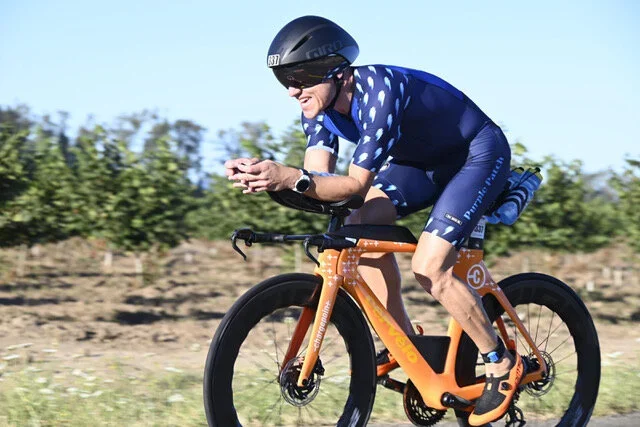
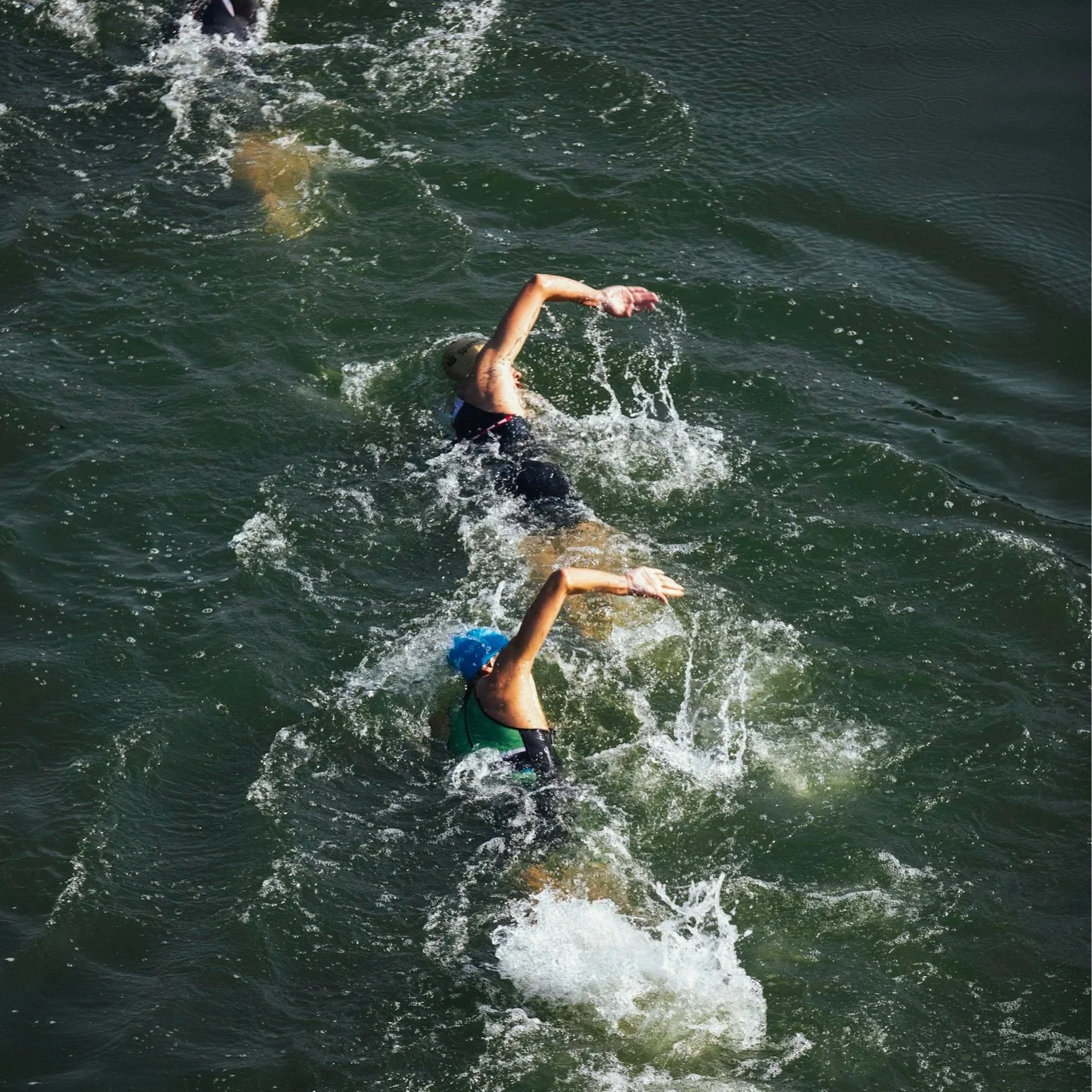
Welcome to the Purple Patch Podcast! On this episode, IRONMAN Master Coach Matt Dixon talks with 15-year Purple Patch Athlete Pat Romano and his athletic breakthrough, emphasizing how long-term training supports performance in both work and family life. At 61, Pat set a 10:38 Ironman PR at California, finished fourth in his age group, and qualified for the Hawaii World Championships, improving by more than 20 minutes from his 2016 PR. He described shifting from rigidly following metrics to adapting to conditions, listening to his body, and managing the race in smaller segments. His season included a running injury and an unexplained performance dip, and preparation was affected by travel and the Nice race, so rest, sleep, and nutrition were emphasized. Pat also linked consistent training, recovery, hydration, and short mental resets to sustained focus and adaptability as a CEO, showing how habits from sport transfer into leadership.
If you have any questions, contact info@purplepatchfitness.com
Episode Timestamps
0:00-1:33 Episode Intro
4:01-end Meat & Potatoes
Purple Patch and Episode Resources
Book your needs assessment with Coach Max
Hiring Purple Patch Coach: https://www.purplepatchfitness.com/careers-page
Fast Track Run Squad: purplepatchfitness.com/fasttrackmarathon
Check out our world-class coaching and training options:
Tri Squad: https://www.purplepatchfitness.com/squad
1:1 Coaching: https://www.purplepatchfitness.com/11-coached
Run Squad: https://www.purplepatchfitness/com/run-squad
Strength Squad: https://www.purplepatchfitness.com/strength-1
Live & On-Demand Bike Sessions: https://www.purplepatchfitness.com/bike
Get a free needs assessment and learn more about our programs: https://purplepatchfitness.simplybook.me/v2/#book/service/19
Live in San Francisco? Explore the Purple Patch Performance Center: https://center.purplepatchfitness.com
Everything you need to know about our methodology:
https://www.purplepatchfitness.com/our-methodology
Amplify your approach to nutrition with Purple Patch + Fuelin
https://www.fuelin.com/purplepatch
Get access to our free training resources, insight-packed newsletter and more at purplepatchfitness.com
Matt Dixon 0:00
All right, folks. Today's episode is a cracker. It's an interview with an athlete that I've coached for the last 16 years, Pasquale Romano. He recently qualified to the Hawaii IMO World Championships, which is great. But that's not really what we dig into today. It's about Pat's story over the course of the 16 years integrating this sport into life to not only continue to improve into his 60s, yes, getting faster with every single year, but also to help him fuel his leadership and how he shows up when he gets back home after a big demanding day of work. He's the CEO. He's on his third company is leading since we've been working together. It is a great story of inspiration and how to unlock performance across not just sport but broader life. Now, if you listen today and you have questions, or if you'd like to explore a conversation with us around how you can take your journey to the whole next level, it's a great opportunity. We offer complimentary coaching strategy calls to help us understand what your challenges and goals are, and set a path to be successful. Just reach out to us, info@purplepatchfitness.com. We'd be delighted to set up a complimentary call. All right, enjoy the show. I'm Matt Dixon, and welcome to the Purple Patch Podcast. The mission of Purple Patch is to empower and educate every human being to reach their athletic potential. Through the lens of athletic potential, you reach your human potential. The purpose of this podcast is to help time-starved people everywhere integrate sport into life. And welcome to the Purple Patch Podcast. As ever, your host Matt Dixon, and today we are going to explore a pretty remarkable performance story. It's about so much more than triathlon. My guest today is an old friend, Pasquale Romano, or as you'll hear in the interview, as I refer to him, Pat. I've had the opportunity and privilege, I might say, or I could even say, the burden of coaching Pat for the last 16 years.
Matt Dixon 2:15
Pat just delivered yet another great breakthrough performance at Ironman, all at the age of 61, he set a PR at Ironman California, fourth in his age group, qualifying to the Hawaii Iron World Championships, and that's remarkable in its own right. It's absolutely fantastic. But this story goes well beyond this because what's most interesting is what Pat's been doing throughout his journey and in our coaching partnership together. He's a husband. He's a father of four. And during our time together, he's always been a CEO. He's now in his third high-performing organization. So here's a man who's managing enormous professional demands, is committed to showing up for his family to the very best of his ability, all while continuing to integrate sport into his life to get faster, smarter as an athlete, and ultimately improve globally and get the yield and benefits from it. There are a host of important lessons in our discussion. Now we also often assume that pursuing really ambitious sporting goals must come at the expense of professional success or family life, but with the right approach, as Pat unlocks and will share with us today, the opposite is true. You see, by training like an athlete, as we talk about in the show, like a professional athlete, has helped Pat become a better CEO, a more effective leader, a better partner and parent, and ultimately a more resilient and capable human being, and that's what we're going to explore today. Without further ado, let's unlock. It is in the meat and potatoes. I give you Pasquale Romano, the most wonderful case study that I could imagine at Purple Patch. Enjoy the show. It is the meat. and potatoes, and goodness me, it's a cracker today. As promised, we have our special guest. Well, I'm going to do it correctly, Pasquale Romano. I know I'm going to refer to you as Pat because that's what I call you. But welcome back to the show.
Pat Romano 4:18
Thanks, Matt. Great to be here.
Matt Dixon 4:20
We've we've worked with each other for a a long time now, 16 years. I think you are officially the longest standing Purple Patch athlete with me. How many times have you been on the show though?
Pat Romano 4:33
Well, this is probably three.
Matt Dixon 4:35
I think this is three. So I that's baseball scores. It's it's less than a third, so so in guest appearances on the show, we're not doing well, but we're not talking about your our appearances today. This one's going to be a cracker, and and firstly, before I get going, congratulations! I was so happy and and proud that I got to share the day. With you and Andrea, your wife in Iron Man, California. We're going to be talking a little bit about that, but a pretty, pretty special day overall. Thanks. Yeah, no, it was super. It was it was a very well same day, and I also, you know, when you met them, two of my longest standing training friends drove up, and then between you and I, I mean, I knew at least 20 athletes out there, if not more. Yeah, but many of them Purple Patch athletes, long standing
Pat Romano 5:30
Purple Patch athletes, a lot of them that I had known from knew from from other circles. It's just amazing when you're out there, and the community aspect of the reinforcement is it's it's emotionally great.
Matt Dixon 5:44
Yeah, no, exactly. Well, landscape here because we're going to go go into background. But just for everyone that's listening, almost 20 years in the sport, self declared. You would say I am I'm not a naturally gifted athlete. Your coach reinforces and reminds you of that almost daily. But but but but just for folks listening, you went 10 hours and 38 minutes. Your and you don't mind me sharing this publicly. 61 years of age, it is your PR. You qualified to the Hawaii Ironman, so you are now faster at 61 than you've ever been in your life. That pattern emerged out of your PRs over the last year or two in half Ironman distance as well. So we started working with each other when you were 45. Goodness me, I look back when I was 45 now. So we've been on quite a journey with each other, and and and it's incredible. And I will say this for the listener: you are a completely different athlete, and we're going to talk about what that means. But a completely different athlete today than you were the one that I first started coaching 15 years ago. It's been an amazing partnership. So, so with that in mind, let's just ground ourselves as as as we think think about this. I have a first question: when when you reflect on this latest breakthrough, what do you think have been the evolution or the changes in your approach as an athlete? And you you can think about the arc of 15 years. You can think about the last couple of years if you want. But I think just just think about what what can you get across around mindset, your development, the key aspects of success for you to continue to get faster is what many people don't believe is possible into late 50s and early 60s.
Pat Romano 7:30
I think it. You know, I've been reflecting on this since you invited me to this to the podcast, and I actually think I'm a completely different person. I'm not a completely different athlete. I am that, but I'm a completely different human. And I think you know, as I often say, the part of your brain responsible for judgment doesn't know what context it's in. It doesn't know if you're at work or hanging out with friends or whatever. And I was an out of balance by my own self assessment person, and that the things that attracted me and made me an engineer, a long standing engineer, probably by well, not probably, definitely biased me to being myopic with respect to being in the moment, in balance with just trying to execute numerically, and as you know, because you coach a million endurance athletes, operating purely numerically in an endurance context is a disaster. I mean, you could have a situation where everything could be, you know, just accidentally aligned with a plan, and it seems like the plan worked. But 90% of the time, or more, when you're out in an endurance event that takes 10 plus hours, it's not going to go exactly like you planned it. And more importantly, conditions, you know, the weather report isn't perfect. The situations on the race course aren't perfect. You could run into a mechanical issue. You could run into a physical issue or whatever. Adapting in the moment was not my strong suit when I was 45. It was not my strong suit, and I think that's the biggest thing. And then also, there's a grit that develops over a long period of time, and that I think part of that grit is a there's a reinforcement when you do things enough that you aren't very uncomfortable with from a confidence perspective. Even if you're not fully successful, even being partially successful reinforces your willingness to peek over the edge. Yeah, knowing that you're in a safe place, so you can pull back from the edge. And this is notice I'm not talking about athletics. It's as. Applicable to work, family, friends, personal situation, health. People get surprised by health situations all the time. Athletic pursuits, whatever. So that's that's I think the biggest change.
Matt Dixon 10:14
It's it's incredible. You know the the you you talk about that. One of the things, and we're going to spend a lot of time today talking about the transfer of your journey in Ironman Triathlon to you as a human being, as a business leader. I do want to unpack the triathlon journey first a little bit, but but you highlight something, and we talk about this in our in our wind cycle workshops a lot of of the value of people taking on athletic challenges, and and it has to be something that's actually a a little scary, so uncomfortable, but also something that isn't overwhelming. In other words, they can break it down and make progress. Because and I just want to reinforce because a real coaching point for people to realize that as human beings, when we make progress, when we go a little further, a little faster, do something that we didn't think that we could potentially do, it doesn't need to be seismic. But what does happen is this incredible reinforcement of a sense of belief that I can do hard things, and what that does is that doubles down on not just our belief, but our confidence in ourselves and our commitment to that, and so it becomes a self-fulfilling prophecy. I'll share, by the way, when you quote walked in the door 15 years ago, you walked in genuinely as an engineer, but but but interestingly, if I sort of cast my mind over everyone I coach now, and this is really interesting, and I think if there are engineers listening, there is might pick up on this. You are a student of feel, you know. Many of the podcast listeners will have have heard me sort of talk about the inner animal, and and so I'd love you to just outline what that journey was like. You measure everything at the same time. You train and race by feel, so both things can be true. Can you can you just unpack that from the engineer side of you and the athlete side of you.
Pat Romano 12:24
Yeah, I mean, I think. Well, I think my inner animal when we met was I don't know, probably an amoeba or something.
Matt Dixon 12:31
I think it was. Yeah, that's true.
Pat Romano 12:34
A single celled organism. Yeah, wasn't it wasn't very much a inner animal that you'd be proud of anyway. I don't know what it is now, but it's much more aggressive than a than an aviva and much more mindful. The I think I think the issue becomes when you are an engineer, you think that everything is quantifiable, which it is to some degree, but the number of variables in endurance racing, and we'll stick to the endurance racing, it translates other things to life. The number of variables are so high that your plan can't account for everything. Yeah, and you don't know what your body's going to give you on that day. And then you also, if you're like me and a whole bunch of your audience and your athletes, you got a job, you got family, you got friends, you got things that happen in life that are good, bad, whatever. So you've got the the the impacts of all of that on top of the impacts of training and travel, and then you've got race variability. It's a very long day, even if you're doing half Ironman. It's a you know four and a half to five hour journey out there. Yeah, and so you know there's you're you're you're pushing yourself into a realm that you don't often see even in training, you just don't because when when do you have me go at race pace for five hours, let alone 10 and a half? You never do that in training. It would the wear and tear would be too high. So to some degree, when you show up on the race course, you are in some level of unknown territory. You can relate it to past races, but you can't relate it completely to your training because you can't race every week. Yep, it's just it's it's impossible to sustain. I was incredibly uncomfortable when the what I thought was quantifiable turned out when the result turned out to be different, and then you start to fret. It's not going to plan. Oh my God, what do I do now? It's not working. I didn't plan well. Maybe I should invest more in the plan for. Nutrition, hydration. Did I put in enough hours, time, mileage? Was the balance of the three sports and plus strength, which by the way we've doubled down on since I was 45, big component of I think let's let's improve things.
Pat Romano 15:18
But there are so many variables, and and the engineer brain wants wants it wants the spreadsheet to actually match reality, and it doesn't. Rare occasions it does, but that's a fluke. And so, learning to be comfortable with adapting is part of it is is you you burn this into my brain is developing tools, so it's how do I react in this situation? What do I do? Right? It's about being in the moment, staying very focused, assessing, applying the tools to correct where you can, and then you get oddly, you get back to the kind of one of our favorite works together through line of the plan. You do get, but it's not exact. You know, the the over the five or 10 hour day in an endurance race, you know, there's excursions from that through line, but you generally can get there. And then the other thing I've learned related to that is if the conditions on the day or your body on the day or like you aren't going to let you go at the pace you planned on any in any of the three disciplines or within a 10 minute period within the discipline, don't worry about it. Just react to it. You have to go with it because trying to push harder than your body is going to give it's not going to end well, right? In a five or 10 hours, sprinting 100 yards, sure, right? But if you're going, you know, you're running a half marathon off a 56 mile bike or worse, a marathon off 112. You got to be thinking long term, react in the moment, and deal with what your body's giving you and what the conditions are forcing on you in that day. I didn't do any of that when I met you. It was terrible. I was staring at my metrics the entire time
Matt Dixon 17:08
the entire time. Yeah, and and now even when you're training, like I think the key the key part of this for for listeners is that in order to do that on race day effectively, you have to train it no different than any skill and acquisition, and you do that very, very well. So we do a lot of our training, where, in fact, a part of the journey. I want to come back to this with Iron Man is you hadn't done Iron Man for a decade or so, you'd be focused on half Iron Man. So we had to do a lot of work to understand what what that feeling should be in Iron Man. Number one, so that you could apply on race day. That was really important. I don't want to tell people a real life story of this because so many look. Look, we had the sense that if you executed your bike well in Sacramento, Iron Man, California, that depending on the conditions, you would be running somewhere around to be really happy, nine minute mile pace, maybe 950s, 930s, but that would get us well within this realm of being really, really good, and and that's what our broad expectation of what could come out the body if everything's aligned and it's great. So that's a four hour marathon, give or take. Okay, somewhere between four and four and a half hour, just for listeners, and 61 years of age, very solid off of on the day, an incredible bike ride that you did, very very smart. I saw you on the course. I got to take a few steps next to you, and I'd seen that your pace had drifted down around 9:30 pace, and I was thinking, okay, give or take 10, 12 miles into this thing, I've got to make sure that Pat is doing what's right for his body, and and ensuring that we're really locked in on this. And and I saw him, and you simply said to me, "Look, I'm not following numbers here. I'm going with what my body can give me right now. I'm fine. Basically, get away, coach. I love your perspective. I
Pat Romano 19:05
didn't quite mean it that way. Leading in, I think it's probably a good framing fact to understand that you and I talked about using a brief reset walk through almost every aid station on the run course, which is a pretty common technique that even you know, you know, some professional triathlons use that occasionally as a reset. I find that I respond to that really well from a form reset perspective. It's not like you're taking a stroll; it's a couple of seconds slowing down, and you're getting your hydration in, so it's also good for that. But it was hot that day; it was quite warm. There were parts of that run course, and I experience some triathlon courses all the time, so it was it's not it's not a big deal. It's just you have to contend with the very very. Of the conditions, and you have to contend with the fact that you just did 112 miles on the bike, and you know, and also the fact that I had injury at the Boston Marathon, and you have been working with me, and and Renee Songer has been working with me on the PT side to basically get my running game back, so I ran into you know there's there's lots of things around the whole run course that we're going to introduce variables. So I basically just didn't look at. I don't think I looked at my watch once the the entire the entire race, and the reason is, I know that once you sink into staring at your metrics, gets in your head. And I just knew that I was running at a pace when I started, and I came off the bike before I started the first time. I I said I got to lock into pace, and we had talked about to kind of loosen up off the bike and kind of get into the natural kind of becoming a runner off the bike, we were going to do a few 32nd ramping pickups after about five minutes of running out of transition to kind of get into a settled kind of feel as a runner, and I did all that. It worked, by the way. Every time I do the little pickup drill, and I haven't done it every race, it works. And I tell myself I should do it every race. And so I got to what I felt wasn't want to call it easy, sustainable for a marathon because I know what a marathon, a standalone marathon, is supposed to feel like, and it started feeling like the second half of a standalone marathon right out of transition. And I know that's kind of that sustainable edge of where you can hold on to it for a long period of time, and you're not going to start declining too early because if you do that by the end, you're plotting, and once you're plotting, you're not efficient, and so you're consuming so much resource, so much of your energy, you fall apart. So I'm like, I can't fall apart. And mind you, I see other people that I know that are in my age group on the run course multiple times because you see them in all the turnarounds and all that, and I'm like, uh-oh, I'm not. Don't take the bait. You've got to run your own race because you don't know how they feel, and so you've got to run your own damn race. Don't look at your damn watch. Just run, and run to how you think it's going to be sustainable, and that's all that your body is going to give you anyway. So when I saw you, I didn't know what pace I was running. I mean, in the moment, I didn't. Yeah, it felt like I was running pace. I was at the beginning. You're saying it declined a little bit. Maybe that's the case. It didn't matter. It felt the same. It felt the same when I got out of transition, right? It was still the first time I saw it was fairly early, and you know, you know, in the first half of the run. And then what happens is you're going through on that particular course. They change the run course, so there's a section on a, I think it's a levee. It feels like it.
Pat Romano 23:18
You're kind of on a berm, and it's all gravel for a while, and the gravel is fairly loose except for where the car tracks are. And there's not a tree in sight that can cast any shade, so you you sort of feel like an iguana wandering along a wall, running along. So you're like, well, sing. What I tell myself is, sing for everybody. However, I feel other people feel the same way. So we're all just in this together. And I just, I literally every eight station, it was okay. Resource management, ice down my back, down my shorts, electrolyte in. Make sure you're getting enough in because it's hot, you know. Are you on your feed plan? Which is I work with Scott Tindall over at Culin, and that was metered out. We simplified it, but we metered it out based on what I trained with. So I was constantly thinking about what am I supposed to be working on. So when I passed you every time I was like I'm hurting. I mean you're in the struggle bus and Iron Man marathon. I'm sorry. There's no way to make that feel good. An Iron Man marathon starts out feeling kind of okay and ends feeling like this is just I am just going to gut this out and I don't care I I don't care who you are, and I don't care what age you are. Whatever pace you're running, you're gonna feel that way at the end if you've left it all on the course, right? If you basically run it out and and and cross the finish line, so that's that's sort of how it went. And I wish it were more glam.
Matt Dixon 30:00
Wants to go to hell in a hand basket at the end of 26 two off 112 mile bike ride, and at 45 years old, I would have fell apart. Yeah, it's interesting. The you know what if I can encapsulate everything you just said there, I think there is two things that I think are most important. Then then I want to move on because I've got I've got a lot to chat to you about. The first is, you know, you you lived in reality, and what you did in reality, the reality of every moment is control everything you can control, control the controllables. It's like whether it's electrolytes and and responding to the realities on the ground. So you you have to have this sense of awareness, and you have to have a dose of reality. Versus, if you're chasing outcomes, then it's going to pull you away from that. The second thing is taking, and we talked about this before, and we don't need to dig into it too much. But it's a big project; it's a big challenge. 26.2 miles, breaking it down and shrinking the challenge into mini projects, and and then when you're out of that, you know, eight by 5k or four by 10k, whatever it is, each one being a standalone project, then within that, I've got to get to that point. I've got to get across that bridge, and that that's the so that you can keep the mind focusing, which is really important. I want to I want to dig into to one other thing just briefly. We just want to touch on this as well because when an athlete has a breakthrough, and I want to reinforce, like your Ironman PR was 1102. It was set in 2016. Now, you know, a decade later, you're more than 20 minutes faster than that at 61, and and so the assumption for people is often like, oh, I just got this great harmonious crack the recipe, everything's easy. But this has been a year that perhaps of all of our years has had some of the biggest adversity for you, some of the biggest challenge. You mentioned the injury at Boston. You also carried something viral. There's a lot of this around over the last couple of years, where people did this long-term, almost lethargy. Certainly, nothing to do with overreaching or too much stress. It was probably something viral, but you had to navigate that. So, you know, the the race delivered on the day that was most important, but I just love your perspective as an athlete because you had to you had to go through the thick of it in a way to get to this result.
Pat Romano 32:35
You know, there's you know, there's a saying, you know, make it make sense, and this season didn't. It was disconcerting. It was distant. It was a mentally unpleasing season until Iron Man California, which made it all make sense. So we had, you know, I think you saw it at your camp in Kona that I go to every year in January. I was just not the same as I have been in the past from a ability to just deliver. You know, kind of my just normal level of performance wasn't there, even in a training environment. It just wasn't. It wasn't terrible, you know. It wasn't like I was like sleeping all day or anything like that. It was fine. It was just like something is just wrong, right? It just like I'm I'm getting enough sleep. I'm my diet's the same, you know. Work and life stress, no cataclysmic thing, no massive health issue, nothing, and all of a sudden you're just like out of it, you know, and not not terribly, but enough to notice. And then we hit then we hit Oregon, and I I well Boston, and then I had whatever I strained on my left side that just annihilated my. I couldn't really run at all. I could have walked it, but that's it. So I had to pull out of the race. Then you had to get me to Oregon, and my you know my cycling was okay at Oregon, my running was off. It was enough for fourth in my AG, but I wasn't satisfied with it. I don't care what my place in AG is. I care what my performance is relative to my what I consider to be my potential on the day, and that was off. And then we have this combination where I'm I qualified for the Ironman Pathfinder World Championships in Nice, France, that's in September, and it's exactly four weeks before Ironman California. And you got European travel, and then I have a weekend New York City for business right after that. So now you've got to go through all of that travel stress. Now I am coming back from what. Whatever the hell I had that we still haven't gotten to the bottom of, and the running's coming back, but I'm running out of calendar for Ironman California, and then we have to navigate Nice. So that's the context, and you train me straight through Nice, which was it's the most mentally dissatisfying thing to do. I enjoyed the race tremendously, but it's mentally dissatisfying. I rode 68 miles on the Thursday before the race. The entire bike course plus race was some. The
Matt Dixon 35:28
entire yeah. For folks listening that know that, I had you ride the whole course plus some three days before the World Championships. That's pretty cruel.
Pat Romano 35:37
Yes, and you had me do the entire swim race. They had the swim race on Wednesday, and then the prep ride. There was a prep ride and a prep run the day before the race, which is all fine. It's all fine in normal context, but it's not the way to optimize for the best performance on the day in these. And then, if you remember, you said you can like you can you can decide in the moment, but one of the preferable ways of executing that half iron run is go out and do it in Ironman pace in practice, and you know hit the climbs on the course, which I I did on the on the knee spike course, hit the climbs hard, and then you know you got to manage the descent. Don't don't with that. If you've ever seen that course, it's you know it's an exciting you know Torque France quality descent for an hour, and so you know man. I like doing that, so it was actually kind of fun. I pull into transition, and I'm like, it's I'm going to go execute that Iron Man run as Matt suggested, which is also mentally unpleasing. It's very mentally unpleasing in the context.
Matt Dixon 36:51
There is, and I want to give some coaching context here. So the first, just on the immediate, I suggested to you two options, and I was like, you you don't need to decide before now. Your body will decide for you. The first is we we are, and very rarely do we just train through a race. Okay, and and and I'll come to that in a second of the context of there. But you also don't want to dismantle the opportunity to have a great race, and so go and swim the swim as you would in the other race. Go and ride the bike really very strong. That's fine. On the run, if you're having a great day and your body is just cooperating, go have you know your best half Ironman ever. It's fine. I can course correct on the back end of that. If your body's giving it to you, giving to you. At the same time, though, more likely, and and we don't need to be. We can lead with curiosity rather than predetermining what the body's going to give us in any scenario. If you're feeling like okay, I'm pretty loaded, go and execute a great Ironman run for half of it. You know, half Ironman distance, but at Ironman pace, and and that's a really good value day. So you had that option. Neither was a failure. That's what it what occurred. The reason that that we we had to, I felt, do that is we'd gone through some adversity, and the the consequences of giving away training either side of that race, recovery and preparation, as well as thinking about your travel that you had, you wouldn't be Iron Man ready, and so ruthless prioritization was necessary. That's the phrase we had to ruthlessly prioritize. What is the most important thing? And it was the Iron Man, and that's the the reason for. So it's not just we're going to go and train through it. It's we literally cannot have two things at once, and so this is the best way. And you still get to go and immerse. You still get value out of it, but and it's additive to your race in Sacramento. And you're at you know, and you're not bypassing this fabulous experience. It's all part of the joy of life. But this is how to do it. And and I'm really glad we did it like that. I have to say,
Pat Romano 39:02
I am too. Given that it all made suddenly made sense at the end, but and and it wasn't that I didn't trust the process or think going in that it was the right thing to do, because I knew I could feel I could feel sort of my my body was on an upward trend, probably since the June time frame or so. Kind of, you know, just generally recovering, getting my run game back, getting, you know, relatively the bite doesn't suffer that much. So it was sort of what it always is. Getting my swim game back on a little bit. I had a better swim in Iron Man, California. Even though it was, even though you get a little bit of current push, it still is a better swim than I would normally do on a percentile basis, and so it all made sense at Ironman California. And you also gave me way more rest than you give me into most races because you know that I don't respond that well to rest, but in context. Boy, was that the right idea? Because I went in fresh, and then the other thing, which is all the context around this. I mean, how many times did I tell you I was going to bed at 830 when I could, leading into that thing? I was literally going to. I mean, I run a company, right? I get up early, so I'm. I'm going to get. I know I need seven and a half hours. That's just for what I need, right? I'm going to get seven and a half or more, as many nights as I humanly possibly can. Yeah, right. And I'm going to I'm going to stay. I'm going to keep my diet as clean as humanly possible, appropriate for pre-race. Obviously, a little bit more carbohydrate coming into the the race week, and I'm gonna. I'm just gonna all the things I can control again. All the variables going in: sleep, diet, taper prescription, which you you for some reason or like a savant. You went to it when I need three or four days versus 10. It worked, and then you know you get where where it all comes out is when you get off the bike. For me, I can tell how the day is going to go in t2. Yep, come off the bike ride. How do I feel in the first five minutes? Now, asterisk of 112 mile bike ride, you never feel great in the first five minutes. It's the degree of how terrible you feel and how fast you stop feeling the after effects of being in your air horse for the better part of five hours versus feeling like a runner again. And I knew the minute, boom, within that first five minutes, I'm like, oh my god, I'm going to be able to manage this run. It just you know, and so now you're you're on, right? If I didn't have all the other stuff leading in, no way. Yep. No way. It's um. So so I want to shift gears because I'm I'm constant in time and I want to get to something. And and you you you just talked about that, and and that's the the context. You're the CEO.
Matt Dixon 42:00
You run an organization. You're you're a very busy guy. You're optimized, time-starved athlete. You did all of this over the course of the last 15 years. You know we have been integrating, not competing, but integrating sport into your life, and and your life has always been busy. I think you've been through, you know, been a part of three really successful organizations over the course of the time that I've been working with you. Your average training hours for this Ironman is somewhere around 10 hours a week. Varies by week depending on what's going on. Sometimes you might do as as little as six. Other times you might do more, but the key part of this is this has been a part of your life through your journey as a CEO. I want to shift gears because there's something that you and I have talked about for years, and I think it's the most important part of your story in the way. And the way that I'm going to introduce this is is a great article that was actually released earlier this year by Forbes, everybody knows that. And Jamie Dimon, the CEO of J.P. Morgan Chase, and he was asked by Forbes magazine, "What's your advice to CEOs?" And and he said, "In today's environment, they should prepare, think, and act like a professional athlete." Now that is word for word, literally what we've had been talking about for 15 years. But you know, when discussing that, you know, Jamie Dimon was pointing to Serena Williams, Tom Brady, Steph Curry, and essentially saying, "Look, look at how they prepare, look at their discipline, how they train, and one of the key things is their intentional recovery now for a business leader in today's environment. Everything that's that's rapidly changing faster than ever have huge uncertainty with AI. Intentional recovery is a core job requirement, and I find that absolutely fascinating. So we've been going on this journey. We've been drawing the lessons of sport, applying it to business. You are incredibly busy and a CEO, and have been training for half Ironman marathons and Ironman all the way on. So, with that mental resilience, physical resilience, managing pressure, I'm really curious about your perspective. And the question is this: How has your commitment to training and competing influenced your performance as a CEO, particularly on your brain. By the way, what you you're the one that's literally create.
Pat Romano 44:31
This is my particular situation. I started, as you mentioned, I started with engineer brain.
Speaker 1 44:40
Yeah,
Pat Romano 44:41
some people don't start from that context. Some people start from a different context. So this is very personal. So I started from engineer brain. I didn't start from feel. Engineers are very structured by training. And by habit, and also I think by just it's what I think it's somewhat natural, and that's what makes us attractive to the profession in general. So the challenge becomes all the other things you're not good at, and you have to train your weaknesses, right? This is sort of like what you do at bike class, the end of range training.
Matt Dixon 45:19
Yeah,
Pat Romano 45:19
right. You know, people are very good at making best power at you know 85 RPM. That's really great until you're climbing a hill and you're out of gear, or you're descending and you want to get to speed fast, and your legs don't make any power at 100 RPM, or they don't make any power at 65 RPM. But you got no choice. It's the same thing, right? So as an as a as a as a as a leader, we're we're chaos levels have gone up, not down, exponentially in the universe. I think we all feel that personally. I think it's very disconcerting to a lot of people. I think people burn a lot of BTUs on that; their own mental energy and physical energy follows on the on compensating for how fast things are coming at us and how fast we have to react and how we get fatigued. So the key is consistency and structure. The key is consistency. And guess what? If you want to train 10 to 12 hours a week and race an Ironman, you better be freaking consistent. Yeah, there's no room for I'm going to take two days off because I can't fit it into my business travel. I will bend up my schedule when I'm traveling. No one will notice. No business colleague will notice. There will be no sacrifice. Work is my priority when I'm dealing with work. It's my absolute priority, and I love it. Yeah. Okay, but I will tell you that I am a consistent ass animal on all of the on training and working, so I will structure my day dynamically with you, so I can get it in without sacrificing sleep, without sacrificing all the other things that you need to support yourself, as you can, you know, being being a tired, consistent athlete, that you're gonna show up in the race. Well, and so the mentality, consistency, the mentality of all of that stuff, but then add to it, which I think has really been the breakthrough for me personally over the last 15 years with you is being able to dynamically adapt in the moment, and it doesn't rattle you. So I'm not rattled easily, and what it does is you you're you're the the less experienced folks on a team.
Pat Romano 47:42
I work in a 66-person company. It's a startup. Okay, we have a lot of people that are early in their career. They're fantastic. Guess what? They're not. They don't have a lot of years of experience. A lot of them are athletes, by the way, or ex-athletes. That's ex-college athletes. So I am seeing the patch. They're incredibly consistent. They're very reliable, but when having to deal with a schedule and impacts of unknowns, this didn't work. What do we do? We have to make a timeline. How do we adapt? Right? They, they, they, they. There's a certain element of of panic, or less so panic, but more burning mental energy, worrying, and they're not controlling the controllable. So I wind up using triathlon language of work. I'm like, look, guys, we have to control as we can control, and I have a scheduling philosophy that is very disconcerting initially to boards as well as people on a team. I actually schedule a straight line path without leading leaving contingency in any one area. Why? Because I don't know how much. I don't know what problems are going to surface because if I knew what problems were going to surface, I wouldn't have the problem of you. Yeah, I would have planned for it. So now you've got a schedule, and the details get very blurry as as you get farther out. But you still have to make that schedule, and you've got to hold on to that timeline. So what are you doing? You're adapting. So okay, we want to change our approach to this. Okay, guys, how do we make it fit this framework? Okay, so we do that, and you and and this kind of like you're really focused on what is right in front of you, but you still have a plan and structure, but you're willing to adapt that plan and structure. That sounds like the first half of this conversation,
Matt Dixon 49:41
that's that sport right there. And what you're saying is that is business, right?
Pat Romano 49:47
Exactly. And for me personally, because I pace my, I pace my. I get the comment all the time from folks that I have a very. High level of energy in general, right? Sometimes younger people say, "Wow, you have a high level of energy for your age." I want to bite my tongue. There are some responses that I want there. I'm like, "Yeah, really? Yeah, let's let's go have a conversation about that." But what it comes from is maintaining a high level of focus is really hard to do unless you're very consistent about the structure of your day. Yeah, and I've also learned I've also have tools for how I regain focus. Not that different than raising runway, and how I regain focus is if I'm in an hour and a half meeting, and I've got another one, I might take a 10 or 15 minute break. And it's not that I'm not working, but I'll go do something that doesn't that's more mindless. To just just give me a little reset. I walk the main station. It's just like walking the main station. A little bit of reset. Okay, now back on it. Now back on it. You don't need that big a reset during the day, but you learn these tools. I also stay. Notice what I have in my hand here. I I have. If you ask folks at work, I have a water bottle in my hand the entire day. Why? Because the minute I don't do this for eight hours. I get tired.
Matt Dixon 51:23
Yeah. Everything. Yeah. Brain performance, the ability to focus, process information, suppress the immune system. Like those two things that you said there. By the way, it's all peer reviewed. It's really interesting. You know, we work with leadership teams in our wind cycle program. The hydration thing is really interesting. What's the impact of dehydration? Okay, lower energy, lower brain function, suppressed immune system, increase in stress. We're already managing enough pressures as it is. We assess people a bunch of a battery of things when we take them through workshops. We've got about 750 inputs now on intake forms, and what we need to offset the potential dehydration, in other words, stay hydrated, perform at our best, is depending on somewhere between two and three liters a day. But let's just call it three liters a day. The average across around 750 C-suite executives intake the average point eight of a liter of daily, so here we come, America. It's the instant gratification. Give it to you, like just drink more water. That's going to be now. It's not a game changer on loan, but when you start to do that, the reset that you talked about, and that could be going for a little walk, doing something a bit more brainless, taking a little 10 or 15 minute nap, meditating. If people are into that, all of the research shows that your productivity for multiple hours following your brain function, your energy is radically increased. So it's not about stepping away from performance, as you call it. It's like walking the aid stage. It's investing in your performance for hours following. And if you were an investor, you would take that deal all day long, and and it just takes a little bravery.
Pat Romano 53:08
And by the way, I've talked to investors, other executives, whatever, and I can tell you that the the acceptance of what I say is low. Yeah, and the reason is it gets perceived as you're taking your eye off of work, which I am absolutely not doing. I guarantee you that I'm putting as much or more mental energy into what I do for my job because that's my main passion and focus, and I'm I'm I'm on until I'm off.
Matt Dixon 53:47
Yep.
Pat Romano 53:47
And I sent my last email at 936 last night. I happened to check this morning. I said, "What time did I go to bed?" I sent my last email at 936. I was up at 530. I was up at 530. I was back on, right, and I'm gone, right. I and and you know I close in just to give you an idea. I typically work from home because I work in San Diego all week. I work from home on Fridays, right. So I commute to San Diego. By the way, yeah, I get on the main. I have an apartment. Yeah, it's not. It's not. It's not logistically terrible, but you know it's it's an added complexity. So this morning, you know, I had my first meeting at 8am, and then I just had a string of meetings with like a you know 15 or 20 minute gap in there. You programmed for my workouts today. You programmed about a 45 minute strength session, which I can do at my home gym, and then a 30-minute run. So by the time I made some calls and got up to some emails that I had absolutely had to respond to, now I'm up at 530, right? I got to be, you know, kind of like ready to go at eight in a meeting. So I get the strength work out in, and I'm like, well, there's no way I'm going to get it. My energy is incredibly consistent, and my ability to focus is incredibly consistent. It's better than what I was at 45, and guess what? My triathlon times are better than what I was at 45. What's the correlating factor? My body's in better shape than what I was at 45, and I'm going to keep going.
Matt Dixon 1:00:19
You're going to keep
Pat Romano 1:00:20
stopping. I don't understand people with stopping.
Matt Dixon 1:00:22
No,
Pat Romano 1:00:22
because I love I love what I do. I love mostly at work. I love my job. I love what I do. It's a gift, and I need to make sure that I can keep giving myself that gift. And the only way that I'm going to be able to sustain that is if I can keep going at this energy level, this health level, this pace. Because otherwise, no one's going to entrust a company to you. There's no investor that's going to entrust a company to someone that basically can't give it their all. So, if you're not investing, you're mortgaging your future. It's just going to end earlier. That's it. And why should it end earlier? It doesn't have to.
Matt Dixon 1:01:00
Matt, you're a fantastic case. In fact, I would say you are the case study of high performance in Purple Patch. Don't tell Panos that, but you're fantastic representation of of everything that I believe as a coach. We believe as an organization. I just want to thank you for the the trust and the friendship that has emerged out of that trust and great coaching partnership. There aren't too many coaching relationships in the world that stand the test of time. We've grown up with each other, and and what a joy it is for you to keep driving. And we're not done yet. Thank you so much.
Pat Romano 1:01:36
We are not done, Matthew. Thank you so much for everything.
Matt Dixon 1:01:39
Awesome. Thanks, mate. Such a fantastic discussion. Reminder, folks, if you want to get in contact, if you want to talk to us about any Purple Patch coaching program, feel free to reach out. info@purplepatchfitness.com. And also, if you're a leader and you want to unlock your potential as well as your team's potential, remember that we have WindCycle, our leadership performance program that is built to help individuals and teams perform under pressure and unlock their capacity and resilience through these most uncertain times. windcycle.org is the website, and you can also reach out to us directly. info@windcycle.org. All right, take care. We'll see you next week, guys. Thanks so much for joining, and thank you for listening. I hope that you enjoyed the new format. You can never miss an episode by simply subscribing. Head to the Purple Patch channel of YouTube, and you will find it there. And you could subscribe. Of course, I'd like to ask you if you will subscribe. Also, share it with your friends, and it's really helpful if you leave a nice positive review in the comments. Now, any questions that you have, let me know. Feel free to add a comment, and I will try my best to respond and support you on your performance journey. And in fact, as we commence this video podcast experience, if you have any feedback at all, as mentioned earlier in the show, we would love your help in helping us to improve. Simply email us at info@purplepatchfitness.com or leave it in the comments of the show at the Purple Patch page, and we will get you dialed in. We'd love constructive feedback. We are in a growth mindset, as we like to call it, and so feel free to share with your friends. But as I said, let's build this together. Let's make it something special. It's really fun. We're really trying hard to make it a special experience, and we want to welcome you into the Purple Patch community. With that, I hope you have a great week. Stay healthy. Have fun. Keep smiling. Doing whatever you do. Take care.
SUMMARY KEYWORDS
Pat Romano, Matt Dixon, Ironman, triathlon, CEO, leadership, performance, resilience, consistency, adaptation, endurance, mindset, hydration, recovery, discipline