
412 - 90 Minutes Faster at 40: How Lindsey Stopped Grinding and Qualified for Kona
Follow the Purple Patch Podcast at:
APPLE PODCASTS - SPOTIFY- AMAZON MUSIC - GOOGLE PODCASTS - YOUTUBE
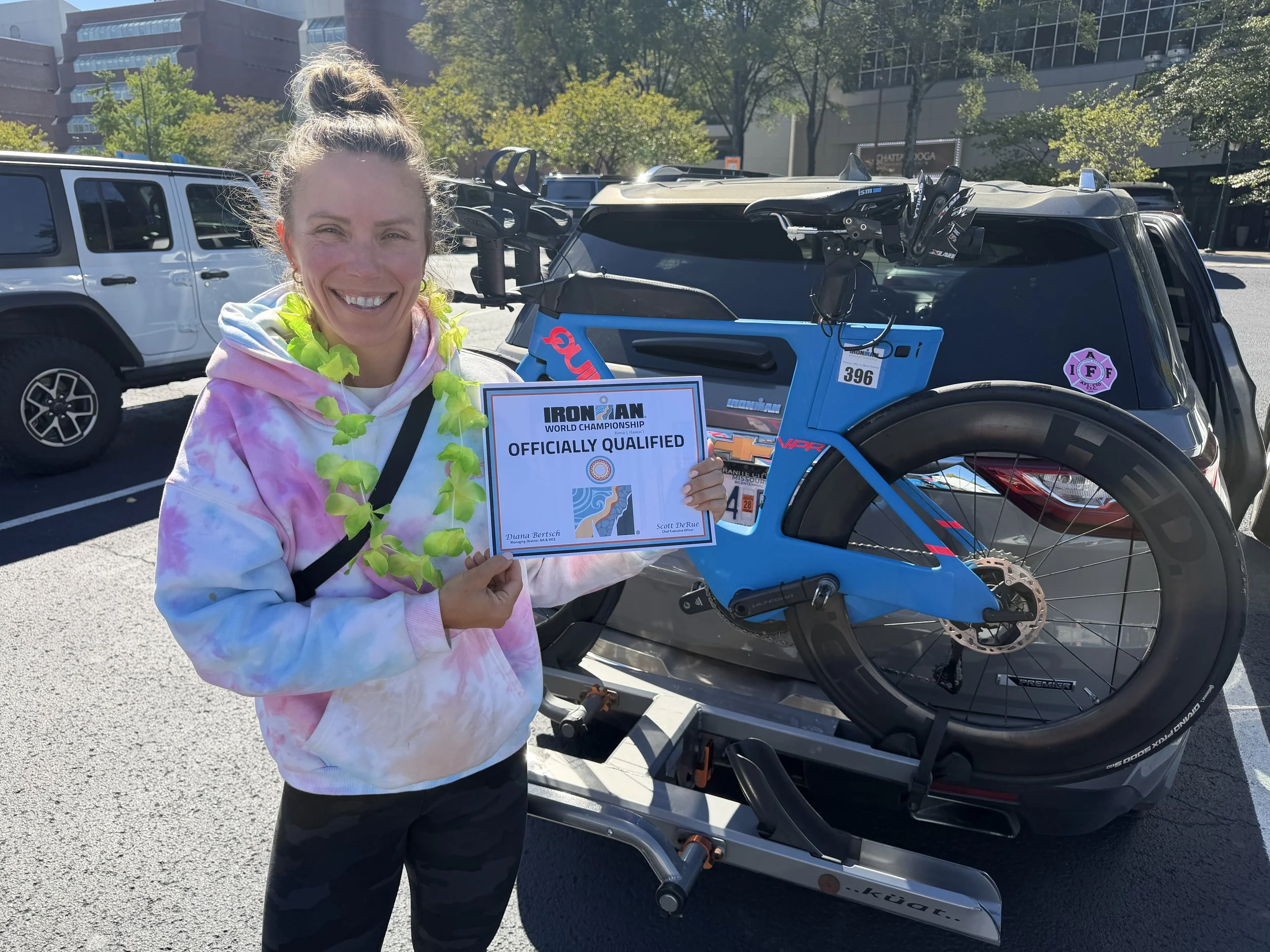
Welcome to the Purple Patch Podcast! On this episode, Lindsey, a personal trainer, endurance athlete, coach, and busy mom who believes there’s always another level to chase. A six-time Ironman finisher, ultra-distance runner, 70.3 World Championship finisher, and *finally* a Kona qualifier, she has spent 20 years proving that big goals are built through consistency, courage, and refusing to give up. She brings that same passion to helping others become stronger, healthier, and more confident in what they’re capable of.
Lindsey described how a structured off-season and more intentional training approach led to a 90-minute Ironman PR and qualification for Kona and 70.3 Worlds.
Performance Shift
After years of inconsistent results and increasing race times, Lindsey joined Purple Patch to gain structure, accountability, and a more sustainable approach.
Her off-season emphasized strength, sleep, nutrition, recovery, and flexible training rather than immediate Ironman preparation.
Velocity improved her cycling skills and helped her apply indoor coaching lessons during outdoor rides.
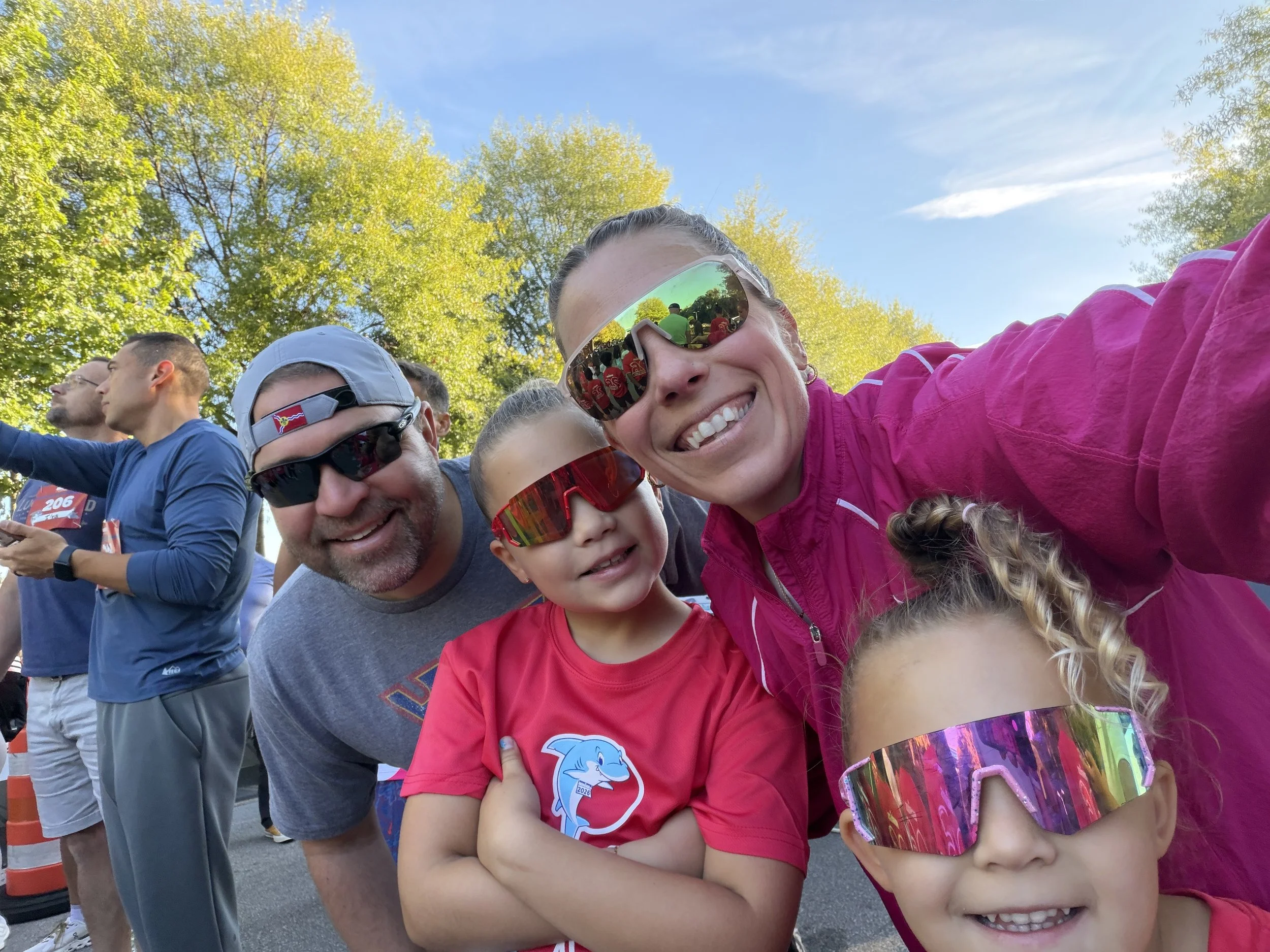
Race Execution
Lindsey managed a foot concern and viral illness before Chattanooga by prioritizing recovery rather than forcing the plan.
Race-day execution relied on fueling, planned aid-station walk breaks, pacing, and mental preparation through a written “suffer pledge.”
The run’s final miles became difficult, with potential fueling issues still to address with Brad.
Key Takeaway
Lindsey’s central advice was to be patient, maintain belief, and use systems and supportive people that fit the athlete’s life.
Athlete Background
Lindsey’s 20-year progression from a first sprint triathlon to Ironman competition.
Current responsibilities include personal training, coaching, and raising two children while her husband works extended firefighter shifts.
Training Approach
Limitations of her previous repetitive and loosely structured training plan.
Benefits of off-season training focused on strength, recovery, sleep, nutrition, and sustainable scheduling.
Use of a paper calendar to organize family, work, and key workouts.
Regular consultations with Brad to review training and maintain focus.
Race Preparation
Muncie 70.3 served as a tune-up and resulted in qualification for 70.3 Worlds.
Velocity sessions developed cycling skills, including maintaining speed on descents.
Pre-race setbacks included plantar fasciitis concerns and illness.
Chattanooga Result
Lindsey achieved a 90-minute Ironman PR and qualified for Kona.
Execution included mental rehearsal, fueling, aid-station walking, and adapting to missed hydration.
The final run miles were difficult and may require further fueling analysis.
Episode Timestamps
00-1:07 Episode Promo
1:25-end Meet & Potatoes
Purple Patch and Episode Resources
Book your needs assessment with Coach Max
Hiring Purple Patch Coach: https://www.purplepatchfitness.com/careers-page
Fast Track Run Squad: purplepatchfitness.com/fasttrackmarathon
Check out our world-class coaching and training options:
Tri Squad: https://www.purplepatchfitness.com/squad
1:1 Coaching: https://www.purplepatchfitness.com/11-coached
Run Squad: https://www.purplepatchfitness/com/run-squad
Strength Squad: https://www.purplepatchfitness.com/strength-1
Live & On-Demand Bike Sessions: https://www.purplepatchfitness.com/bike
Get a free needs assessment and learn more about our programs: https://purplepatchfitness.simplybook.me/v2/#book/service/19
Live in San Francisco? Explore the Purple Patch Performance Center: https://center.purplepatchfitness.com
Everything you need to know about our methodology:
https://www.purplepatchfitness.com/our-methodology
Amplify your approach to nutrition with Purple Patch + Fuelin
https://www.fuelin.com/purplepatch
Get access to our free training resources, insight-packed newsletter and more at purplepatchfitness.com
Matt Dixon 0:00
All righty, we're on our way today, and we've got a cracking conversation with an athlete that had a smarter approach, a little bit of belief in herself, a whole bunch of patience, and unlocked an amazing performance at Ironman Chattanooga. And one of her key catalysts to success, if I can be so humble to suggest, was a fantastic off season last year. You've heard me talk about it before. The bedrock of any unlock, of any breakthrough performance, is a great off season. And Lindsay, our guest today, is a prime example of that. And it so happens that it's off season right now. And so, if you'd like to have a conversation with us, a needs assessment, a coaching consultation with Coach Mats, I should say, just email us info@purplepatchfitness.com. It's a time for you to take a break, lay the foundation of some really smart work and habits, and make sure that you're going into 2027 not behind, but in the front of the wave, and you can unlock a magic performance to yourself. Enjoy today's show; it's an absolute cracker. All right, here we go. I'm Matt Dixon, and welcome to the Purple Patch podcast. The mission of Purple Patch is to empower and educate every human being to reach their athletic potential. Through the lens of athletic potential, you reach your human potential. The purpose of this podcast is to help time-starved people everywhere integrate sport into life. Alrighty, folks, it is the meat and potatoes, and today a special one. I'm excited because I always love it when we get to bring athletes onto the show and have a little bit discussion, particularly when Lindsay. It's been really successful. I'm going to give everyone the catalyst first of why we want to have this episode. It's all about breakthrough performances. Kind of qualification: Iron Man Chad and. that was recently on there, but this story isn't just about podiums and successes and things like that. It's actually one that goes a lot deeper, and we think this story, Lindsay's story, is going to resonate with any athlete who's just passionate about pushing themselves, aiming to get better and improve in endurance sports, and so my guest today, welcome to the show, Lindsay Hevelin.
Lindsey Heaberlin 2:29
Thank you so much. I'm so excited to be here. I'm kind of fangirling a little bit, Matt. I have known Purple Patch for a long time, so I'm like a little bit nervous, but I'm so excited. I I just hope my story can help even just one person.
Matt Dixon 2:45
Here we go. Well, I think it will. Just just for context for for everybody listening, Lindsay is a Purple Patch tri squad athlete, so that's our one to many program gets to leverage as we'll get into today the whole of the Purple Patch coaching team, and and we're going to break down today a pretty simple story. Just a just a month or so ago, Lindsay was competing at the Ironman Chattanooga there in Tennessee. Had a 90 minute PR, qualified to the Hawaii Ironman. Congratulations, Lindsay! Thank you. Fantastic. Along the way, also just knocking off a little half Ironman qualification, just as you, you know, I mean, you stub your cigarette out and you went and and just did a little race to do that as well. But I, I don't want to steal the spotlight here. I, I really want your story to come from you in many ways, and and so I'm going to have you unpack the experience because it's not just about the final result that I think is so meaningful in this conversation, as we do with all guests. What I want to start with, though, is understand a little bit about you, your broader life, and your background. So why don't you just give the listeners a little bit of the landscape? Lindsey Hebernon, you are very busy. So why why don't you give everybody a little bit of snapshot of who you are?
Lindsey Heaberlin 4:05
Okay, so I work part time at Lifetime Fitness as a personal trainer, and I've been a personal trainer since 2010. And I've gone through like a lot of different phases of that. I was a full time trainer for a long time. I got super burnt out. I was working from 5 a.m. to 7 p.m. at night, taking naps in my car in the parking lot. That is not an exaggeration. That was actually when I was training for my first Ironman as well. And then I actually owned my own business. My husband and I built a gym in our basement. I did that for a while, and then COVID hit, and I kind of had to recreate the title I was going to do. I dabbled in real estate a little bit, and then I just came back to fitness because I've always loved it. So I'm a personal trainer, and I also coach a few classes there at Lifetime, and then I also am. Athlete or triathlon coach on the side as well. I train mostly like beginners, just helping them get started in the sport. I usually train a few runners, you know, every couple seasons as well. So it's just fun. It's my passion. I've been doing it for 20 years, and then I have two kids.
Matt Dixon 5:21
Two kids.
Lindsey Heaberlin 5:22
Yeah, two little ones. One is almost five. Um, she'll be five in November, and my other one is seven. So, one, my seven-year-old's in second grade. My five-year-old isn't in kindergarten yet, so that was little stressful training for this and trying to figure out daycare and all that. Um, and then my husband is a firefighter, so he is gone three to four days a week. So I'm a single parent, essentially about 40% of the year.
Matt Dixon 5:54
So you're you're navigating this, and and I think that's an important landscape for people to hear. You you're navigating. I mean, you're still in the hurricane. Kids are still like in in the in in the joyous crazy phase. At the same time, husband going away as you know go on the long term shifts, and you're looking to train not just for sport but for Ironman triathlon. So let let let's go back. When when did triathlon? You're not a newbie to triathlon. You've been doing this for a long time, yeah.
Lindsey Heaberlin 6:27
Yes. So I did my very first triathlon in 20 or 2006. So exactly 20 years ago. Okay. I think that's kind of a fun little date that it just happened. That 20 years on the dot, I finally qualified for Kona, and I did a little sprint triathlon. My aunt, who has kind of always been by my side, she's kind of been like a second mom to me growing up. She, I was a decent swimmer, and when I say decent, I don't mean like collegiate level. Yes, I did swim one year in high school and one year in college, but it was not well. Like it was, we were a very small team. You know, it was one of those ones where you had to do like five events because there weren't enough of you to just specialize. Kind of just were like mediocre at everything type of thing. So I did grow up like being in the water a lot, and so my aunt was like, "Well, you can swim, so just come do this triathlon with me. And I pulled out my like Target bike. Literally, I remember it was like pink. It was probably like $50, $100. I don't know.
Matt Dixon 7:38
Purchase from the store Target.
Lindsey Heaberlin 7:41
No, like literally, if when you go and they have them up on the shelves, and you're just like, "Oh, that one looks fine. Okay, I guess I'll do that one. No, I had nothing fancy. Like, I distinctly remember wearing a swimsuit and like pulling leggings over my swimsuit and just like putting on it like a cotton T-shirt, like it was just, it was a sprint, and I walked my bike up every single hill, like it was horrible. And I think for almost the entire run, which wasn't more than a 5k because it was a sprint, I'm guaranteed it was maybe even like two miles. I was legitimately like crying the whole time, and my aunt had finished like way before me, so she was running alongside of me like, "You can do it! You can do it! And I finished it, and I was like, "Oh my gosh, I can't believe I just did that! You know, it probably took me an hour and a half or something. I don't even remember, but somehow like my brain went to like the extreme. I was like, "Well, I think I want to do like do it again and like try to do an Iron Man one day. And my aunt always jokes about this because she was like, "I literally almost fell out of my seat when you said that because you couldn't even run two miles like without crying.
Matt Dixon 9:03
You certainly didn't. You certainly didn't see at that point a future Hawaii Ironman qualifier. No. No.
Lindsey Heaberlin 9:10
No way. No way. I loathed running. Like I was not a runner. I. I what I was athletic, but I wasn't ever like a star athlete in any of that sense. Like I kind of started athletics later in life, so I remember my mom always asking me like, "Oh, do you want to do soccer? Oh, do you want to do this? And I never wanted to like be a part of anything until like middle school, and so I didn't start like so. I started playing soccer in middle school, which was way late, especially in California.
Matt Dixon 9:45
Yeah,
Lindsey Heaberlin 9:45
soccer is very competitive. Yeah, I played in AYSO. I don't know if you know what that is, but just kind of you know the local whatever.
Matt Dixon 9:54
Yeah,
Lindsey Heaberlin 9:54
and I think my first year I was a goal, so I wasn't even on the field like running. And I hated goalie, so then I stopped telling people that I played it. You know, I was like, "Oh no, I don't play goalie. And then in high school, I did play soccer for like a small, a very small like Christian school, and I remember this very specifically. Our coach used to time us like on. I think we had to do three miles. It was exactly one mile around the campus loop, and we had to do three. And I think he made us do it under like 30 minutes, so not that big of a deal, especially for a high school athlete.
Matt Dixon 10:35
Yeah, I
Lindsey Heaberlin 10:35
was almost always the last one finished, always. So
Matt Dixon 10:40
there we go. Okay, so so this is our this is our grounding. I'm going to fast forward 20 years. You did the sport for 20 years. By by the way, what do you remember? What year your first Ironman was?
Lindsey Heaberlin 10:51
It was 2012.
Matt Dixon 10:52
2012. Okay, so here and 2026. Here we are. You've qualified. So you join the Purple Patch Try Squad just over a year ago, August of 2025, and I'm interested when there was a catalyst, as there is for every athlete, to say, you know what, I'm going to do something different, and I'm going to go and talk to these guys and see what there is. Maybe there's a different approach that's better for me. Whatever it is, what were the challenges that you were going through that you faced? I think some of these are going to resonate with a lot of listeners. So just just give me the checkpoint of what was in your state of mind and challenges that you faced and decided let's go with Purple Patch.
Lindsey Heaberlin 11:40
Absolutely, I think a huge catalyst. I remember listening to a lot of your podcasts about the off season, and when I had signed up for Purple Patch, I still had one seat or one race left, but I had not trained well at all that summer, just like no structure, I was following a different plan, but I wasn't doing it well. I kind of felt like I was over the workouts. It was just a repeat, like every week of the same stuff, and I was just getting tired of it. And I wasn't. I mean, I wouldn't say I wasn't seeing results, but I wasn't following through in the way that I would expect myself with the train.
Matt Dixon 12:28
Yeah,
Lindsey Heaberlin 12:28
was I was having a hard time balancing life and balancing being like with my kids over the summer with no daycare and training during that time, and I went and raced, and it was not a good race. And I knew it wasn't going to be that great. But right before that, I had listened to your whole series of the off season, and I was like, you know what? Like, if I if if I'm going to sign up for another Ironman, like I want to know that I'm doing the right training right, and I felt just like a confidence within that program. I have like followed you guys from the beginning. I remember like when you were working with Meredith Kessler; she was like a big inspiration to me. Seeing her go from like a 12-hour age grouper, I was like, "Hey, I did that. I was like, maybe you know, not that I can go pro, but maybe I can get somewhere. So I talked with Max, and it just seemed like a good fit. And I remember trying the Velocity platform, which really intrigued me. And I mean, we can get into that later, but that Velocity is a game changer. So I think the catalyst was more just not showing up the way that I wanted to for myself and for the goals that I had, which were ambitious. And I knew, like, there's something in me that I knew that I could do it, but I just needed a little bit more like structure and push and like inspiration to bring to the table.
Matt Dixon 14:05
It's interesting, and I mean, hear this. We see this a lot of the time, where there's this this engagement and effort. People sign up for races, they they do it, but there's just that that next thing missing, and and a lot of it often feels for people. I'm I'm I'm sort of parroting this back to you a little bit because you you you sort of really sit in a right in the middle of of a pretty typical person where you're investing all the time, you're doing it, but you're not really reaping the rewards that all that effort and energy goes into, and that that evaporates a lot of the joy, and not just of the outcome, but of the actual process. And it starts to feel like almost something we're doing, no different than doing the dishes or something. And and people fall into this murky man, you know, sort of murky land of mediocrity, almost, and you yield it. You came at the right time in many ways. You launched into off season. I'd love you to for you to unpack your off season last year. You have heard me say, off season is the most critical part of the journey, and it and it's miles away from you getting ready for an Ironman. By the way, your Ironman's in September. We're talking about last September, October, November. What were some of the key areas or changes to your approach? Knowing that you've done the sport for 20 years, knowing that your first Iron Man was, you know, 10 or 15 years prior to this, what were some of the changes to your approach a year ago, when you went through off season, I'm really interested in that.
Lindsey Heaberlin 15:44
So I think traditionally, and I think this is pretty common for us, like over here in you know the U.S. or whatever. I think a lot of people do their race, and then they just kind of are like, "Okay, I'm done. I'm gonna wait till January.
Matt Dixon 16:03
Yeah, you see
Lindsey Heaberlin 16:04
that a lot. I'm gonna wait till January. I'm just gonna do whatever I want through the next couple months, and I think that a recovery or some having that time off mentally is can be helpful, but once I listened to like all the podcasts, I was like, I I need to do this. Like, I need to take the off season and use it to my advantage because if I start in January, I don't want to feel already behind, and I think it relieves a little bit of the pressure, maybe that like oh, training starts in January. You got to get on it, and it just helped me like build a good structure that still was flexible and it wasn't super time consuming. But I knew that I was getting stronger while other people were just sitting regressing,
Matt Dixon 17:02
basically. Yeah.
Lindsey Heaberlin 17:03
Yeah. And and you
Matt Dixon 17:04
were you at the time. I mean, you mentioned strength, etc. And it it's not like you were training through the lens of I've got to get ready for an Iron Man. I got to get ready for an Iron Man. It was it was less training, yeah. Than
Lindsey Heaberlin 17:20
I don't think I even signed up for Chattanooga because I actually wasn't sure that I was gonna do it. I really wanted to do California, but my training partner, who keeps me good on track, Mark, he had already signed up for Chattanooga, and so I thought, ah, I don't really want to do that race. I heard it's really hot. I heard it's really hilly. I don't know. I think I signed up in December, maybe.
Matt Dixon 17:51
Okay.
Lindsey Heaberlin 17:52
Um. So I did. I wasn't. I knew that I wanted to do an Ironman, but I didn't know what it was gonna be. Um, I thought maybe I would, you know, try to sign up for California or maybe even Florida. I just was didn't really know yet, so I was ready to do the off season before, yeah, even signing up.
Matt Dixon 18:14
And and the in speaking to a couple of the coaches, the one of the things that they highlighted to me about you, by the way, you didn't know I was going to talk about this, is is that you did a great job of laying the foundation of a whole bunch of habits, like getting in your sleep, getting in your fueling, and your fuel in the the company, which maybe you can talk about that. Some of those bedrocks that that you managed to really maintain throughout the year, so it was all about strength, real intentional recovery. Those were things that you actually prioritized in those months. Yeah, that do you feel like that had a that that gave you a really robust foundation? Yeah,
Lindsey Heaberlin 18:56
definitely, definitely. The year before, I was actually dealing with like some health issues, and I was working with like a functional medicine doctor because I really just wasn't feeling like myself. And basically, what we came down to was really needed to prioritize like sleep and figuring out how I could sleep better, how I could recover better and just bring down like my stress levels. So sleep is like non-negotiable for me. Like I I need like nine hours of sleep a night, and that's what I realized when I was doing using that functional medicine doctor. I was like, okay, I need and I need to improve it. I need to figure out ways to make it so that my you know deep sleep is better and all those things. So I definitely had already kind of figured that out prior, but was still in the transition phase of trying to implement those things and just focus. On good nutrition, and I knew like I I joined the Fuelin app because I knew that I had always struggled with that, and I have a non traditional schedule, so using Fuelin really helped me figure out like when do I need to eat based off if I'm working out in the middle of the day because that's usually my time when I would work out. Because I'm not waking up at 5 a.m. I'm sorry, I will not set my alarm for anything earlier than that. Usually, I wake up around six or seven, but I'm in bed at nine. You know, just really trying to focus on resting and recovering because I know that that's what I need. You know, after 20 years of being in the sport, I think, and I, you know, everyone says as you get older, you know, you need to prioritize those things. But I do think, just internally, I have developed a better sense of listening to my body and knowing, you know, what it needs in that day, what it needs in that night, yeah. So that that has always been really important to me for the last year.
Matt Dixon 21:08
And and you said something important there: listening to my body rather than just reading it on a score, on a watch, or on a ring, or anything like that. And and and I think it's important to hover here because it wasn't always like that. And yeah. there's some of those that was we talked about before, and and and I want to I made a note of this, so I'm just reading this out, which is I've been doing the sport for 20 years, and like many athletes, this is something that you mentioned and made a note of this. Like many of us, I was really good at working hard, and so I was grinding, hitting another session, pushing through, and thinking more is better. By the way, this sounds a lot like me in my professional triathlon career. And and now I know that actually being willing to suffer and being good at endurance sports are not necessarily the same thing. So that's a big shift of of mindset. Now we're going to talk about a story where you have a 90-minute PR in an Ironman on a tough course on a hot day, etc. When was the shift in this perspective? Like, when did it actually land for you? Where it's like, yeah, you got to be tough, you got to work hard. This is an easy street, but it's not always the answer. Some of these things. Was it that experience of going through those health challenges? When did it all land for you?
Lindsey Heaberlin 22:25
Yeah, I think definitely going through, you know, with my functional medicine doctor kind of talking to me about, you know, learning to just tune like everything else out. It's really hard, obviously, you know, in this day and age, with social media and whatever, and you have other friends training, and you're looking at their stuff, and they're doing this, and you know, my friend is running a marathon at you know 11 p.m. at night because he couldn't get in his training earlier that day, and I'm like, that I just know for me, I cannot do that. Like it's gonna wreck me. So I have to still have energy to show up not only for my training but for my family. Like I have, I know that I have to wake up at six a.m. and I have to start taking care of the kids. And I, when I get up, I don't stop moving until 9p.m. at night. So that's why, like the recovery and the rest is really important to me. If I can, occasionally I'm a I am a fan of like a 20 to 30 minute nap. If I can sometimes squeeze them in, and then I try to like use my recovery boots as much as I can, just taking you know a little bit of time for myself. But I do think, yeah, in the last year, and just also just following the program has also showed me that okay, I don't need to be doing 20 hours of working out to get the results or to feel like I'm getting fitter. So I think that also helped. Like as I was going, feeling like okay, I'm checking this workout off. I you know I did it well. I feel good, and I don't need to feel wrecked. Like that's yeah. It's not it's
Matt Dixon 24:14
not a point of validation. Yeah. You you also highlighted before about the the power of really understanding the intent of the training rather than just doing the training with the key sessions. Talk about that a little bit because we we structure our training like that. That's that's I assume really helpful for you when you've got this variable schedule. Yeah,
Lindsey Heaberlin 24:33
so helpful. Like I I so my Sunday special is done on like Wednesday.
Matt Dixon 24:40
Oh, interesting.
Lindsey Heaberlin 24:41
I'm trying to figure out. Also, I take my paper calendar. I don't have it with me, or else I would show it to you. But I use a paper calendar, and everyone in my life makes fun of me. But I color code everything.
Matt Dixon 24:54
Good. Yeah.
Lindsey Heaberlin 24:55
Now I write like the days my husband's at work. They're big and bold. Like on the on the very top, and then I write out my schedule of all my clients, all my classes, and then I write down all my kids' stuff. That's incredible, and then my workouts go in the middle, like and it's like a little puzzle, and those are orange. So I just I think when I look at the schedule for the following week, Mark always makes fun of me actually because I'll be like, "Oh, have you seen the workout for next week? And he's like, "No, I don't look at it till the day before. But I'm looking at it like 10 days ahead of time
Matt Dixon 25:33
to look at the intent and look at the yeah.
Lindsey Heaberlin 25:36
Yeah, if I need to move anything, I want to make sure I'm getting in like those key workouts because usually I do have to move some things around just occasionally, not always, and also decide like what workouts just aren't going to fit into my schedule.
Matt Dixon 25:51
Yeah,
Lindsey Heaberlin 25:51
sometimes and I'll just delete them.
Matt Dixon 25:54
That yeah, and that that's not a point of weakness. That's you know that's that's actually a superpower. That's something that I would label athletic IQ, by the way, which is which is is terrific. Having the bravery of saying, if I don't do that session, then I'm a failure. The plans work, and instead saying, within the context of life, this is the appropriate training load for this week, and that can ebb and flow. Because if your husband's got the week off work randomly, well, maybe you can do more that week, and I think that's helpful. I want to get in in the pursuit of time. Want to get into the racing side of stuff, and and we're going to talk about Chattanooga, the race. But along the way, you raced Munsey. You it was a part of the build. It was almost a nothing race. You absolutely smashed the bike. You qualified to worlds there. That was just a tune-up race. It was really in the spirit of getting ready for for Chattanooga. I I'd love to help you because I think you're a great success story of doing something that we really recommend athletes do when they're on the squad program, which is to leverage the coaching team, and and the coaching team via a couple of channels. The first is consultations, where you grab a session with one of us and say, "Hey, let's talk through that. You built a really good relationship with Coach Brad. I think he's very helpful. By the way, he told me just now before recording, make sure you remind her she needs to recover right now. So, so we're on lockstep. So, Lindsay, recover. But also myself and Brad on on the bike program. I'd love that you you mentioned it earlier. By the way, my one of my pet peeves, a phrase that I don't like, is game changer, and it is a game changer. It is a great session. No, you use it because it's it's it's the time that it is appropriate. So I'd love you just to talk about managing the build and talk about
Lindsey Heaberlin 27:48
breaking up a little bit. Sorry, hold
Matt Dixon 27:50
on. All right, hang on.
Lindsey Heaberlin 27:51
Breaking up. Sorry. Now you're good.
Matt Dixon 27:54
Now we're good. All right. So I'll go back to the I'll go back to the top. So I'm going to redo that section. All right.
Lindsey Heaberlin 28:00
Yes, that's fine.
Matt Dixon 28:01
So they'll be able to cut in somewhere around. I'll just go from here. So I'd love to. I'd love to understand your your journey. You obviously went through, and we're going to talk about Chattanooga. But on the way, you just popped into Muncie 70.3. You smashed the bike. You qualified to 70.3 worlds. It was a lot to fit in, and you talked before about the velocity bike platform, the trainer-based platform that we do. That's all video-based. You also, I think, are a great example of leveraging the coaching team and and doing consultations along the way to help you make sure that you're focused on the right thing. So your Iron Man build, you talked about. I enjoyed it. It wasn't stale. I wasn't desperate to be over. Draw out some of the some of the help and support you got. A lot with Coach Brad, yeah. I think you use Coach Brad, and then also the role of the bike trainer sessions because people are always interested in
Lindsey Heaberlin 29:07
those. Okay, so after Muncy, I just wanted to have confirmation that everything that I was like adjusting or doing or just any questions that I had, I wanted answers because I was like, okay, listen, I am going to pay all this money to do this race, and I'm traveling with my family. And when I signed up for Iron Man Chattanooga, one of the things that I kind of wanted to promise myself was that I was gonna do everything in my power to give it my all. So I knew that I needed a little extra help. So once I met with Brad, I was like, it was so helpful that I was like, oh, I'm meeting with you every three weeks. I'm sorry. You'll probably get sick of me, but I'm meeting with you every three weeks because I want you to look at my training, and I I'll probably have 8000 questions for you. I think the first email I sent him was like two pages long. I was like, I'm really sorry, Brad, but I'm gonna need your help with this. So that was humongous for me. I mean, just to be able to talk through what I was thinking, how I was feeling. Is that good? Is that bad? Like what at this point? What should I be focusing on? So he was absolutely key for me in just helping me like stay focused and just the confirmation. Sometimes you just need that little like, yeah, you're doing good. You know, instead of over analyzing everything, or this person's doing this and that person's doing this, and just saying like your training is good because listen, I am not a typical triathlete in which I don't like when I finish my workout, I don't look at the data. It's done by on to the next thing. Like I got kids to pick up. I got to go teach a class at night. I got to go train a client. Whatever. I don't like. I am my friend Mark, who is one of my best friends. I call him my triathlon dad because that's what he is, and he helps me with everything. But he will look at my file and be like, "Oh, your power was blah blah blah blah blah, and I'm like, "Cool, dude! Like, just tell me that I'm on the right track. Because once I I'm done, I'm done with the workout check. Yeah, gone on to the next thing. So I'm not like an over analyzer. I don't like open my training peaks and look or anything like that. So I just needed someone else to look at it from an outside perspective and tell me, okay, you need to do this a little differently. You need to do this. This is what you should be thinking about as you go into the next three weeks. Because I love how Purple Patch does those three week walks. That's why I was like, okay, I'm gonna meet you after every three weeks
Matt Dixon 32:07
cycle. Yeah,
Lindsey Heaberlin 32:08
yeah, every cycle, so that you can just help me make sure that I'm on it. And then in terms of velocity, I don't know how to say this, but this that platform is truly amazing. Like I had think that I have become such a better cyclist because of it, and it's weird to say that because you're inside, like you're not cycling outside, but you do become better. And then every weekend we had the opportunity to go outside, and Mark and I would practice all the things that you talked about,
Matt Dixon 32:43
apply the skills, yeah,
Lindsey Heaberlin 32:44
yeah, and practice them, and so that on race day, like I literally like for Muncie, I didn't like soft pedal one time, and I don't think I've ever done that. And for Chattanooga, the same thing, like I was pedaling, and I was passing so many people on the downhills because they would just be like, I was like, heck no! I'm gonna use that. I'm trying to get my speed investment right. Yeah. So I mean, I think that platform. Like I feel like I will never give up. It's amazing, and I used to just go on Zlif, and or I don't know if I'm allowed to say that on this podcast. Yeah,
Matt Dixon 33:24
you can, you can.
Lindsey Heaberlin 33:25
And I would just turn on Netflix, do my workout. Like velocity, I cannot have anything on. I have to fully
Matt Dixon 33:33
immerse it.
Lindsey Heaberlin 33:34
Like it is so, and their workouts are hard, but they're so like they're doable, and I love the coaching from it. I think that has been absolutely phenomenal. Like hearing you talk, and like just taking those little nuggets and putting them away in my brain, like has just helped me stay so focused during the build. It's just, and the fact that the workouts really are an hour. Like, if I have a little extra time, maybe I would ride five or 10 minutes extra. But ride some extra com. Never did like the time rich. I almost always did time-starved and I mean, I I've improved so much. I I'm still like kind of in shock actually. Yeah, you
Matt Dixon 34:18
know, interestingly, when if we go back in the day and and we talk to Velocity, it was a very real financial investment for for us to actually use that platform. And we had you were not part of Purple Patch then, but we had everybody on Zwift or Trainer Road, and it was a light pulling teeth to say you should really do this, and and it's embedded as in the cost of the program. So we take on the the overhead of the subscription. The reason we did that is it is not a and other training platform. It's like this is going to make you faster. If you lean in, you will get faster on this. That's how good it is. As long as you take the principles and lessons of the coaching video and apply it to outside, you've done that. Boom, and and and it is such a game changer. It really is. So we're going to do that. And with that, we're going to talk about Iron Man Chattanooga because you smashed it. You went in 90 p.o9. minute p.O. Almost every listener is going to think, great. She had one of those days where it was just easy street, everything flowed, and and it was just simple. You probably landed the plane coming in. You felt great going into the race. It was smooth. There weren't any potholes. You just went had one of those days. Why don't you give us the quick and dirty two minutes of leading up into the race and and how the race went? It it's amazing when it all goes so perfectly and so easy. Is that right?
Lindsey Heaberlin 35:52
I mean, I think anyone that's done triathlon knows that no race is perfect. Absolutely. I don't know anyone that said, "Oh yeah, everything went great. Two weeks before the race, I thought I was getting plantarfaciti, so I went into panic mode, and I got shockwave therapy on it. I took running off. I ran so two weeks before I ran one time, 20 minutes I think two miles. A week before, I ran one time, 20 minutes. That's it. And then, so that was like on Sunday, two weeks before. I like literally could not walk, and I started to freak out. And then on Friday, I started to get sick. And on Sunday, Mark and I wrote three hours, and then I felt so horrible. I called my husband, bawling my eyes out like he was at work, and I was like, "I just need you to tell me it's gonna be okay. It's like I can't believe I've done all this work, and now this, and just like Lindsay, relax, go to the doctor and just make sure it's nothing like serious and see what they say. Like you're gonna be fine. So I literally went to the doctor after my three hour ride. I like just went to the minute clinic or whatever, and I was like, just tell me that I don't have COVID or the flu or something or that I'm gonna die. And she was like, you have a virus. Don't do anything for three days, and you should feel better. And I was like, okay. So I did Monday, Tuesday. I did ride my bike on Wednesday just because I was like, I just need a little like 40 minute ride. But I was not feeling good at all. And even I met with Brad, and he was like, "Well, Lindsay, like you might feel kind of sluggish, like going into the race because you kind of have over rested. But in my mind, I was like, "Okay, what are my options here? My options are to follow the training plan perfectly and come to the race, injured, and possibly still sick, or take as much time off as I need and try to like recruit, and hopefully, I can get to the race and feel okay. And so that's what I did, and I was very nervous. I was worried that I was going to be very sluggish and tired. And but Mark and I went out on a ride. It felt good. I was like, okay, well, I'm I'm just going to do the best I can with what I have in front of me. So it's smooth.
Matt Dixon 38:41
How how did the race day go?
Lindsey Heaberlin 38:44
Race day, I actually felt very calm because I was just like, look, I've done everything I can. There's nothing I can change now. I have a plan. I had already worked on like mentally. This was important. Like I had already worked on all the things that come to me when I'm racing, and I had already worked out like mentally how am I going to respond to these thoughts that come into my brain? Like you're tired, you need to stop. You don't really care that much. Why are you doing this? I am never going to do another Iron Man again. You know all the things that come in your brain. I had already prepped myself with the things I was going to repeat, and I literally had that on lockdown. So that was like key, I think. I I wrote out a whole. I call it a suffer pledge. I read a book about this whole mental training, and I wrote it out, and I I read it every day for like 10 days leading up to the race. I recorded it, I listened to it, so it was embedded in my brain. I had a little sticker on my bike, a little tiny sticker, the smallest little font, just to remind me. And my whole mantra was, I am willing to be uncomfortable for something I deeply want, and I just I felt pretty good. I mean, I fueled well. Now the last like the swim was fine, boring. Luckily, like my goggles stayed on. Nothing. I'm not like a I'm an okay swimmer, but it's downriver, so you know it was all right. Transition. I left my I left transition without my bike shoes on. That was fun, and I just laughed and I was like, "Oh, gotta go back and get those. Can't ride my bike without these. But I think I was so excited. You know, I just was like, "Oh, great! My family was there during the race, and it was my first. It was my girl's first time being at like an Iron Man event, so I think that really helped me stay energized and like knowing that they were excited to see me, and I was excited to see them. That kind of helped me get like you know, stay focused and just get to the next. You know, get to the next thing. Stay with it. The five went really well, except I did drop a water bottle around mile 80, so I didn't have any water for about 10 miles. So that was a little bit rough, but I had drank enough, so I was like, okay, nothing you can do about it. You just have to keep like moving forward. Don't focus. So the purpose in front of you. Yeah. So I was like, just keep pedaling. Get to the next aid station. Make sure this time you slow down and you make sure that you get it. So I did that, and then the last like 10 miles, I said it would be a little bit like, but I'm always excited to run. I usually feel really good running off the bike. So I was like, okay, just you got to get to the finish and saw my family. The run went really well, except for the last eight miles were a depth march. So I'm working with Brad on figuring that out. Partially, probably a fueling, you know, issue. And I remember you saying that in the Bring Your Grace ride. You know, sugar, sugar, sugar. If you're feeling
Matt Dixon 42:16
if you're
Lindsey Heaberlin 42:17
bad, so I started taking poking, and I think that helped. My stomach was not very happy. I had so much phlegm in my throat from being sick that I like kept almost puking. So that was not fun. But you know, I don't know. I just I tried to to stay focused. Like usually, I I tend to start to spiral. You know, once you start to feel really bad and negative, and I just got telling myself, like Lindsay, you know, everyone is at that place in the race. Like it's everyone is hurting at this point. You just need to keep like one foot in front of the other. Just keep going. Just keep, you know, try to stay as steady as you can, and your only goal is to get from A to B as fast as you can with the circumstances in front of you. So let me
Matt Dixon 43:10
let me ask a question that I don't know the answer to. Did you did you integrate did you integrate walk breaks into the? Yes.
Lindsey Heaberlin 43:16
Oh, absolutely. Every almost every aid station. Yeah.
Matt Dixon 43:21
Almost every aid station, nine minute PR. Almost every aid station walk breaks.
Lindsey Heaberlin 43:25
Yeah, yeah. No, definitely. I'm. That was my plan going in. I was like, I am gonna walk every single aid station. I got water. I got electrolytes. Dump the ice down my kit, and then get a little bit more water at the end, or Coke, I switched to Coke at the end, and the only time I didn't, I think there were maybe two aid stations that were kind of downhill, and so I didn't really want to stop and walk, so I just kind of ran through it. But I still grabbed stuff, and because the back half of that course is so hilly, and I had to walk a lot of those hills, like I was trying to just you know keep my heart rate nice and steady. So I knew that I would have to walk a little bit more of the hills. I think there were only maybe two aid stations that I didn't walk, but almost all of them.
Matt Dixon 44:15
I um, like the final question for you as we wrap up, and and I should say first, congratulations! It's a great, the great start in my mind. Now we've got another off season. Brad says you need to recover. Yeah, it's a great time that we're recording this. You you joined us about a year ago, just over a year ago. You had a big dream, and you you wanted to have an unlock like this. You went and successfully did a great off season. Here we are again, and it's off season again. This time you're starting the 2027 season with a spot to 70.3 Worlds, a spot to Kona.
Lindsey Heaberlin 44:54
Yeah,
Matt Dixon 44:55
fantastic. So it's a great window for you to recharge and everything else. But for everyone listening, who's in the same spot, who's entering the end of their season, perhaps, and and and hopefully has got big goals, big dreams. Is there any final thought that you can share with them that can help them fuel their journey and be set? What would you say? Because you had the courage to believe. I think Brad and team help you believe. What would you? What would be your final piece of advice?
Lindsey Heaberlin 45:28
I honestly think that my final piece of advice is just to be patient with yourself. I think that I could have easily just, you know, quit doing it, or you know, my results weren't anything fancy before this. In fact, I think my Ironmans were getting progressively slower. So, if you would look at that, you would just say, "Oh, like no, no way! Like this girl isn't doing this. But I think I just had maybe the willingness to keep going because there was a tiny little seed in my heart that said, "I think you can do this, and I feel like if anyone just has that little piece of belief, you need to water it and figure out what that means to you. How you're gonna water it? For me, it was like leaning into people that believe in me, leaning into a system that works for me. Maybe trying something new that is outside of your comfort zone. I really do think that like I'm not anything special. I just was willing to not give up and to try to evolve with what works for me.
Matt Dixon 46:52
Yeah, it's great.
Lindsey Heaberlin 46:54
Yeah,
Matt Dixon 46:54
congratulations.
Lindsey Heaberlin 46:56
Thank you. Thanks.
Matt Dixon 46:57
Thank you for joining the show and appreciate your time, and and for folks that folks that are listening to the show not part of Purple Patch, we're going to include your race report in the show notes because it's a lot of fun. But Lindsay, I appreciate you being on the show. Go rest up, have a break, and then get charging next year.
Lindsey Heaberlin 47:18
Yes, usually breaks are not a problem for me, so I love taking a break.
Matt Dixon 47:24
Thank you. All right.
Lindsey Heaberlin 47:26
All right. Thank you so much.
Matt Dixon 47:28
Thank you, guys. Thanks so much for joining, and thank you for listening. I hope that you enjoyed the new format. You can never miss an episode by simply subscribing. Head to the Purple Patch channel of YouTube, and you will find it there. And you could subscribe. Of course, I'd like to ask you if you will subscribe. Also, share it with your friends, and it's really helpful if you leave a nice positive review in the comments. Now, any questions that you have, let me know. Feel free to add a comment, and I will try my best to respond and support you on your performance journey. And in fact, as we commence this video podcast experience, if you have any feedback at all, as mentioned earlier in the show, we would love your help in helping us to improve. Simply email us at info@purplepatchfitness.com or leave it in the comments of the show at the Purple Patch page, and we will get you dialed in. We'd love constructive feedback. We are in a growth mindset, as we like to call it, and so feel free to share with your friends. But as I said, let's build this together. Let's make it something special. It's really fun. We're really trying hard to make it a special experience, and we want to welcome you into the Purple Patch community. With that, I hope you have a great week. Stay healthy, have fun, keep smiling, doing whatever you do. Take care.
Transcribed by https://otter.ai
SUMMARY KEYWORDS
Ironman, breakthrough performance, off season, triathlon coaching, training structure, training habits, sleep hygiene, fueling strategy, velocity platform, mental training, athletic IQ, performance potential, recovery, training intensity, training adaptation