
406 - 6 Training Decisions That Will Make or Break Your Fall Marathon
Follow the Purple Patch Podcast at:
APPLE PODCASTS - SPOTIFY- AMAZON MUSIC - GOOGLE PODCASTS - YOUTUBE
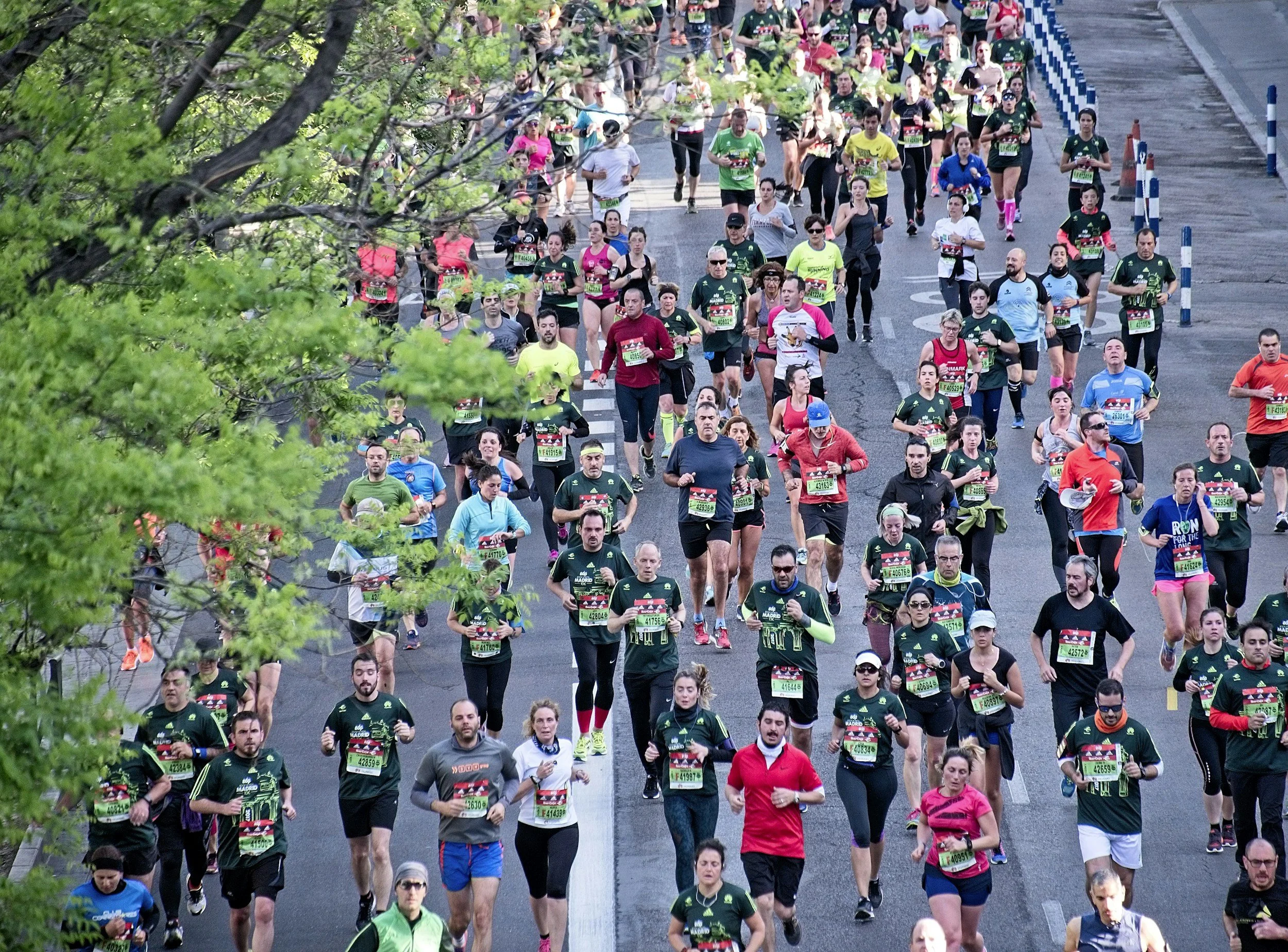
Welcome to the Purple Patch Podcast! On this episode, IRONMAN Master Coach Matt Dixon discusses six key decisions for optimizing marathon training. First, he emphasizes the importance of committing to training by feel, focusing on consistency and quality over quantity. Second, he suggests integrating cycling or other modalities to build endurance without adding running miles. Third, he stresses the necessity of strength training for performance enhancement. Fourth, he advises against making long runs the centerpiece of training, advocating for cluster running instead. Fifth, he recommends using walk breaks as a strategic tool to manage fatigue. Finally, he advises against crushing every workout, aiming for a balanced body of work to ensure readiness and performance on race day.

If you have any questions about the Purple Patch program, feel free to reach out at info@purplepatchfitness.com.
Episode Timecodes:
00-2:00 Episode Promo
2:30-2:51 Episode Intro
3:58-end Meat & Potatoes
Purple Patch and Episode Resources
Hiring Purple Patch Coach: https://www.purplepatchfitness.com/careers-page
Fast Track Run Squad: purplepatchfitness.com/fasttrackmarathon
Check out our world-class coaching and training options:
Tri Squad: https://www.purplepatchfitness.com/squad
1:1 Coaching: https://www.purplepatchfitness.com/11-coached
Run Squad: https://www.purplepatchfitness/com/run-squad
Strength Squad: https://www.purplepatchfitness.com/strength-1
Live & On-Demand Bike Sessions: https://www.purplepatchfitness.com/bike
Get a free needs assessment and learn more about our programs: https://purplepatchfitness.simplybook.me/v2/#book/service/19
Live in San Francisco? Explore the Purple Patch Performance Center: https://center.purplepatchfitness.com
Everything you need to know about our methodology:
https://www.purplepatchfitness.com/our-methodology
Amplify your approach to nutrition with Purple Patch + Fuelin
https://www.fuelin.com/purplepatch
Get access to our free training resources, insight-packed newsletter and more at purplepatchfitness.com
Transcription
Matt Dixon 0:00
Just before we get going with the show, new, improved, better. Well, we do always say Evolve or Diet Purple Patch, and we have brand new, refreshed marathon builds for all of our athletes that are running full marathons. Is that you? Well, let me give you the news. You can go faster on fewer miles, this isn't some generic or one-size-fits-all program. It is your program for you, with a team of coaches that are there to support you. When you sign up and you register and you become part of our community, we are going to get you ready to have your best performance. You have integrated strength training. You have a program that can be personalized to your schedule, and it's going to ensure you that you stay healthy, have more fun, and yes, are successful and go faster. It's all in our run squad program. Why don't we get going? Why don't you approach things in a slightly evolved and smarter way, where marathon training can be fun, and you can also go fast. And the best thing is, it integrates rather than competes with your life. And so, come and join myself, the team of coaches, where we're here to support you and be part of a worldwide community doing things a little different, and we think a little bit better. If you're interested, head to purplepatchfitness. com. Check out the Run Squad program, register, and we'll take care of you. We kick off with a coaching strategy call. And if you're not sure if the program's right for you, or perhaps you're just interested in a strategy call globally to help you with your performance, we offer complimentary consultations.
Matt Dixon 1:40
You just ping us at info@purplepatchfitness.com. Whether you're a runner, whether you're a triathlete, whatever you're looking for, we're always happy to give you some complimentary advice. Reach out; one of our coaches will have a nice discussion with you. And make sure in this pressure-free conversation that we're going to dial you in for your best back half of the season possible. All right, get on with the show. Let's do this. I'm Matt Dixon, and welcome to the Purple Patch podcast. The mission of Purple Patch is to empower and educate every human being to reach their athletic potential through the lens of athletic potential. You reach your human potential. The purpose of this podcast is to help time-starved people everywhere integrate sport into life. And welcome to the Purple Patch Podcast. As ever, your host Matt Dixon, and today I'm going to ask you very simply to make some decisions. In fact, six decisions. Each one of them will be on their own, fueling a little bit better readiness and performance in your running. And when you combine them together into a fabric, well, it's the opportunity to uplevel your performance beyond your wildest imaginations. Goodness me! What a promise that is.
Matt Dixon 3:03
What we're doing is delivering clear, actionable decisions for you to shift in your mindset, pulled from our years of preparing athletes from very, very simple running level all the way up to the American record holder, and it is first timers to people that are looking to break through and even smash their age group, or of course qualify for Boston. Something everyone would love to do at some stage in their life. We're going to strip away the varnish. I'm just going to say these are the six things that you want to make as a decision. Very, very actionable. Six simple decisions to unlock running performance. It is all in the meat and potatoes. And so, if you're ready, let's do it, ladies and gentlemen. The meat and potatoes. All right, folks. The meat and potatoes. I'm on a mission today. We're going to dig right in. This is the whole premise of the session today. How do I make running really fun? How do I integrate it into life? How do I stay injury-free? How do I get faster? How can I actually unlock my marathon performance? Whether it's my first time, whether I'm looking to absolutely smash a PR or qualify to Boston, how do I do that on fewer miles? How do I make sure that my whole weekend isn't taken up by some big long run every day?
Matt Dixon 4:32
How do we take the principles of everything that we've learned from all levels of running over 20 years of coaching into helping you today go faster. Six decisions: 123456, Show over. It's very, very easy. Here we go. We're going to go right in. There's no messing around. Decision number one. I need you to decide to commit. To making the easy easy, and also learn how to train by feel. It's kind of a double barrel. This one. Now I've talked about this on the podcast before, and it's incredibly important to revisit as it pertains to marathon racing. A successful marathon isn't determined by some single peak week. It's not by one or two of the big long runs. In fact, it's not really about the long runs at all. It's been built on weeks and weeks and weeks. Some might say months of the magic word of performance for any endurance athlete: consistency. And it is not just work done, but quality work done, and what I mean by that is training that your body can absorb, where it can be effective. Your body will always adapt. The question is, will it adapt by getting stronger, fitter, faster, or will it maladapt by creating fatigue and sometimes injury? We want to make sure that we're maximizing within the context of your life effective training, and we want to do as much of that as we possibly can, layered on consistently, week after week after week. And there's a couple of elements that fuel your ability to do it. The first is being in touch of how you actually feel, and then making smart decisions around being able to adjust appropriately, and this is absolutely critical if you're able to stack what we're calling effective work. So let's get some grounding of why this matters.
Matt Dixon 6:37
Well, let's go back to one of my favorite coaching sayings. I often find myself saying to athletes, "Look, life is not a spreadsheet, and so it doesn't make sense if you have a static program that you're just checking the boxes off and thinking that it's somehow mystical and magical for your success. Every single week, you're going to have a living, breathing set of stresses that impact your body and your physiology. In addition to that, you're either going to absolutely master in any week, or sometimes not do quite as well some of the supporting habits that can have a huge impact on your status of readiness and recovery. Things like how sleep is, maybe your hydration, maybe you don't nail your nutrition or recovery. All of these components, and so your readiness to train effectively and strong every single day is going to vary. It's going to vary because of external stresses. It's going to vary relative to training load. It's going to vary due to a whole bunch of things that are very very difficult to measure, and you just simply won't get that ultimate input from external sources like your aura rings or your whoop bands or your Garmin watches. That's going to give you a snapshot, but ultimately, the best athletes really build a relationship with themselves, what we call the inner animal, and so in order to get the best adaptation from every single workout, you want to ensure that you have the bravery, for lack of a better phrase, to meet yourself where you're at on that particular day, and you need to be able to have the courage to push yourself appropriately, and when you do this well over time, and like anything else, it's really a skill that you develop. You ultimately have the difference between winning just individual workouts and building great fitness. Our whole mantra that we want for readiness in any performance is to arrive at the race absolutely as fit as possible. Yes, we want to do that with great muscular resilience for running, but also fresh. Another coaching saying, "Fit and fresh. You've heard me say it before. What we don't want you to do is going there, following a program in a static mindset, and arriving incredibly fit, but in a fog of fatigue, because that will show up on race day in the worst kind of way, and in fact, when we think about physiological readiness, it's a very simple equation. Performance readiness emerges from the fitness side.
Matt Dixon 9:15
When you are fit, you have to do the work, but you are also hormonally and muscular-wise, very very fresh. That's when the body's ready. But the other side of it is the mental game. How can you also show up confident in your ability to actually show up and meet the demands of race day? Well, so many people think that that emerges from more, more, more. But confidence is something that's built from evidence, and when you start to layer on successful sessions, where you string together wins in sessions, day on day, week on week, because you're not trying to push a boundary, and instead listening to your body, and starting to train appropriately. To it, you start to build consistency. Consistency is the evidence your body and brain needs to say, "I'm ready for this, because you haven't missed 20% of your training because of fatigue or injury or anything else. And this is the inner animal that we talk about: your deeply developed awareness of your own body under stress. It's the ability for you over time to start to gage, without external meters, which are wonderful to have and should be leveraged. But despite those, in absence of those, be able to sense your effort, your pace, your state of fatigue, your recovery status, without just relying on external metrics. When you wake up in the morning, if you sleep with a magic monitor on your finger or your wrist or anywhere else, it's probably likely the first thing you do was look at that output and say, "How was my sleep? And that's going to be a guide, and that's not a bad thing to do. I do it. I have on my finger the aura ring, and yet the most important and scientifically greatest validity thing that you can do is ask yourself a single question: How do I actually feel today? Am I good? How's my energy? Because your body will tell you that. You then, when you're running, think about the intention of the session that you're prescribed, and you think about what does success look like in this. Maybe it's an easy day, maybe it's a strong threshold day, maybe it's an over distance day where you know that fatigue will accumulate, and go and execute to the attent of that, not to some fixed pace, but actually say when I finish this workout, what should it feel like, and execute to that using metrics, pace, heart rate as the secondary monitor, as a framework, high high value.
Matt Dixon 11:57
Let me tell you, if you can develop this over the course of your running, then you're going to be like one of those athletes that we like to say has great athletic IQ. What do I mean by that? What it means is that athlete with the great athletic IQ has a performance compass that tells them how hard they're truly working. They've got a great connection to reality, maxing their perception of effort with actual pace, what their heart rate is, what the speed output is, they start to develop a great mastery of pacing, distributing effort over the minutes and hours rather than just reacting in the moment, and they understand when yes, they can actually peek over the edge, push push a little harder, and when they need to have a little bit of restraint, but you can only make these decisions through deliberate practice. But when you do that, skill development occurs, and you become a smarter athlete. And when you understand yourself, you gain trust. You're able to make better decisions, and you know where it really becomes great is when you partner that inner animal with the technology as a sidekick, not a replacement. Metrics should inform your inner animal, not override it. This is really key. So how can I make this really applicable to marathon training? Well, let's think about key sessions with race pace. If you're training smart for your marathon, you're going to do some over distance sessions that are going to include some running intervals that are extended in duration, not 234, minutes, but longer intervals where you're sitting somewhere just below at or just above your goal marathon pace. One of the things that is a colossal mistake of athletes is to bring a pass-fail mentality to that type of session, particularly when it is a key workout for readiness.
Matt Dixon 13:57
And so, what I mean by that is when you approach that type of workout, you don't want to think, "Hmm, my goal pace is let's make it up 745 minutes per mile. Great, that's your pace, give or take. I need to hit that no matt what today or the session is a failure. That's a very common mindset for athletes, but that is a losing proposition. That's a fixed mindset, because let's imagine that that session is happening on a Sunday, and it's happened to be placed in a week where you happen to be really fatigued. Perhaps you've had some work travel, or the kids have been sick, or you've had work demands. Perhaps you've had some really, really hard training over the course of the week. If you chase a prescribed pace period, and you've only had a few hours of sleep before, that session might be physiologically much too hard for you, and it will always. Come at consequences. It might be zone three in prescribed output, but you might be running at zone four to hit that magical pace. Instead, even if you hit the pace, you've missed the purpose. Instead, peel it back. And so, let me give you a real-world example of something that I prescribed to a real athlete of mine, Chris Harris. A few months ago, he was on the podcast. I would go back and listen to his episode because a lot of our decisions today are anchored on athletes like Chris, and we we shared one of his sessions. I'm going to share it with you again right now. It's really important. Chris is a very busy executive. He was emerging actually out of a belt of fatigue, and I said, Chris, here's one of your sessions, key marathon session. You're going to warm up, and then you're going to go three intervals of three miles. Okay, so that's give or takes longer than 20 minutes for him in his marathon pace, three intervals of three miles.
Matt Dixon 16:05
You can have a break easy between each. I want you to be a little bit faster or at marathon pace. Well, the first time he did that workout, he really struggled. In fact, he couldn't hit what his goal pace was, which was six minute and 45 second minute miles, 640 fives. That's what he was looking to do because his goal pace was under three hours for the marathon. Pretty impressive. He really struggled, but he didn't force 640 fives. I said, I want you to go with what marathon pace feels like for you, and he did it, and he struggled, and he went 7:10, 7:15. He said, "Goodness me, that was tiring. But we didn't chase it. He didn't make the big mistake of forcing 645s and blowing up. Just did it. Finished the session. Said it felt like marathon pace. It was much slower. And of course, then he said, "Am I going to be ready for this? But over the weeks, about every three weeks, we did sessions that were similar to that, and he started to build into the pace. And by the end, he ended up locking in three by three miles, exactly the same set. A few weeks later, body was pretty fresh, 640 pace. That's evidence right there. What did he run when he went and ran his marathon, two hours and 57 minutes, and so this workout is not a test of readiness. He doesn't have to do it or he's failed. It's not a barometer of his fitness. It's part of him building fitness. This is very very easy. And we talked about the decision here. This is a big one that we start off today. The other part of this was go easy in the easy days. A big part of the inner animal is to make sure that you're self-monitoring and managing yourself on the easier sessions, because that session that we talked about there-that's demanding. That's a key marathon session. It's tough, and that's great, but I also give Chris, you, anyone else that's training, a whole bunch of sessions that are designed to be quote soul fillers, where we are looking to process stress.
Matt Dixon 18:11
The value of it is a chance for you to focus on form, make sure that it's easy, so it's great for cognitive load because you're getting to process stress, and it's just very gently building tissue resilience and a little bit of cardiovascular conditioning. But here's the whole thing: if you want to show up on the key workouts, if you want to be ready for those, there is no lower basement in how easy those could be. You need to run those sessions, the easy workouts, as easy as you need to to ensure they are genuinely easy, and that can include a whole bunch of walking. You're still getting the adaptations. The value of an easy run is time on feet, frequency built up, a little bit of tissue load, a little bit of development of cardiovascular conditioning, and I couldn't care less whether, if you were a three-hour marathon runner, whether you're running at 830s, 930s. I don't mind if you're really tired from stress. Go for a walk. You see, the real cost of the easy workouts is when people run them too hard. They start to bring the basement up, and the compromise on that is it creates a chronic accumulation of stress load and compromises the value and quality of the tougher sessions that are always going to come afterwards. And what happens there? Adrift to mediocrity. And so the first decision that you make is lean into the easy and build the inner animal. Decision number two. Here's a big one. You're getting ready for marathons. Great. I want you to decide to use cycling or another modality, multi-sport, to get. Ready for your running. So build multi-sport into your running training. If you want to go faster, leverage it. It's a wonderful opportunity. We're going to talk in terms of cycling. You could use a stair climber, a rower, an elliptical. I don't mind, but let's label it multi-sport. I want you to build the engine without adding more running, and don't worry here. Running is your bullseye. Okay, that's absolutely critical. Running is your bullseye, but most athletes think about any integration of cross training as recovery. Yeah, I do some of this. I sit in the elliptical and I just unweight the legs. I go on the bike and I spin my legs. I might even do some atkle jogging.
Matt Dixon 20:47
That's great, and all of that is fine. But here's the thing: multi-sport is a speed tool. It's a resilience tool. It's a performance enhancer. Now we've known this for a long time, but guess what? There's very real research that backs this up. So I want to share this with you today. Okay, it's a study by Dindorf et al. and they were looking at cross training. So that's multi-sport integration, by the way, between running and cycling. And what they were addressing was the impact of integrating cycling as a modality into a running program on running performance and VO2 max, and it was a systematic review and a meta-analysis. This is really really interesting. They did seven studies that they looked at, and they were looking at people that just trained running alone, or integrated cycling into the mix as well, and they did a program over the course of these studies, ranging from the very low end, four weeks, all the way up to 10 weeks, so a couple of months of stimulus, and they tested it in several ways, and so the impact, what happened, that's what you want to know. Well, think about VO2 max, and that's the high end. So we're talking about the greatest capacity of your ability to uptake and utilize oxygen here. When you're running, well, when you're looking at this, and by the way, that's what I should measure here: VO2 max in running. So it's not VO2 max measured on the bike or anything like that. It's VO2 max measured in running. The people that only ran had a slight difference, a slight improvement over the people that integrated cycling. Very, very slight, but it wasn't statistically meaningful. So it's enough where it could have been random. That's really interesting. Okay, let's test VO2 max while cycling. The other side of it, unsurprisingly, the cyclists slightly ahead, same story, but not statistically meaningful. Really interesting, and so there was a little bit of a shift, but really nothing.
Matt Dixon 22:51
Nothing that in peer-reviewed research you could actually look at it. But let's just look at what really counts, what we care about. Let's look at performance in the mile, in the 3k, and in the 5K. Guess what? Both groups, those that just ran, those that integrated cycling as well as running, absolutely dead end even. No measurable difference in in running performance. That's amazing, and that's really embracing. Also, the cycling groups significantly improved treadmill measured VO2 max. Now they were doing some running as well. Yeah, so that's really interesting. There's another study that showed this as well. That's really interesting, and this is back in 1993. This is Matttton and colleagues, and they looked at trained runners over five weeks. One just carried on with their running program. The other replaced half of its running-that's more than I'm suggesting. Half of its running was cycling. Both groups significantly improved mile and VO2 max performance. Absolutely no difference between the groups. Now this is really interesting. Both of the all of these studies are showing that there is fitness improvements in groups, and there is equal running gains to be made from people that are integrated cycling. So that becomes really interesting as a coach, because you're saying, "Hang on, we can introduce modalities that can deload the tissue, radically reduce risk, but still gain the benefits. And guess what? This is what we've been doing for 20 years, and we were called crazy for doing it. And let me make it clear: you got to run. It's non-negotiable to be ready for a marathon. But if we can build the engine on another modality, and not have the high risk, high speed track sessions.
Matt Dixon 24:43
That's an unlock. I'm going to keep you healthier, and I can still get you faster. It's also really good on the brain because you're doing different modalities. That's great. If I can complete your high intensity, yeah, what that another word for that is really fricking hard. Mold. Sport sessions in there, it's going to have all of the boost, but it's going to boost your recovery from a muscular standpoint. So I get to give you more load over the week on your tissues. Boom! So this becomes really powerful, incredibly powerful for athletes that repeatedly break down with injuries, potentially some mature or masters runners, people like me that are bigger runners. I'm 200 pounds, and also time-starved athletes, particularly those if you travel, and so this creates an opportunity. So here's a challenge for you, for decision number two: look at one of your midweek runs, the ones that you quite often do tired, perhaps include some intensity. You go to the track, you do some sprints, whatever it is, and replace it. Put it in. Get on a bike, a peloton, a rowing, and say, "I'm going to go five by four minutes. Really, really strong zone four type effort threshold. Have three minutes easy between. See how then you feel over multiple weeks of doing that type of thing, and see how feel your how your other run in the week feels. I bet you show up fresher and get more out of that as well. Pretty cool, huh? Decision number two: make it happen. Decision number three: decide to keep strength in the program because it's performance enhancing. Yes, strength is not just injury prevention. It's a nice little benefit, but it's also not about fitness. It's about performance. This is key. So many people think about strength as prehab. It ain't prehab, ladies and gentlemen. It's what runners do to go faster. This is really key, and so it's an important decision that you have to make to say, "Hang on, this isn't a nice to have that gets cut when life gets busy and the race build gets serious, but it's actually the moment that we view it as a performance intervention, and we dial it in. When we look at highly trained runners, and we do meta-analysis across all the studies, strength training has a huge impact on your running economy. So that's how many miles per gallon that your body is using, in other words, at any different given pace. The cost of that physiologically, we radically improve economy, a huge thing over endurance running performance, and we also have a big impact on sustainable speed.
Matt Dixon 27:35
And here's the truth: it just makes logical sense because a stronger, stiffer system from a mechanical standpoint can release and return more elastic energy every single stride a little bit further, and you also become more resistant to the accumulation of overall systemic fatigue, and you can retain good form, and that's a big part of the game. So we can have you get more spring, lower the cost, and retain form under fatigue. And so, if you've got the cardiovascular conditioning, boom. If you've got the freshness, fireworks. It's very, very system. Two rules on strength training: don't let perfect become the enemy of good. Two sessions a week is great, but one is better than zero. Make sure you keep it in. And number two, when you're ramping up to a marathon, the goal of strength in a race build is different than off-season strength. Off-season, we're building motor patterns, we're increasing load strength is the bullseye. Right now, we don't want your strength training to compromise your running performance. We don't want it to create overall soreness. We don't want it to create deep fatigue. The strength should support your running in your race build, not degrade it. That's a big thing, by the way, in our run squad program, because the strength you are doing on your builds going into racing integrate and are a part of it. So you have video-based strength where you know you're doing the right strength, not just going to a class, not just heading to a gym, not even working with a personal trainer that says, "Let's get you strong like bull. That's not what you're looking to do. You're looking to partner with running training sessions and, of course, your multi-sport with the strength. It is a performance enhancer. And guess what? Every single elite endurance athlete integrates strength training into their program. Different than 20 years ago, everyone who's smart does it. Alrighty, decision number four.
Matt Dixon 29:47
We've got four, five, and six, so we're doing well here, team. Stop. Decide to stop making the long run your hero, the centerpiece of your program. In a marathon build. We need to do some over distance, but that doesn't mean every single week your marathon readiness is going to be built on your ability to do a single run that's over distance accumulating closer to marathon race pace. Some of them it's great, but let me tell you, one of the biggest unlocks we've had is breaking apart the single long run into what we call cluster running. Back-to-back medium runs can quite often, over time, in the big picture, actually be just a weekly one hero long run. The weekend run in most marathon programs is one of the most sacred sessions, and it's almost a rite of passage. I've got to run 18 miles, 20 miles, 22 miles. But let me ask you: Do you really have to to be ready for a marathon? It's good to do that sometimes. I would say over a marathon build, yeah, integrate some long running, but thinking that you have to do it every single week is absolutely wrong. You can progressively build it, you can go longer, but let me tell you, we've had tremendous success. We're having athletes running Friday long or Friday medium, running Saturday a little bit longer. Sunday coming back and doing some high quality marathon pace, and over the course of the three days, accumulating longer duration than that single run, but better quality and more effectiveness. Boom, because they're doing it with every single step, good form. Their mechanics are never compromised. Their mode of programming, great running form, and over the course of the three days or two days of running, depending how we do it, they're finishing with a really quick rebound. We're developing muscular resilience. We're developing cardiovascular conditioning, but without the recovery cost, we're ready by Tuesday to go again. And so this is a shift of mindset. This is a decision. We go go Saturday medium long, Sunday medium long, sometimes even Friday Saturday. The key is that you stop before you're deeply fatigued? You stop before your form is breaking down. You're into survival, and you're starting to have a magnified muscular damage. Quality running at race pace under accumulated fatigue. It's a different stimulus, but we know from peer-reviewed research and from observation, frequency compounds.
Matt Dixon 32:43
We get more quality minutes, better economy, faster recovery, and in the big picture, greater readiness. It's true, and so this week, try something. Go with bravery. Try something. Take that long run that you're planning to do and split it apart. On Saturday, maybe go 60 to 75 percent of the planned duration or distance. Sunday, then do another run back to back and go 50 to 60 percent of that original planned duration. So over the two days, you're going to do more running. Start Saturday easy, and when appropriate for yourself, lightly build up to the last 30 minutes. Been around the feeling of what marathon race place, and don't just ask yourself how much did I run? Was it good or bad? Actually, ask yourself, how do I feel? Where did I feel best in those two runs, and most importantly, how do you feel on Monday? Because I tell you something: as a big body of work, you've accumulated plenty of running mileage or time. You've also done it well, and hopefully, you feel better. Pretty interesting. You start to build that into the program. It shifts your perspective. It's all a decision for you to make. Decision number five. We're almost done, folks. Decision number five is this: use walking as a performance strategy. Now, what I mean by that is walk breaks are not something that are acts of desperation. Walk breaks are also not something that makes you less of a runner. They're not going to slow you down. In fact, the whole purpose is to speed you up. Here's what most runners believe: they think that walking is a failure. It's something that needs to be done in times of desperation when, well, the proverbial has hit the fan, and they feel like real runners run, but that's backwards.
Matt Dixon 34:44
The mindset itself is the thing that's the limiter here. Look, we're ultimately looking to go as fast as we can over the course of a marathon, and if you're running for two hours, two hours and 10 minutes, you're probably not taking walk breaks, but. The vast majority of us are not running 210, 215, 220 for a marathon. We're going for a much longer duration, or much less capacity to train, and so we're showing up with probably less cardiovascular conditioning, less running background, and certainly less muscular endurance. And the limiter in marathon running is mechanical fatigue. It's not running out of puff. Your legs won't do what they want you to do, and so rather than running, running, running until form breaks down and you're forced to walk, that's where time starts to speed up. Instead, use it as a strategy. Use it to give body relief, mental reprieve, and reset, and a smart strategy, particularly when you integrate it into aid stations to ensure that you're getting your fueling and hydration. And when you do it earlier than you need to, you're saving your body's ability to run well at the back half of the race, and if you can unlock that towards the hairstyle, that is the unlock of performance. And we've got some athletes that have integrated walk breaks into not just their training but their racing and gone incredibly fast. How fast? Well, we had last year an athlete run two hours and 24 minutes. He walked six times over the course of it, 10 to 15 seconds only through aid stations, big resets. We had someone last year also run the New York Marathon, two hours and 33 minutes. But it goes up. Our two athletes that were on the podcast, David Farsay and Chris Harris, under three hours walked every single aid station, but you don't have to be this type of athlete. It's one of the things that you do before desperation, but in order to do it effectively in racing, you want to do it in training. Build it into your long runs, build it into your cluster weekends that we talked about, so that you can tolerate greater load. Now, this isn't the Galloway method per se. Very smart coach, utilizing it on a time basis, but it doesn't need to be rigid. I'm going to run X number of minutes and walk one minute. No, it's not. Think of it more as a short strategic reset.
Matt Dixon 37:22
You're going to make sure that any walking that occurs walks when occurs when the speed penalty is least up hills and on flats at most. You never walk downhill, and when it goes in racing, well, start early before you need to. Make sure you do it during eight stations or when you're going up hills. That means that you're doing it at time of speed penalty minimized, and also when you can do something else productive, fuel, hydrate, etc. When you do it early, it takes a little bravery. But when others are doing it out of desperation, you're running great. It's key. The key difference is you're doing it as a strategy, so that you're managing to run faster overall. You're not doing it because of desperation, and you're just surviving. And so try it this week. Here's how you do it. Action number one: go for a run. Maybe do an hour run. Run with perceived effort, six out of 10 effort or so. Zone two, zone three. Go and do it. Time yourself. Maybe measure your heart rate, and just run the whole thing. Next week, go and do exactly the same run. But I just want you to walk 20 to 30 seconds every six minute or so, same perceived effort. See what the output is. Almost every time that someone does it, they come back after week two integrating walk breaks and said, "I felt great. I felt great. And then I looked at my watch and realized, "Hang on, over the course of that loop, it took me a minute less, including my walk breaks, and that happens a lot. It is a tool to go faster. It's a strategy to help you in your marathon performance make the decision. Final decision, folks: stop trying to crush every workout to prove readiness. Instead, build a body of work so that you can win on race day. This is the decision that ties it all together. A marathon build isn't a collection of individual workouts. It is a body of work. It's an accumulation of training that your body can absorb, and so you don't want to crush Tuesday and then suffer on Saturday. It's not about breaking King of the mountain or segments on Strava. It's about showing up fit, fresh, healthy, fueled, confident.
Matt Dixon 39:48
We talked about that through evidence and ready to express it and have fun. Everything we discuss feeds into that mission. Train by feel. Make the genuinely easy, easy. Use cycling or a multi-sport to build the engine. Make sure that you keep that strength in there to support your running to make it better. Cluster your big long run sessions rather than just always doing standalone. Some's okay, but not every single week. And use walking as a strategy rather than an act of desperation. Your decision is to be brave enough to make the five decisions. Make those five. That's your six. Bring it all together. You're gonna thrive. None of this is about making your marathon training easier. There's no shortcut to success. You got to be committed. You got to be great. This is a set of decisions to make your training more effective, and it's what we do. We know it works because it's backed by research, but it's also buoyed by the consistent results that we get of people smiling, having fun, staying injury-free, and getting faster. Yeah, it's impressive on paper, but it's in your hands. You can do it. Great marathons are never built by heroic individual workouts. They're built from hundreds of good decisions, and I want you to make every decision the same. And so, to finish today, best of luck. Have fun. If some of this piques interest, maybe even some questions, reach out info at purplepatchfitness. com. We'll set up a strategic call. We'll answer your own individual questions. We'll make sure you're on the best path for your journey. Info at purplepatchfitness. com. I want you and all of us that are competing in four marathons to absolutely crush it. But I want to do it where it also fits into life and you stay healthy. That's the Unlock Team, and so reach out to us. And if you know anyone training for a marathon or even a half marathon this fall, please share this episode. And a review always helps. All right, team. We'll see you next time. Take care, guys.
Matt Dixon 41:58
Thanks so much for joining and thank you for listening. I hope that you enjoyed the new format. You can never miss an episode by simply subscribing. Head to the Purple Patch channel of YouTube, and you will find it there. And you could subscribe. Of course, I'd like to ask you if you will subscribe. Also, share it with your friends, and it's really helpful if you leave a nice positive review in the comments. Now, any questions that you have, let me know. Feel free to add a comment, and I will try my best to respond and support you on your performance journey. And in fact, as we commence this video podcast experience, if you have any feedback at all, as mentioned earlier in the show, we would love your help in helping us to improve. Simply email us at info at purplepatchfitness. com or leave it in the comments of the show at the Purple Patch page, and we will get you dialed in. We'd love constructive feedback. We are in a growth mindset, as we like to call it, and so feel free to share with your friends. But as I said, let's build this together. Let's make it something special. It's really fun. We're really trying hard to make it a special experience, and we want to welcome you into the Purple Patch community. With that, I hope you have a great week. Stay healthy. Have fun. Keep smiling. Doing whatever you do. Take care.
SUMMARY KEYWORDS
Marathon training, strength training, personalized program, injury prevention, performance enhancement, multi-sport integration, running economy, cluster running, walk breaks, training by feel, fitness improvement, race readiness, athletic potential, Purple Patch Fitness, Run Squad program.