
398 - Avoiding the IRONMAN Shuffle: Keys to Unlocking Your Best Run From Training to Race Day
Follow the Purple Patch Podcast at:
APPLE PODCASTS - SPOTIFY- AMAZON MUSIC - GOOGLE PODCASTS - YOUTUBE
Welcome to the Win Cycle Podcast!
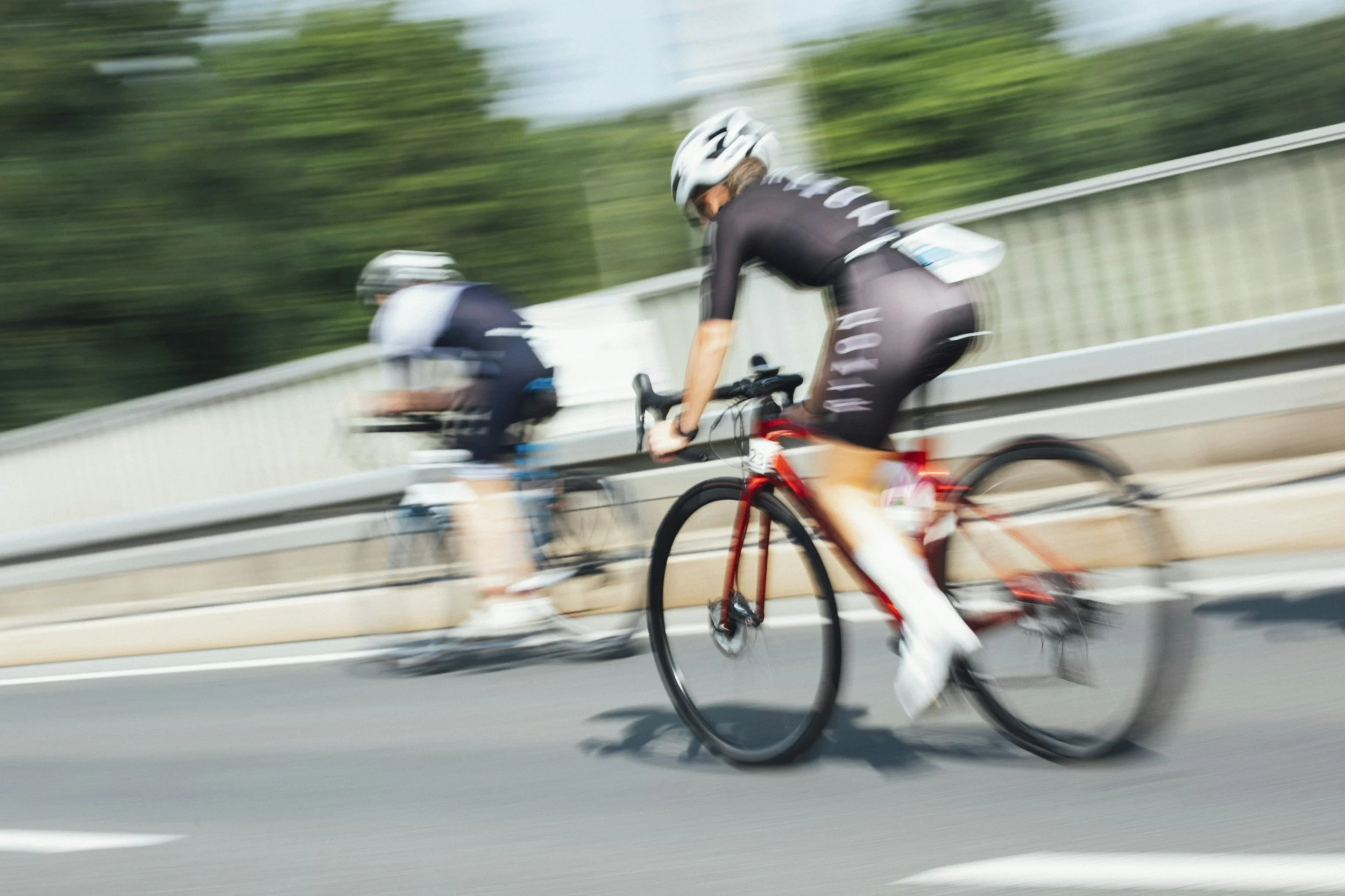
In this episode, IRONMAN Master Coach Matt Dixon discusses strategies for improving IRONMAN run performance, emphasizing the importance of training consistency, running economy, and strength training. He highlights the need for year-round consistency, especially during the off-season, and the significance of running economy, which he likens to miles per gallon for the body. Dixon also stresses the value of brick runs, which integrate running off the bike, and the strategic use of walk breaks during races. He advises against overtraining and instead advocates for a balanced approach that prioritizes being "fit and fresh" on race day. Dixon also touches on the importance of bike fitness and proper fueling and hydration strategies.
If you have any questions about the Purple Patch program, feel free to reach out at info@purplepatchfitness.com.
Episode Timecodes:
00:-1:27 Promo
1:56-4:37 Episode Intro
4:42-35:58 Part 1: Training
36:01-57:51 Part 2: The Bike
Purple Patch and Episode Resources
Hiring Purple Patch Coach: https://www.purplepatchfitness.com/careers-page
Fast Track Run Squad: purplepatchfitness.com/fasttrackmarathon
Check out our world-class coaching and training options:
Tri Squad: https://www.purplepatchfitness.com/squad
1:1 Coaching: https://www.purplepatchfitness.com/11-coached
Run Squad: https://www.purplepatchfitness/com/run-squad
Strength Squad: https://www.purplepatchfitness.com/strength-1
Live & On-Demand Bike Sessions: https://www.purplepatchfitness.com/bike
Get a free needs assessment and learn more about our programs: https://purplepatchfitness.simplybook.me/v2/#book/service/19
Live in San Francisco? Explore the Purple Patch Performance Center: https://center.purplepatchfitness.com
Everything you need to know about our methodology:
https://www.purplepatchfitness.com/our-methodology
Amplify your approach to nutrition with Purple Patch + Fuelin
https://www.fuelin.com/purplepatch
Get access to our free training resources, insight-packed newsletter and more at purplepatchfitness.com
Transcription
Matt Dixon 0:00
Greetings, everyone. We've got a cracking show today, but before we get going, I want to give you a little bit of a heads up. We've got two upcoming absolutely free webinars where I'm going to deep dive onto both Iron Man training and marathon training. Now, even if you don't consider yourself really time starved, but you're looking for a fresh insight on an approach of training that's going to unlock your potential. It's one that we've refined over the last 20 years. This is your chance. Come and join me on june 11. It's our faster, fresher, more fun racing an Ironman on 12 hours a week of training or less. Yes, you can do it, and you can be really successful, and you can achieve your goals on 12 hours or less. And then one week later, June the 18th, that's our fewer miles faster finish racing a marathon on under 35 miles a week. Once again, a proven approach to enable you to progressively build, start from your starting line, but absolutely smash your goals. More information, and all of the sign-up links are in the show notes. And, as always, you can email us directly, info@Purplepatch Fitness. We'll send you the sign-up and all of the links, and hope to see you live. Oh, and one more thing: make sure when you do come, bring your friends, and make sure you're armed with lots of questions, because we're going to leave space for you to ask any questions you want of me. Alright, enjoy the show, it's a cracker today. I'm Matt Dixon, and welcome to the Purple Patch Podcast. The mission of Purplepatch is to empower and educate every human being to reach their athletic potential through the lens of athletic potential. You reach your human potential.
Matt Dixon 1:40
The purpose of this podcast is to help time-starved people everywhere integrate sport into life. And welcome to the Purplepatch podcast, as ever. Your host, Matt Dixon, and today it's all about Iron Man. Yeah, it's in our DNA, isn't it? It's really how it all started. For all of you folks training for 70 point threes or full Iron Mans this year, we've got a cracker for you. You see, you train for months, you build fitness, you make all of the sacrifices, and for many of you, Iron Man, in many ways, sort of becomes a part of your identity during a training book, outside of work and family, it's what you're thinking about, it's always there, and you arrive at race day, all of those months of training locked into one singular day, and you've got a lot of excitement, and maybe a little bit of fear. Now you remind yourself you've done the work, you're the fittest that you've been, perhaps ever in your life. And then before you know
Matt Dixon 3:00
It,
Matt Dixon 3:00
you're doing what they call the Iron Man shuffle, the run becomes as much of a walk as anything else. You see, that is where most things go wrong for so many athletes. It's where races fall apart, athletes bonk, the legs stop working, sometimes it's the GIS system, sometimes it's total body shut down, and I want to be clear about something. The idea of you running across that finish line, actually thriving in the run, and not just surviving it, that's not just a cute marketing campaign, it's absolutely possible, and that's what we want to unpack today. How do you correlate all of the effort into meeting your potential and actually thriving in an Iron Man running through in many ways the most important part of the race today? We're going to dig in, and we're looking for three outcomes that we want you to leave today with. Number one, an understanding of the training framework to actually build run durability. Second, what some of the challenges are that cause bad Ironman run experiences, and by the way, it's not always what you think. And finally, an absolutely fresh approach on race day execution, so that you can actually enable your trained potential to transfer into race day performance. That's what we're doing in today's favorite part of the show, always the meat and potatoes. Let's do it. Meat and potatoes Iron Man run. That's what we're digging in. Of course, we're talking about the Iron Man run as an unlock to overall run performance, because the truth is many races come apart in the third discipline. You've already got a lot of accumulated fatigue. That's where the proof point is, and so we're going to dig in today. Now, it's important to note, we're going to break this down into sections, and I'm going to start with training as the overall umbrella. How do we unlock run potential via a smart approach to train when we start to dig into training for an Ironman run training for triathlon follows many of the same principles as run training for the marathon, but there are differences when you're actually training for an event that comes third in order of a discipline, a sport that is made up of not swim, bike, run, but is actually swim bike run. There's no coffee breaks. There's no massages. It is coming off the back of even an Iron Man, two and a half miles of swimming, and 112 miles of bike riding. And so there are differences compared to preparing for a standalone running race.
Matt Dixon 5:55
Now we're not going to get too much into that in this episode, but the key point of consideration, as it does relate to the Iron Man run, is one of the keys for unlocking a great Iron Man run is your year-round consistency, starting with off season every year, as it starts to go into September and October. You'll hear me preach about the biggest performance unlocks that occur for any athlete of any level is always a well executed off season, and that's really key, and that's the truth, because it enables you to set the stage and do all of the preparatory work when you're far away from the demands and needs of the more race specific training. Now we don't always look for obsession and hard work during that time, but it is critical in its foundational element, and so I can't talk about Ironman performance with at least tickling on the fact that off season is critical, but we're not going to talk about that today in depth, because I want to accelerate forward and talk more about the elements of training as it relates to the more race-specific block. In other words, where the vast majority of us are just about to go into, or into right now, right in the midst of our race builds, and so let's talk about training as it relates to preparing for an Ironman in the closing 1015 20 hours a week, or so. Now, in order to do this, we need to start with a very important principle around Ironman running performance, and that's your running economy. You can't talk about Ironman without mentioning running economy. Now, the easy way to think about this, if you're not used to terms like this, is to think about it as so far as the miles per gallon of your body. That's a nice way to think about it. So, we're using the metaphor of a car, an automobile, and we're saying, okay, it's not just the size of your engine, that would be your VO two max, but what is the actual miles per gallon that you get for your body? So, let's think about this. You've got two athletes, and you've got the same physiological capacity, so both athletes have VO two max, so the maximum ability of oxygen that they can update of around the same side, but one athlete gets 30 miles per gallon, the other athlete only gets 20 miles a gallon. In other words, they're less economical. Same effort, very different output over the course of 345, hours of running. The better economy that you have, the less it costs you at any operating level of running speed, so that's the first thing that we want to think about as it relates to training, because in Iron Man, quite often you're starting your run when you've already got fatigue accumulation, you've already got diminishing substrates available as you go through, you're not on a near empty tank, but you're definitely on a reduced tank, and that means that if you're burdened with poor economy, it means you're going to be burning more of that finite fuel that you have left in a faster rate than perhaps it needs to, and so if you have these two athletes, our case studies coming out of t2 getting off the bike together, same sort of fitness level by male 18. One of them is going to be holding full, the other one is going to be shuffling. The gap is quite often not central fitness, but it's economy. And so, how does that influence our thinking as it relates to training? Well, the magic word for this is the same magic word across performance in almost any arena in life. You want to hear it: consistency. Building your running economy is not a 12 week fix. And that's why we always disregard the thinking of how many weeks do I need to train for an Iron Man. Well, if you want to do it really, really well, you've got to train a lot of weeks. You don't need to be Iron Man specific, where you're dialing in focus and racing for the specific demands of the event, but you need a lot of months, even years, to build your running economy. It's a product of consistent high quality, every step being a good step over months, if not years. And so, when we think about building running economy, the magic word is consistency. It's your foundation showing up regularly, building high frequency running matters more than any single big workout, and this should inform all of our decision making.
Matt Dixon 10:53
We always hear athletes say, How far do I need to run in my long run? What type of intervals do I need to do? Well, all of that stuff is just the salt and pepper. There's a million different styles of intervals, whether it's higher speed, threshold, tempo, hill-based intervals, and there's different durations of mileage that athletes respond really well to. Some are lower mileage, some are higher mileage, some really require, for emotional reasons and mental confidence, a little bit of over distance, others just simply don't. But the thread that runs through every successful Ironman athlete is they build great running economy via high consistency over not weeks but months and months and months. Now, in the traditional running world, this is built through a big approach or focus on volume for economy, but for very busy athletes with various different demands that are taking on triathlon, three dis three different disciplines woven into one sport, you can't just chase big mileage the way that a pure standalone single discipline runner would, so how do we do it? Well, there's a few different things that you can focus on. The first is variance, running at a variety of pacings. Economy is actually race specific, and so you become economical at the paces you actually train at, which means that you need to do some running faster than Ironman pace, not just slow, easy conversational miles. Yes, zone two has a big element, and I know that you've read it on the media, and it's supposed to be the new frontier of training, even though it's been around since the start of time, and some foundational running, and some very, very easy running is good, but some over speed running is really valuable, and in fact, you are more economical the higher running speed you run at, and so doing some high speed running is really valuable. The second piece of value is a focus when you're running on form and posture, standing tall and really making sure that you're not taking any bad steps, and so this isn't about looking great, it's about removing energy leaks. Every sloppy stride that you take is a tax, and it's a micro tax that you pay for 10,000 times over a marathon that accumulates to a heavy burden, and so if you can remain calm and committed to taking good steps in your running. You're going to build your economy in a more economical way. Now we're going to talk about walk breaks later, but this is one of the tools, the reasons that walk breaks in training is so valuable, because they give you emotional and practical breaks without the dilution of the impact, the benefit of cardiovascular conditioning and muscular skeletal conditioning, but you're doing it with good running stride, and so posture and form is critical. We have a saying, whatever the version is to you, an elite runner looks and is more economical than a newcomer, but relative to yourself, don't take any back steps, and so just before you start to decline, take a short break, reset, run again.
Matt Dixon 14:34
There's an old Purple Patch saying, run as well as you can for as long as you can, as often as you can, and that's the unlock a great route as a catalyst for economy. Strides are really important. These are short, controlled accelerations after easy runs, and all they're doing there is simply firing the dialog between brain and muscle. Are teaching your neuromuscular system to fire efficiently without actually adding meaningful fatigue. These are hugely underused by the zone two crowd or the age group triathletes, but every elite crow quite often will finish an easy run, six by 10 seconds, lots of recovery, we're not building fitter, stronger, faster, we're firing economy, and of course, the bike, you can get away with lower total volume or mileage on the run if your bike training is ideal, a well-trained aerobic system, your cardiovascular system from cycling reduces the physiological cost of running. You arrive at the bike more metabolically efficient, and so in many ways, when we think about these interrelated sports, being swim fit is really valuable, being robust on the bike is the gateway to release whatever level of running economy you have, so let's not forget that the running economy is a booster. Now all of this is dwarfed in value for our next training principle that has a direct impact on your running economy, but also has a broader impact on your Iron Man running performance, and so I give it its own category. Here we bleed out of economy into the next principle of training, strength training. Absolutely critical. When I first started coaching professional athletes, and I was determined to do things different, not because I wanted to do it different for different sake, but because I felt like there was a better way, and at that time, in the early to mid 2000s there really was no elite endurance athlete that really committed to year-round strength training, Purple Patch athletes were different. It was a non-negotiable of mine.
Matt Dixon 17:05
As a coach, if you wanted to be coach by me as a professional athlete, you had to a year to hit year round strength, and it wasn't about injury prevention, it was about performance evolution, and a big part of that was strength training, we understood, was a huge catalyst of running economy. It is absolutely huge, and so let's talk about strength as it relates to the Ironman run. Stronger muscles absorb and return energy better through each foot strike. That's a really important component. I'm going to repeat that when you are stronger, you get greater absorption and rebound energy through every foot strike. And research backs this up, that strength training can improve your running economy by somewhere around 10% That is a huge performance catalyst, and so if you're a very busy athlete that doesn't have countless hours to train, you can't do 60 miles a week. Strength training is one of your highest ROIs in training you can do. In fact, for many athletes, particularly as we start to mature in age, or if we're a woman, strength training, I would say, is the bullseye of your training, and I'm saying this as an endurance coach, it's the bullseye we wrap the endurance around this, and a big part of it is your running economy. Look, think about it. You are going through a non-weight bearing sport, swimming 90% of your weight is displaced, into an only partially weight bearing sport, mostly not cycling, so that's creating muscular fatigue, cardiovascular fatigue, and then you get onto an Ironman marathon, which is weight bearing and high impact multiple times your body weight going into the ground every time on already energy depleted legs, and so it just makes logical sense, and all of the research backs it up that structural strength is going to be a determinant, or whether your form and posture is able to hold or it collapses, and so the Iron Man shuffle, as we call
Matt Dixon 19:30
It,
Matt Dixon 19:30
very low short stride length walking, almost is a part of the overall fatigue story, when basically your glutes, your hamstrings, your springs at the bottom, under the knee, calf, achilles, etc. They give out everything. Follows you start to run more like a noodle. You sag, the head drops, the shoulder drops, your stride length loses the pop. It's not. Just the engine, it's the musculocellatil structure, it's your chassis, and so it's a key component of keeping running well. Strength training also is a huge component in reducing the risk of cramp. Now, cramping is a multifaceted challenge, and there is more systemic cramps, biochemical, if you want to call it that. There's more muscular reducing, or issues of cramps. Strength training is a catalyst to help the second of those. Traditional cramping was always thought to be just a result of dehydration and electrolyte balance, but a lot of research shows that yes, there is a role of that, but there's also a lot of research pointing to neuromuscular fatigue, that's another course of exercise associated cramping, and this makes sense, where it's not just systemic, you feel it systemic if you're running and your biceps cramp. Okay, that's probably systemic, but if your quads and your hamstrings and your calves start cramping in running, it's probably associated with exercise associated, and when muscles reach a certain level of fatigue, the nervous system loses its normal braking mechanism. The muscle fires uncontrollable, and there it is, ladies and gentlemen, that's your cramp. And so, when you develop muscles that are stronger and more fatigue resistant, remember the title durability here, it raises that threshold, your muscles are less prone to cramping. Strength training is one of the most direct things that you can do to reduce cramp risk in the back half of an nine man run, and so we've got now the pursuit of driving on economy, a little bit of over speed work, strides, high consistency. It's going to get there before you even think about race-specific work. We've got strength training. We also need to get really, really specific. We need to do what is commonly referred to as brick runs. They're really important if you are going to run off the bike, well, you better get really useful to familiar and allow the body to get used to running off the bike. It is the sport, and it's a skill, and like any skill, it needs to be trained deliberately and progressively across the season early in your training cycle, we leverage brick runs just to integrate running frequency with really not much purpose in them. It's just a way to sneak more running into the program. Short, frequent runs, 10 or 15 minutes after a bike, 15 to 20 minutes after strength, even a little 20 3040 minutes after a swimming session. This is a way to infuse more running in the program without it being a standalone session, but as we start to get more race specific this time of the year, at the time of recording, wow, now we need to put some purpose behind this skill, running off the bike as quickly as we can, simulating what you are going to face on race day. I can't tell you how many athletes leave race performance on the table because they just do really smooth, easy, short brick runs off the bike look at Purple Patch.
Matt Dixon 23:44
We do a ton of running off the bike. We like to do short ones, we like to do some longer ones, particularly at this time of the year. But here's the important part: actually integrating some more demanding run sessions off the bike, so that you can get pre-fatigued and force the body to hit high-quality running after some very real honest bike works. This is driving and forcing adaptations that stand-alone running just really doesn't afford. You're training the body, and perhaps just as importantly, your mind to perform when it's already compromised, and you're learning how to run with good form, with good posture, at good speed under fatigue. That's why we talk about, can you develop form under fatigue? Because that's what training is, and so if it's a skill, you better get used to it. It doesn't feel good, but as you become more familiar, you get better at it. It's really key. It's also a wonderful time to start to manage and build this sense of inner animal to develop awareness around your race pace. When you're fatigued, if you only ever run easy off the bike, or if you take a 15 or 20 minute gap, and then go out for a trot, you're never going to be able to develop the ability to find race space when you're fatigued, and so force it, integrate it into your training with purpose, it's really, really valuable. We call it quite a lot activation runs. Use that time intentionally, because it's a treasured moment. Give yourself a couple of minutes to settle, and then build your leg speed, and work on doing some over speed work that drives on to hit at, or most importantly, above your race pace, and practice it, practice it, practice it. To give you some really concrete examples, I'm going to give you a couple of run sessions that we might do off of the bike. The first is more pure activation, two or three minutes of easy running, and then 10 repetitions, where we go 20 seconds very fast, 40 seconds easy, and you're settling in to waking up the body and forcing engagement with good posture. Then we might just run 10 minutes at race effort, and that's not particularly hard at an Ironman, but you're doing it with race form, so that overall is just a 25 minute run. We might also, on a simulated day, do something pretty different. We might have you ramp up over five minutes, then we settle in at five minutes above race effort, just to train the body and brain to get into run cycles, and then we might go three intervals of 810, 12 minutes, just above your race goal effort, two to three minutes between each. Settle in. Now that's more of a simulator. Now we're getting up to 60 minutes of running off the bike, typically reserved for the weekend, typically coming off of a pretty demanding bike, and that's a great time to practice both full month of fatigue, but also, of course, fueling under fatigue, really, really valuable. Now, I can't talk about training as it relates to Iron Man run specific training without talking about the long run. Oh, ladies and gentlemen, the long run. This is going to be the platform that everything is built on. It has to be. If I'm going to do a marathon off the bike, I need to know that I can do a marathon off the bike. It's a non-negotiable, well, kind of. It's true. Some long running is really valuable for the Iron Man run preparation, but I would urge caution on this caution in the belief that you think it's the game changer. It's not caution in the belief that you have to run close to the marathon if you're going to be ready.
Matt Dixon 28:06
The instinct is just to go long, very long. Athletes see marathon training plans with 2020-two, mile long runs, and they think I've got to replicate this in an IMAT, but there's a different reality here. You are not a standalone marathon runner, you're a triathlete, and the bike is already giving you significant cardiovascular conditioning that a pure runner is aiming to get from that running volume, and that changes the equation. Look, the long run for a triathlete, it's just about building run durability, maybe a bit of confidence, also a bit of a testing and proving ground for your fueling and night new and nutrition, but it's not about simulating the full marathon training, we've had athletes win the Hawaii Iron Mountain World Championship on a long run that was no longer than 12 miles in the whole of their preparation. We've had others that need to go 20, but the truth is, whatever it is for you, don't build it around a session that you think has higher importance than the rest of your program, it doesn't. It's just one session, and in fact, when we're building Ironman programs for athletes, going back to the eight years of building Ironman champions as age groupers as pros all the way up, we would typically have an athlete run long, and I'm going to designate that is longer than 90 minutes, no more than about every third week. Between then we might do some double runs on days, we might cluster runs over three days to accumulate some over distance running, but the standalone wrong. It's just another session. It's just giving you an athlete a little bit of familiarity of going that long, working out their cadence of walk breaks, and able to simulate a little bit of fueling and hydration. Beyond that, it's really about a little bit of personal preference. How does your body actually handle that, because just remember one thing: if you start to go longer than two hours in your running, it's going to come at a consequence of subsequent days of training, and so if you believe that that long run is critical, you better be willing to negotiate and barter the following two to three days of training to give yourself proper recovery, so that you don't accumulate long-term fatigue, versus doing more frequent training of high quality with bigger bounce back that maybe 90 minutes to two hours is great, and you do many, many few less long runs over the course of the block. If you had to ask me, and I don't have the data, but if you had to ask me, what's the average longest run that a Purple Patch athlete would do in preparation for their IRONMAN? And remember, we've qualified more than 2000 athletes to world championship events.
Matt Dixon 31:23
When I tell you this, we've had multiple age group Ironman world champions. We've had countless athletes that have won Ironmans all over the globe. What's the average long run mileage of their peak? It's probably somewhere between 14 and 17 miles, very, very few go above 18. Some of them do it for emotional reasons. We enabled them. Others are just higher volume athletes, but none of them do it through fear, and that's the catalyst. My final note on training as it relates to this is something that looks great on a T-shirt, but has real depth and meaning to every athlete that's ever mentioned it, fit and fresh. This is the catalyst of how Purplepatch began, because I lived an experience as an athlete where I was extremely fit. In fact, I was faff. Yep, I was. It's a very scientific phrase. I was faff. Do you know what faff is? Now I want to precursor this. When I curse, it kind of sounds like poetry, because I've got that English accent, but faff is a scientific phrase, fit as fuck, that's what it means, and that's what I was as a professional athlete, but paired with that I was fatigued, fit and fatigued, and when my career ended in ashes, I looked around and I saw many people that were underperforming, despite sometimes great talent and a massive amount of effort, and I saw that the common challenge is these athletes were showing up just as I did into races fit and fatigued, and instead the unlock is when you can show up fit and fresh. This is probably the most important thing I'm going to say in this episode, most athletes don't fail because they lack fitness. They fail because they arrive at race day too tired to express that fitness. Fit and fresh, it has a key driver, and the run is the difference where it most brutally shows up the instinct before you come to race day, and you start to feel that start line coming to you. The natural instinct, do more one more big brick, one more long run. I need to feel ready. Goodness me, let me tell you a story on this fit and fatigue is so common. We recently received a question from an athlete that had repeated GI distress in their run struggles, and they reached out and they were looking for advice. It's great, and they said, This is my approach. Here's what I do with training. Here's what I'm doing with nutrition. I need to unlock my nutrition, because every single Ironman race, my stomach shuts down. I must be doing something wrong. And we looked at their nutrition, and it wasn't a bad approach at all. But then we looked at their training, and they mentioned some of their favorite simulators, as they called them. One of the repeated sessions that we saw was simulators to help quote test their fueling, and the training session was a three kilometer swim, so about two thirds of an Iron Man into 180 kilometers of bike riding. Yes, that's 112 miles into 30 kilometers, give or take, about. 1820, miles of running. Guess what, that's almost an iron man itself. And they did that 234, times every last few months going into a race. This athlete's issue wasn't fueling nutrition, hydration, it's fatigue creep, and so whatever approach you take in your training, let me promise you this, and it's healthy promise. It's better to be slightly undercooked and have the courage to have recovered and show up really fit, but fresh and vibrant with vitality than it is to try and squeeze sneaking the final component of training, so that's our training block, but let's go beyond the running section two. I want to dig into the bike. Hang on, this show is about running. Why would I talk about the bike? Well, here's the dirty truth. Your running is largely determined before you even take a single step. In other words, you can get out of t2 start your marathon, and be completely done because of what you have done before. We see it all the time, fatigue accumulated. You don't have a chance to even showcase all of your hard run and even your natural potential and talent ability on the run. So often Ironman run challenges are the byproduct of Ironman bike problems. That's the truth. It could be because of a lack of bike fitness. In other words, you haven't emphasized it properly. It can be an impact of poor fuelling and hydration on the bike, and of course, it's some rather ambitious pacing. If you want to unlock great running performance, you better get really robust on the bike. It is the central governor of Iron Man performance. It's critical. The stronger you can be, strong like bull, as we like to say, on the bike, the lower physiological cost of the riding.
Matt Dixon 37:17
There's no sugar coating it. 112 miles, 180 kilometers of bike riding. It's a long way, and so you need to be bike ready. A very well-trained cyclist into 2t two has far more left in the tank than an under-trained run who's trying to just go easy and spending him longer on the bike ride. You need to bring yourself up that you can ride with purpose and discipline, and get off the bike and still run, and that comes with a central focus on the bike. The bike is where you either protect or destroy your run. Make no mistake about it. You need to build bike fitness beyond general cardiovascular conditioning, because ultimately it's your ability to sustain sub-threshold effort for 4567 hours in a position that's a little bit funky. Let's face it, time trial position. This is a very specific adaptation. and if you ride in an inefficient, uncomfortable, untrained position, the cost is enormous over all of those hours, and it leads athletes with not just cardiovascular fatigue and poor substrate availability, but also highly compromised running mechanics, because you've been crouched over in this position you're not used to, and you have no durability, and you try and stand up, open up the shoulders, open up the flicks, the hip flexors, and before you know it, goodness me, I'm suddenly running, and if you've stood on the sideline of any Ironman run, you see it, the head stooped, the back arched, the hips tucked under, shuffling along. It's a byproduct of a lack of bike readiness, and so locking to getting the right position for you that you can sustain with the right posture on that bike that you get very, very comfortable. You also need to become an artist of the bike. It's not just about building muscular durability and cardiovascular conditioning, it's about understanding how to ride the bike, terrain management. We've had whole sessions, whole podcast shows dedicated to terrain management, but let me tell you, it's not just about speed return on the bike, it's also about the impact on the run. If you ride your bike in too big of a gear. A big slow cadence for too long, it's something very challenging to run with good spring in the steps, but conversely, if you sit at high cadence spinning your legs and trying to save my legs for the run, the neurological distress and fatigue is huge. In general, Iron Man riding tends to steer more towards athletes drifting lower on cadence, but lower is not better. The biggest thing is using a range of leg speed over the course of terrain to get bigger speed return, while also ensuring that you're unlocking the dearth of run performance, which is a lack of variance, and so build, build, build variance into your riding, and of course, finally, fuelling on the bike. What you take on the bike directly fuels what your legs are going to have on the run, and this is fueling and hydration. Most people know this, but the key is that fueling on the bike is not really just about getting you through the bike really well. It's actually about ensuring that you get to the end of the bike with enough substrates to fuel your run when it's more challenging to take in calories. The second part of it is hydration. When you're going through multiple hours of bike riding, you will get dehydrated. The goal isn't to keep full hydration status, it's to ensure that you get off the bike with no more than about 1% dehydration of your body weight, and if you do that, then you can get suitably dehydrated on the run without it compromising performance, and so the bike is the place that we want to lock in proper fueling, proper hydration to set yourself up with your run ability, and so ultimately when you have athletes that finish a race in frustration, it hasn't gone well.
Matt Dixon 42:06
It's collapsed on the run, you know. The first place we look: bike, bike preparation, bike skill set, bike fit and posture, bike pacing, and bike fueling and hydration. It's typically the first place that we look now, the last thing I will say on the bike is pacing, because we always get this question, and this is a tricky one, as we're speaking to a broader audience, this is more challenging to me, and there are only explain why there are lots of nice charts out there talking about your relative percentage of FTP that you should be able to hold in an Iron Man, but let me tell you, there is a vast difference pacing approach depending on your experience of athlete at the top of the sport, the elite pros, these men and women, they are seriously racing an Ironman. Seriously, it's a race that is actually consuming much less time than us mere mortals, seven and a half to nine hours, and in that race there isn't an easy moment. They're pushing relative to their functional threshold, their maximal steady state. They're sitting at a relatively high percentage of it, and guess what, to get to this point of privilege that they're able to operate at that level, they have years typically of development, and they've been building the muscular and cardiovascular resilience and capacity to do just this, and so, therefore, they're able to operate at a vastly different level than us, the typical amateurs, but realize something else important as well. Central to IMM performance is a concept of durability, no matter what your power or speed potential, it's just a simple fact that when you're fresh and new to this distance, it's going to take a little bit of time to build durability to perform in IMET. So, what I mean by that is, let's not just think about the faster you are, the higher percentage of your operating threshold that you're able to hold. Is it going to be that's not just the case, because as you go down the level, someone that's been in the sport repeatedly training for and doing Ironman racing for 789 10 years is going to nudge their operating level higher than a brand new athlete to the sport. In fact, the reason, or I would say, what we can take away from this concept is when we have a newer athlete coming into Ironman, I'm going to share their mental main mindset and their framework for building success in their first Iron Man. It doesn't matter. Her, whether they're a professional athlete who is performing at a high, high level at the Olympic distance and half Ironman level, or they're a newcomer to the sport, this is the same advice. If you don't have the years of durability, the smart racing approach to an Ironman is go and train all day.
Matt Dixon 45:24
In other words, when you refuse to race and instead you train, the racing result is typically better. It's only after the physiological and emotional wisdom of going through the Ironman journey multiple times that then we can take a more aggressive approach, and so, if you're slightly newer to the sport, or if you're newer to Iron Man Racing, train all day. It takes a lot of courage to hold back, but it's way better to be chasing your best self than it is running away from your best self with half a marathon to go, and so for all of the nuances of race pacing in today's show, we're not going to dig into the pacing specifics, but I will just say train all day, for the vast majority of us that's the key. Alrighty, so we've talked about some training principles to fuel your run performance. We've discussed the bike. Now I'm going to dig into just simply nailing the run. Okay, and so how should we actually lock in and talk about running well off the bike? It's race day. You've got a let's set the stage on this, you've got to get off that t2 go through, sit there, gather yourself for a minute, and think 42 kilometers, 26.2 miles, goodness me, this can be a long way, guess what, set the tone, you see, a great run starts with how you exit t2 into your first aid station. The first thing I would encourage you to do is remove yourself from fixating on pace from the start. Instead, say pace comes behind form and posture, you're looking over the course of the first mile or so, where things are going to feel awkward. Your legs are going to feel like they're six feet under the ground. Luckily, your body feels like it's six feet over, and you need to connect these things, and so stand tall. Number one, number two, shake the shoulders out, or as I like to say, shaking the shoulders. Just shake them out and get to good arm speed. And over the first mile, don't over stress on heart rate, don't over stress on pace, don't even look at it, look to unlock rhythm, because as you allow yourself a little bit of time, 510, 15 minutes, and you're looking to find form and posture and good rhythm, then your natural pace is going to come out of it. And remember this: your leg speed is the number one predictor of race performance, and if you want to unlock leg speed, in other words, good springy running, where your hips aren't sinking into the ground, and you're spending too long on the ground, dropping running economy. It starts with the run speed, so focus on tap, tap, tap, tap, tap, your elbows just knocking back, supple shoulders, shake them out and get the arm speed, find your rhythm, don't overcook it, and also then quiet your might, stay focused, and you know what you do, then you hit aid station number one, and what am I going to tell you to do right then?
Matt Dixon 48:59
Aid station number one, I'm gonna tell you to walk, walk, walk, that's a sign of weakness. No, it's not. It's a strategy for you to go faster. You're gonna hit eight station number one, and you're gonna walk really quickly. You see, our challenge is an optimization challenge, and for the vast majority of athletes, not every single athlete, but the vast majority, the run in Iron Man is about reducing and preventing mechanical fatigue, and so we have an optimization challenge. You got to be tough, but it's not just a toughness challenge. Strategic walk breaks are going to help you just as like it is in training to take good running steps as much as you can for as long as you can, and so this is not just for back of the pack runners. Let me tell you this. Just last year, Jenna, our athlete, I man, can. California. She's in her mid 40s. She won her age group. She was the second female overall in that race. She ran a 328 marathon, pretty good for 45 years of age. Guess what? She walked every single aid station, every single aid station. That's not bad, James. 926 a 20 minute PR on the run, 339 off the bike, every single aid station. Matt Liaodo, back in the day, Purplepatch Pro, third at Iron Man Canada. You might know him from the commentary, but he was a really good athlete, sub three hours for him, swimmer biker, a huge unlock, third in the race, 256 marathon, walked every single aid station. These are just three examples of hundreds. This is the key thing about walking, you want to be strategic and not reactive. It doesn't work if you wait until you're desperate. You need to bravely do it in a proactive strategic manner, run, walk before you need to, and you integrate your walk breaks generally at aid stations, but then layer it in the more nuance around terrain. In other words, it's a great opportunity to walk when the speed penalty is less, going up a grade. And then a simple rule: never, ever, ever walk going downhill. Layer it on. The good news is it doesn't need to be long to be effective. 10 seconds, 15 seconds, going through an aid station. Make sure you get hydration, make sure you get your fueling. Reset the mine, taking a big problem 26 miles into shorter, more sustainable projects. Reset it one mile to the next one. Boom, boom, boom. It is absolutely key. All right, let's talk about pacing very quickly. Look, Iron Man is long, dynamic, complex. You can't approach an Ironman race like a lab test. Fix numbers without context are dangerous. They're going to limit your performance, and so every athlete that I coach leverages power, heart rate, pace. They're valuable guides, but they're terrible dictators. The best athletes use them as guard rails, not handcuffs. Conditions change everything: heat, wind, terrain, hydration status, fueling nervous energy, accumulated fatigue, even your emotional state, your body that you had, and the mind that you had at mile 80 is very, very different than it was at the start line, and at mile 18 of the run. Goodness me, it represents nothing compared to what you were before you started. And so, when you think about pacing, it's not robotic, it's not just ingredients into a recipe, it's responsive. You've got to constantly interpret what's the cost of this effort now, and yet metrics are good. Understand your ranges, have ceilings, know what a suitable heart rate or power or pace might look like, but don't use it as a cage. The goal for any athlete is not, and I want to repeat this, not and never is to hold a number. The goal is to maximize your sustainable output on the day relative to the conditions, and just what happens, because we're going long enough here that, depending on what your day brings, there's going to be flex to this number. I have never had, in 20 years of coaching an athlete who blindly locks into a fixed power or pace unlock their best race day performance.
Matt Dixon 54:10
Every single athlete that's had a personal breakthrough, from winning the race to crossing the finish line for the first time to having a huge personal performance, it always involves deep, deep self management and adjustment, constant engagement on the aspects that you can control, and so, yeah, blend your personal external metrics with internal awareness. It's what we call the inner animal, your externals, pace, power, heart rate, which is a measure of your internal cost on a screen, internal, your breathing, your muscular tension, your posture, your emotional state and control, mental clarity and focus, your gut stability, your perceived exertion, pacing. Is a skill, and just like any skill, as we keep talking about, it needs to be trained. One of the biggest differentiators in long course racing is developing that pacing, and this is partnered with what I talked about before, train all day, because I tell you, what, it's a long freaking day out there, and the best Ironman races are patient, not rigid, but instead highly aware, highly disciplined, controlled, and adaptable, and guess what, if you get to mile 20 and you think, why did I listen to that Matt Dixon, I feel great, fantastic. Go and run your PR for the last 10k of that race. Great, and then build on it next time. It's really, really key. I know you really want to know the perceived effort. Great. All right, on the run, I would say the first 10 k6, miles or so, you're probably running at about a six out of 10 effort from mile six to 16. If you're feeling great, push it a little bit, you're moving to a seven or eight out of 10, and after that, whatever you have, 16 miles onwards, very, very different pacing than a standalone half marathon. If anyone tells you to negative split it in pacing, they don't understand what they're talking about. This is running off the bike. It is not a marathon. The first half will not quote feel easy. It's a higher perceived effort over the course of an Ironman marathon than it is for a marathon, and you know what the challenge is, it's mostly muscular fatigue. All right, folks, that is the unlock, that is what we're talked about. We're going to dig in and talk more about the IRONMAN performance as it relates to run, as we dig into the second part of this, but for right now we've covered a lot. There's still a lot more, and this is nuanced and personal.
Matt Dixon 57:05
So, if you have any questions around this episode or your own running performance in Iron Man, and you want to chat to one of our coaches, we're going to give you that opportunity. All you need to do is email info@purplepatchfittance.com and we'd be happy to dig into your run performance, whether you're an Olympic distance, half Ironman, or, of course, the theme of today's show, Ironman run performance. You can also chat to us more strategically about your performance and your race. Just set up a strategy call or click the link in the show notes. And remember, Ironman webinar june 11. If you want to get involved, click on the link in the show notes, or reach out to us, info@purplepatchfootness.com and we'd be delighted to set you up for great success. All right, team, that was a good fun one. We'll see you next time. Take care, guys. Thanks so much for joining, and thank you for listening. I hope that you enjoyed the new format. You can never miss an episode by simply subscribing. Head to the Purple Patch channel of YouTube, and you will find it there, and you could subscribe. Of course, I'd like to ask you if you will subscribe. Also, share it with your friends, and it's really helpful if you leave a nice positive review in the comments. Now, any questions that you have, let me know. Feel free to add a comment, and I will try my best to respond and support you on your performance journey. And, in fact, as we commence this video podcast experience, if you have any feedback at all, as mentioned earlier in the show, we would love your help in helping us to improve. Simply email us at info@purplepatchfitness.com or leave it in the comments of the show at the Purplepatch page, and we will get you dialed in. We'd love constructive feedback. We are in a growth mindset, as we like to call it, and so feel free to share with your friends, but as I said, let's build this together. Let's make it something special. It's really fun. We're really trying hard to make it a special experience, and we want to welcome you into the Purple Patch community. With that, I hope you have a great week, stay healthy, have fun, keep smiling, doing whatever you do.
SUMMARY KEYWORDS
Ironman training, marathon training, running economy, strength training, brick runs, race day execution, walk breaks, pacing strategy, bike fitness, fueling and hydration, off-season consistency, high-frequency running, over-speed work, posture and form, inner animal.