
390 - The Way Of Excellence With Brad Stulberg
Follow the Purple Patch Podcast at:
APPLE PODCASTS - SPOTIFY- AMAZON MUSIC - GOOGLE PODCASTS - YOUTUBE
Welcome to the Purple Patch Podcast!
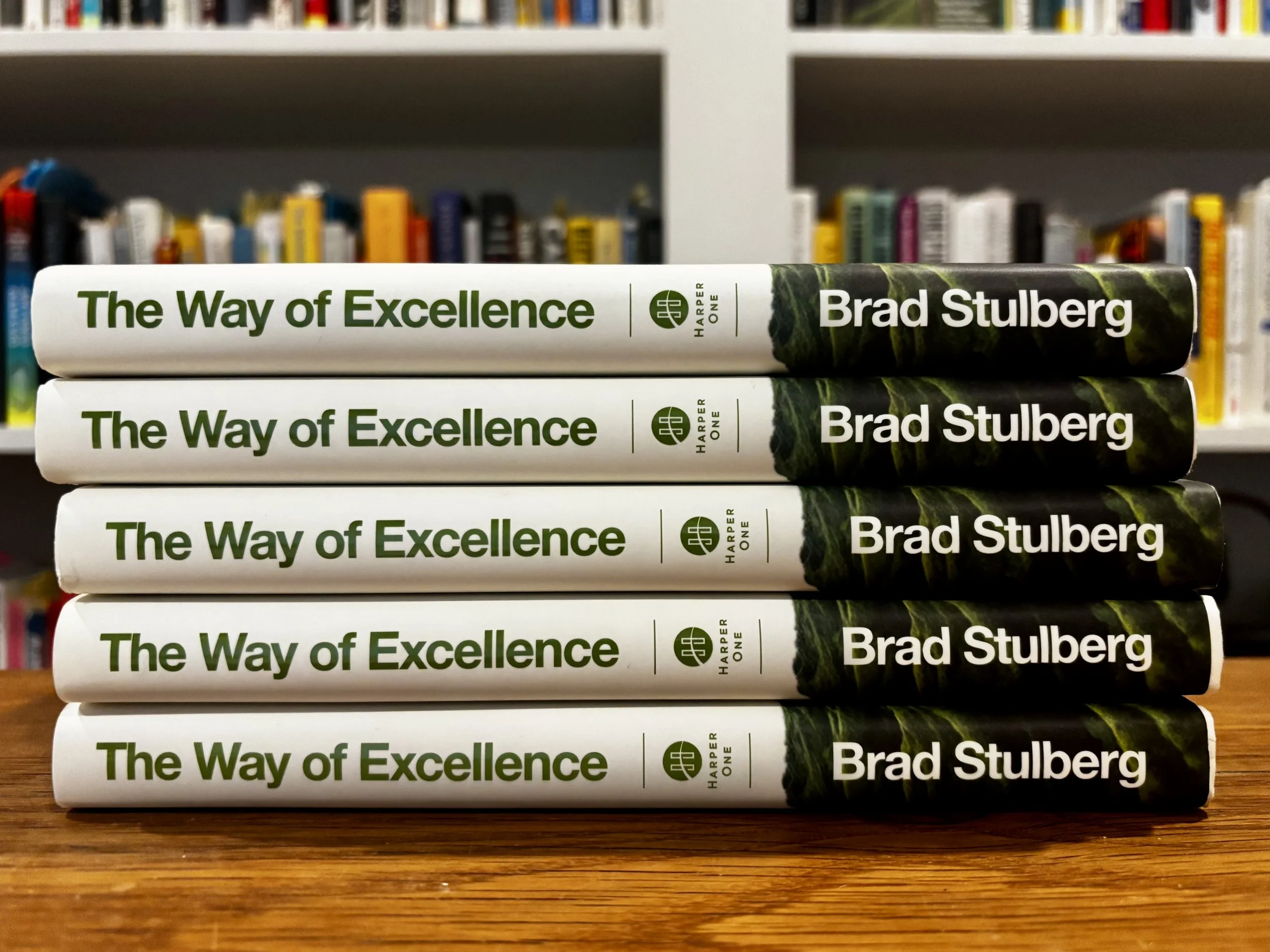
In this episode, IRONMAN Master Coach Matt Dixon and Brad Stulberg discuss the concept of excellence, emphasizing it as a practice rather than an outcome. Brad's latest book, "The Way of Excellence," explores this idea, highlighting the importance of consistency, integrity, and alignment with values. They discuss the role of routines and stability in managing stress and maintaining performance. Brad shares insights from high-performing athletes and leaders, stressing the need for a balanced identity house with multiple areas of focus. They also touch on the impact of technology and metrics in performance, advocating for a balanced approach that values both process and outcome.
If you have any questions about the Purple Patch program, feel free to reach out at info@purplepatchfitness.com.
Episode Timecodes:
Episode Timecodes:
:00-1:26 Episode Promo
1:51-4:05 Intro
4:10-end
Purple Patch and Episode Resources
Brad Stulberg’s Book:
The Way of Excellence is currently 23% off here: https://www.amazon.com/Way-Excellence-Greatness-Satisfaction-Chaotic/dp/0063385945
Fast Track Run Squad: purplepatchfitness.com/fasttrackmarathon
Check out our world-class coaching and training options:
Tri Squad: https://www.purplepatchfitness.com/squad
1:1 Coaching: https://www.purplepatchfitness.com/11-coached
Run Squad: https://www.purplepatchfitness/com/run-squad
Strength Squad: https://www.purplepatchfitness.com/strength-1
Live & On-Demand Bike Sessions: https://www.purplepatchfitness.com/bike
Explore our training options in detail: https://bit.ly/3XBo1Pi
Live in San Francisco? Explore the Purple Patch Performance Center: https://center.purplepatchfitness.com
Everything you need to know about our methodology:
https://www.purplepatchfitness.com/our-methodology
Amplify your approach to nutrition with Purple Patch + Fuelin
https://www.fuelin.com/purplepatch
Get access to our free training resources, insight-packed newsletter and more at purplepatchfitness.com
Transcription
Matt Dixon 00:00
The theme of today's show is excellence, and really that's what purple patch is really all about. It's about trying to help people get the most out of themselves, whether it's working with an athlete, working with a busy, time-starved executive or leadership teams and extended teams within organizations. We love that word excellence. I get to invite a special guest today, someone that I've known for almost 15 years, Brad storberg, and we're going to unpack some of the insights in his book, The Way of excellence. But as you listen to today's show, if you'd like to further the conversation with purple patch, whether you're interested in one of our squad programs to get ready for a running event or a triathlon event, making sure that you go on your journey of excellence without sacrificing the broader aspects of life, as well as, of course, your health. Then feel free to reach out for a complementary needs assessment. It's a pressure free call where we want to help you set the vision, the guide and the roadmap, and if that means that a part of purple patch programming is suitable for you. We'll get you on to the right program. And if you're listening as a leader, we reference in today's conversation wind cycle our leadership program quite a bit. If you'd like to learn more about that for your team and your organization, reach out to the same address, info@purplepatchfitness.com. I would love to have a conversation with you about that. All right, without further ado, enjoy the show. I'm Matt Dixon, and welcome to the purple patch podcast. The mission of purple patch is to empower and educate every human being to reach their athletic potential. Through the lens of athletic potential, you reach your human potential. The purpose of this podcast is to help time-starved people everywhere in a great sport into life.
Matt Dixon 01:52
And welcome to the purple patch podcast, as ever, your host, Matt Dixon and today, this is a conversation that I've been waiting for weeks to have I'm incredibly excited I get to welcome back for, I think, the third time on the purple patch podcast. Brad Stolberg, if you don't know Brad, he's a best selling author. He's a performance coach, and he's a writer on performance well being and sustainable excellence. He explores how people can pursue meaningful values aligned growth and satisfaction without falling into that old trap of burnout and superficial achievement. It is so parallel to purple patch, it's unbelievable. And my old journey, and in fact, Brad and I have known each other for almost 15 years. His first book that he co authored with Steve Magnus, which you regular listeners will know, has been on the show a couple of times as well, was labeled peak performance. And guess what? I was a part of that book. I was interviewed for that book focused around something that was very dear to my heart, and still is recovery as a fuel of greater, sustained high performance. Well, Brad has recently released a New York Times best selling book, The Way of excellence, a guide to true greatness and deep satisfaction in a chaotic world. It is an absolutely fantastic read. We're going to link all of his books, and of course, the way of excellence in the show notes today. I really recommend you listen to it. But quite simply, this conversation with Brad is about a single word, excellence. We dig in, we explore, we make sure that we shine the light on our athletic listeners that are chasing high performance and excellence in their own journeys. And we also think about leadership, business and performance in broader life as well. It's a fantastic conversation. Someone that is so eloquent, a true craftsman, an expert in their domain field, and someone that's gone on an own journey for themselves to drive their own meaning and performance across all aspects of life. I think you're going to absolutely love it. Enjoy the show. It is time for the meat and potatoes. I give you Brad Stolberg.
Matt Dixon 04:11
All right, yes, it is the meat and potatoes and Goodness me. As I said in introduction, what a cracker we have today. He needs no introduction. I'm I'm actually honored to have you come back to the show. Mr. Brad starberg, welcome back, Matt.
Brad Stulberg 04:28
It is a pleasure to be back. Thank you. It's
Matt Dixon 04:31
a it's been quite a while since. I can't remember when we did our last coaches discussion, as we called it, back in that time. But I want to start off, you're now a New York Times best selling author the way of excellence. What a journey you've gone on. And just congratulations,
Brad Stulberg 04:50
thank you. As I was saying offline, I feel really fortunate because, you know, sometimes the chips fall in the right direction, other times they don't, and this time around, they fell in the right. So I'm thrilled for it.
Matt Dixon 05:03
You build a body of work like that, and it goes through and then suddenly it's the day of release. And there is a parallel to sports performance. It's the beauty of the jeopardy of it all, isn't it? So yeah, that's 100% right? It's pretty magical. But this conversation is, is really meaningful to me, because for many of the listeners won't know this, but we met more than 15 years ago and and you were actually based, you based in Asheville, North Carolina. Now you're, you're based in the Bay Area. At the time, you were a pretty young writer Outside Magazine, and myself, I was, I was deep in a relatively narrow perspective in many ways, I was aiming to coach champions. I had the purple patch pro squad. I was developing purple patch an organization and and it wasn't. It was around 15 years ago, a little less than that now, but where you and I had a quite a quite an occasion. You were working on your first book peak performance with a certain Steve Magnus, who's been on the purple patch podcast as well, and you were studying performance way back when that shows you some of your history, but we had a really interesting conversation at my kitchen table in my house in San Francisco and and since then, we've stayed connected, shared ideas, challenged each other, supported each other, and so, so it's a really sort of special conversation for me and and I just like you to take a little bit of a step back for us to start and just reflect A little bit on the journey that has brought you here when we first met each other.
Brad Stulberg 06:45
I distinctly remember that conversation as well. I remember it fondly. That was probably 12 or 13 years ago, because the book came out almost a decade ago, and it was in the very early phases of reporting on peak performance, and back then, you were really cutting edge. And I'd like to say Steve and myself as writers as well, for thinking a lot about rest and recovery. And what I remember most from our conversation is we spent a lot of time talking about that. And today, you know, I think you and I see eye to eye that there's there's almost the pendulum has swung too far, and now there's like the rest and recovery industrial complex, but we were on the vanguard of, you know, grind, grind, grind. Work harder, work harder. And I think we were some of the first folks you in a sporting sense, certainly, to say actually, we need to be taking rest and recovery more seriously. The goal, the goal isn't to create fatigue. The goal is to create adaptation. So that that is a conversation that I just remember fondly. Since, since then, I've, I've written four additional books, one co authored with, with that certain Steve Magnus, and in three, individually myself. And really this, this most recent book, feels like a culmination of not just the last decade, but really the last 20 years of work in my life and of thinking, really my entire adult life is an undergraduate student. So long before I met you, I was fascinated with a fellow named Robert persig in a book called Zen and the Art of Motorcycle Maintenance. And at the heart of that book is this term quality with a capital Q. And persig defines quality is what happens when you care deeply about something and you give it your all, and you get really close and intimate with it, where the distance between you, the actor, and what you're doing the act, it narrows and it shrinks until you almost become one in unlike a flow state where you have this acute moment, or maybe minutes, if you're lucky, hours of being in the zone with quality. It's an ongoing relationship. It's the relationship of a craftsperson. And yes, you can have this as a craftsperson. You can have this as a woodworker or furniture maker, but you can also have it as a coach, as a leader, is an athlete, is a writer, is an artist, is a mathematician, as a computer scientist. It's domain agnostic. You can have this in any way in your life. And I first read that book at age 20, and it totally blew my mind, and it really helped me form a guiding philosophy for my life, which is, I want to live a life of high quality. I want to care deeply about things and get really close to them. And as I lived, I never let go of that. I don't think I was ever equipped to take persigs torch and try to carry it on in my own work. So I wrote peak performance, which is an incredible book. I still stand behind it, but that book is very much about how to become very proficient at something, and I think there's a difference between excellence and proficiency. And then over the last 10 years and the four books that came in between, I meandered. I had my own personal challenges and struggles. I had great successes and great failures. I wrote about change. I wrote about groundedness. I wrote about obsession and passion. And now, a decade later, I kind of came back to my roots, which is like, let's take this big swing at what excellence is it? What quality is in in as I'm sure we'll discuss more. Later, it's not just about becoming proficient at something, it's about how that thing also shapes you and how you express yourself through your work and in through your activities.
Matt Dixon 10:11
It's you are not obsessed with reaching the top of the mountain. You are enjoying the journey on the way up. Isn't that a big core story in the Zen and Art of Motorcycle Maintenance, as Phaedrus would say,
Brad Stulberg 10:24
that is the the quote that that I think about all the time is that the only Zen on the tops of mountains is the Zen that you bring up there with you.
Matt Dixon 10:35
It's fantastic, you know, interesting. I didn't know that about you, but one of the books that I read as I was going through chronic fatigue as an athlete, my I was the prime example of how to do a professional triathlon career very poorly, and my career ended because of the overzealous approach to just white knuckling and ignoring some of the elements that fueled long term performance. And when I was in a very dark chapter of my life. The book that I read that in that had a grounding aspect, and I would say, less, less defining than your experience. But certainly, one of the books that I read as I went through was the Zen and Art of Motorcycle Maintenance. It's, it's really compelling, and just coming back to the focus of recovery, I think this is really for listeners, it's you talked about recovery at our time and myself, you Steve, having that discussion around the importance of recovery. And now, when you have it there, it's so obvious, and as you say, the pendulum has swung the other way. But at the time, I remember the media labeling me as the recovery coach, not in a positive way. I was a shill, a quack, a quick fix merchant, a snake oil salesman, everything that you can say. Because the belief was that I was saying less is more. I was like, no, we want to be more effective. But how do you get to more effective work? So you know that that being the grounding of this. I want to dig in to the book. I want to dig into excellence with you. And so I guess it's time for you to fasten your seat belt and get ready to go as as you rock and roll. You ready for this? I'm fastened up. That's what more can we ask for? You write us in the book. You write excellence is is not an outcome, it's a practice. You just referenced that a little bit. I'd love you to kick off what that really looks like, bringing it down from a theoretical type mindset into something that's really, really practical. Because outcome chasing is a, I would say, a big performance killer globally and so explain what you mean in a practical sense when you say it's not an outcome, it's a practice.
Brad Stulberg 12:47
Yeah, the first thing that I would say, and I'll start a little theoretical, and then we'll get down to the ground level, is that it is a practice that leads to the outcome that you want. So I think that there's a lot of people, and I call them the Let's all hold hands and sing Kumbaya. Folks that say the outcomes don't matter, or that you shouldn't care about outcomes, and I just think that that's patently false. I think generally, the people that say that are billionaires that have had all the success in the world, so it's easy for them to say that outcomes don't matter. Outcomes do matter. They often have financial repercussions. They open you up to new opportunities. And even if it is just in a hobby or a leisure activity, to care deeply about something and to set a goal is so satisfying and so fulfilling in to be able to either succeed or fail on something that is concrete. In the case of sport, you know, the time on the clock or the points on the scoreboard that is important, that really is something that does matter. So outcomes matter. I'm not saying that outcomes don't matter. What I do believe, and what I've come to firmly believe, is twofold, the way that you get the best outcomes is to largely stop chasing the outcome and dig where your feet are and focus on the process, which I'll talk about. And then the second thing is that all of the personal growth, all of the fulfillment, all of the things that we remember on our deathbed, they don't happen on top of the podium or on top of the mountain. They happen during the climb. There's actually research out of hospice that shows that when people are towards the end of their life and they're asked to reflect on seminal memories and moments, nobody talks about the day they won the gold medal or the day they got the promotion, or the day they qualified for Kona, what they talk about is the training, the relationships that they forged along the way, the challenges they overcame. So we remember the climb, not the peak, and as with literal mountains, but also with metaphorical mountains. The peak of the mountain is very narrow. You don't spend much time up there. You know the day that you the day that you the day that you qualify for Kona, you're on Cloud, you're on the podium for two minutes. You know, if you win an age group award, maybe you're on the podium for four minutes. And then it's back to the process. So what does that mean in a very practical level? The way that I think about a practical process mindset is to first set, set your big goal in make. At something that really is scary and that makes you vulnerable where you could fail. But then after you set that big goal, you really want to break it down into its component parts, and then largely forget about the big goal and focus on the parts. For the book I interviewed Kelli Humphries, who just won another medal at the Winter Olympics. She's a five time Olympian, five time medalist, three golds to her name, five time world champion, one of the better women's winter Olympians that the United States has ever had. And we talked a lot about her goal setting. And for her, the goal is really simple. She says, I want to win a gold medal every four years. I want to be the best in the world. And I said, Well, simple. Simple doesn't mean easy. That actually sounds quite hard. And then she told me that the way that she trains trains with Stu McMillan, who's a great power Sport Coach, is they take a four year cycle, and they break it down into two years, and each of those two years has a purpose, and then they take those two years and they break it down into single years, and each year has a purpose, and then that year gets broken down into quarters. The quarter gets broken down into months. The month gets broken down into week, and the week gets broken down into days. And she said that when I am training, I am just focused on the workout that I have to do today. I am present for it. I am not thinking about the workout that happened yesterday. I'm not obsessing over the outcome that I'm working toward. I am in the I'm in the day, I'm in the workout. And there are no hacks, there are no secrets. That is very simple. It's extremely hard to do, but the more that we can set our big goal and then focus on the steps, the better in something that has helped me, especially as it comes to book publishing, my primary craft is whenever I catch myself outcome chasing or worrying or thinking about an outcome, I use that as a cue to go back to the process. So to get really nitty gritty as an author, what you can do during the pre order period or your launch week is Amazon, man, I don't know why they do this, but they give you real time sales rank data, so you can always go check how your book is doing. And every author knows that there's this inclination to constantly check, you know, how's my sales rank? Is it going up? Is it going down? What's it doing? And every time I got the inclination to do that, instead of going and refreshing my computer for the 100th time, I stepped back and I said, Can I write a good Instagram post? Can I pitch a newspaper? Can I pitch a podcast? Can I email 10 friends and let them know that I have a book coming out? Like, how can I actually do something in the process that matters, and it's just continually coming back to the process over and over again,
Matt Dixon 17:21
because you can control those aspects versus you can't control on the outcome. I want to come all the way back to how you started there, because I think it's something that's very, very important, and it's something if I rebound off of you as a coach, obviously coaching world class athletes, winning is not a dirty word, and when said right, and one of the things that quite often is misrepresented or misunderstood around a coach with with elite athletes is that we were very ambitious, and we wanted great outcomes. We celebrated when they won an Iron Man race, won a world championship, or whatever it might be, but we applied very little time, energy or focus on those outcomes. What I was always looking to do as a coach is build, is enable the focus that is still down into the aspects that the athlete could control, could have influence over and also build mini victories as well along the way, because that as a part of that journey, that really builds confidence in capability, joy, continued progression. So when you you talked about Kelli Humphries and breaking it down, it becomes a framework that enables process. And then, of course, as you go along, consistent reflection of realizing of Hang on, look where I've come. And that's that creates great enjoyment, great confidence, great control, and they'll ultimately lead you to the outcome that you're looking for, which I think is, is so, so important so and this, you know, it's very, very easy to talk about this in a sporting context, but as you said, this is absolutely agnostic. This extends across any aspect that you're looking to drive. So I'm so glad that you, you sort of highlighted your experience as a writer there, because I think that's that's really, really tangible, and of course, extends into leadership and business at the same time. Wouldn't you agree? Yeah, 100%
Brad Stulberg 19:35
in in I think, with the word excellence in particular, is, is people think about excellence, is the transcendent moment. So the day that Steph Curry hits his 15 three pointers, or you ring the IPO Bell is a founder of a company, or as an athlete, you do qualify for Kona, and that is a part of excellence, but excellence also encompasses all of the tedious, mundane, consistent. Instant work that you did to get to that point, and I think too often, we focus again, we cock our necks up, and we just stare at the summit of the mountain without realizing that all the life is on the sides
Matt Dixon 20:13
I want to highlight and just go on a brief tangent, because you said something that really perked my ears up as well. In our wind cycle program, where we work with leadership teams, we work a lot about the with the physical foundation, so that people are not existing on a bedrock of exhaustion. We also talk about the mental game a lot, and we talk about growth. So how can you, individually and your team actually develop and improve? And a big part of it is getting out of your comfort zone. When you are out of your comfort zone, that is the opportunity for you to actually growth in many of the traits that we know make up high performance. Let's put it this way, and one of the things that we always encourage is for people relative to their starting point. This isn't athletic conversion therapy. This isn't about trying to persuade everybody to compete in an iron man or a marathon or a thing like that, but whatever your starting point is to take on a physical challenge, because it integrates such visceral learning the mind and body connected together. And I always talk to people about from your starting line, wherever you're standing. The correct goal for you is something that actually scares you, but with commitment, you can succeed. So I just want to, I just want you to dig into that a little bit through your perspective. As a performance leader around getting out of your comfort zone and growth, I'd love your perspective.
Brad Stulberg 21:43
Yeah, growth happens at the point of resistance. You can't grow without stimulus or challenge, and that's true for physical growth, that's true for cognitive growth, that's true for emotional growth. And I think what often happens is we, we we sometimes feign this attitude of nonchalance, or we don't take on challenges because we think, Oh, we're too cool for that. But that's that's not actually what's happening. What's happening is that there's an insecurity about a fear of failure. Because when you take on a big challenge, when you do care deeply, when you give something your all, when you don't self handicap, you make yourself really vulnerable like It takes guts and it takes courage to step into the arena and push yourself. Because if you're truly exploring your potential, at some point, failure is inevitable. And what I argue in the book is that the cost of heartbreak is worth the benefit of growth in texture and meaning and satisfaction in your life. So that's the first thing that comes to mind. And then the second thing that comes to mind is just the the power of curiosity in in framing. Again, there's a difference between, to me, performance and excellence. I think performance is about the is about proficiency. Excellence is about the growth and the person you become. And really, the more that we can frame things as an ongoing an ongoing craft, or an ongoing relationship of self discovery, the better, because so often we think that we're working toward a goal, so we're working toward finishing a marathon, or we're working toward toward toward buying our first home, or whatever that goal is, but that goal is also working on us, like we're not just working on The marathon. The marathon the marathon is working on us. The marathon is teaching us about consistency, resilience, coaching community, overcoming setbacks, being comfortable, being uncomfortable, and these are all skills that shape us. The word character comes from the Greek, the Greek, excuse me, root Teresa, which means to stamp. So character is what we stamp upon ourselves. And how do we how do we shape our character? How do we stamp it upon ourselves, by challenging ourselves, by doing real things in the real world with real people that make us increasingly uncomfortable. There's this wonderful quote from Kobe Bryant, and he has all kinds of issues off the court, so I'm going to ask the listener to set those aside, and let's just focus on Him as the basketball player, because it's inarguable that he was a he was a great basketball player. And Kobe Bryant, before his death, was asked, Are you the kind of player that plays not to lose, or are you the kind of player that plays to win? And Kobe Bryant answered by saying, I'm neither. I play to figure things out. I play to learn and grow. And I find that fascinating, because Kobe Bryant, like the mamba, he was known for his killer instinct on the court, but when he walked on to the court, he was just in the zone of discovery, of curiosity that fueled the path. And I think in every journey of mastery, at some point, we've got to shift from again, that outcome chasing to being genuinely curious about our potential. And we only get to be curious. We only get to figure out what our potential is by by making ourselves uncomfortable.
Matt Dixon 24:50
And you just encapsulated there as well the exact the exact power of the journey itself, providing the rewards. Because everything you. Talked about there comes emerges out of that journey of the experiences, and that's including the highs and the lows of it, the challenges, the setbacks and, of course, the progression.
Brad Stulberg 25:10
Yeah, yeah. And I just, I love using these examples from truly world class performers that everyone knows, because there's a risk of, oh, it's just about the journey. This is woo, woo. I'll give you Greg Popovich, the winningest NBA coach ever dynasty at the San Antonio Spurs a very intimidating presence as a coach and for his Hall of Fame induction speech, he said, the wins and losses, they don't really matter. What matters is the stuff that you do along the way, the relationships that you forge, how you see people grow and develop, and how you grow and develop yourself. So you know, if it's if it's not enough to hear it from me or Matt, it's coming from Greg Popovich this, this stuff is real. Another great quote on this that I think I know there are so many highly skilled, high performing leaders in your audience, Steve Kerr, another remarkable basketball coach in the Greg Popovich coaching tree. Remarkable leader. Coach. Kerr talks about how when you're on the basketball court, when he's coaching, the only thing that matters in the world is winning that basketball game. And you have to have that mentality. However, the minute that you step off that basketball court, it is just a game, and it's in the perspective of your own life and all the life around you, and to be able to hold both those things at once. That's what makes him such an excellent not only coach, at developing basketball players and winning championships. He didn't say winning doesn't matter. He says that when you're on the court, it's the only thing that matters. But the minute that that game ends, there's so much more to the journey, and that's also why he develops these great people.
Matt Dixon 26:37
Yeah, no, it's fantastic. And two of the universally, and certainly from my lens, the most respected coaches, I would say, in any in any sport. They happen to be both in basketball and obviously they have a good relationship. But you go from there. I do want to, I do want to, I want to dig into two parts, because we just mentioned athletes, we also mentioned business executives and leaders as well. And I thought it would be fun to apply the word excellence to both arenas and and so I want to go athlete first. I want to I want to shine a light through the athlete lens. And and having worked with goodness me, 1000s and 1000s of athletes from all level, people that are aspirational just starting the journey up to the world champion level, I see outcome, outcome, outcome metrics, metrics, metrics stamped on everybody's heart, mind all the way along. So through an athlete lens, just dig in and shine it. And I know there's going to be a little repetition here for you, but shine like what does excellence look like for an endurance athlete on an ordinary day when there's no race, it's not in the race, there's no spotlight, they're away from it. What does excellence look like? Define that for me, it's
Brad Stulberg 27:57
a great question. Excellence looks like showing up consistently, bringing intention and focus and awareness to what you're doing, and having a purpose for what you're doing in executing on that purpose to the best of your ability, in doing it with integrity. And what I mean by doing it with integrity, I mean integrity to the workout. So if the workout calls for a recovery day, you do that recovery day. You have the discipline to hold yourself back. If the workout calls for really pushing yourself, you owe it to yourself, and you owe it to the program to have the integrity to really push yourself, and integrity also means doing it in a way that aligns with your values. So if you value yourself on being a healthy person, then that doesn't mean depriving yourself of nutrients. After the workout. That means living in alignment with that value of health. If you value honesty, that doesn't mean engaging in performance enhancing drugs or doping or trying to bend the rules. So it is. It is about the caring and the focused and the intention. It's about the level of presence and awareness, and then it's about execution with integrity, and trying to do that day in and day out, trying to stack as many days of that as possible. The outcome takes care of itself on two levels. On one level, the time on the clock at the end of the race takes care of itself. And on another level, you, the person that you become, the athlete that you become, that is also going to take care of itself.
Matt Dixon 29:23
I wasn't planning to ask this question but, but it popped into my brain, so I'm going to because I You're not an athletic coach, per se. You are a man of excellence, though I'm really interested because you, you've done plenty of endurance sports. You have also done a lot of heavy strength work and power lifting. I want to ask your opinion on metrics, because there's an explosions of wearable devices. So under the banner of this, what's your perspective? Less as a coach, more in all of the research that you've done of the positives and negatives? Use of people tracking sleep, sick people, stacking heart rate, power, pace, etc. I'm just really interested in your perspective on that.
Brad Stulberg 30:08
Yeah, I think the short answer is, it depends. And then the longer answer is, we'll unpack it. So the way that I think about metrics in tracking is, the first thing that I would ask is, is the device that you're using to track something? Is it reliable? And if it's giving you garbage data, then there's no point of tracking anything. I don't believe in it. If you have some degree of confidence that the score that it's giving you, or the heart rate it's giving you, or the power I mean, let's get really clear. No one would put a power meter on their bike that doesn't give them accurate power and we can gage a power meter pretty simply. For some of these devices that give you recovery scores and heart rate variability, it's tough to know if it's accurate or not. So the first thing I would say is you need to figure out a way to vet if this device is accurate. Then what I would say is you want to use these devices and not have them use you, or you want to own the device, not have the device, own you in a model that I really like for this is, is the four phases of competence. So the first phase of competence is unconscious incompetence. So at this phase, you don't know that. You don't know what you're doing, and no device tracking is going to help you. What you need to do is you need to read a book or two books or five books on the basics of your pursuit. You need to hire a coach or a mentor. If financially you can't afford that, you need to get a workbook, and you need to start learning what the heck is going on. The second phase of competence is conscious incompetence. So this is when you know that you don't know what you're doing in here devices in real time, feedback can be very helpful. This is when you get on the bike and Matt, you prescribe a zone two workout, but your power is in zone four, but you're just like, I'm just on my bike. This is great. Well, that power meter is really important because it's helping you realize that you don't know what the heck you're doing and you need to slow down. The third phase of competence is what's called conscious competence. So this is when you are very competent. You know what you're doing, and it takes effortful trying. So this is how I raced Iron Man. I was a good Iron Man athlete, but I was never great. I was never Excellent. So for me, my best bike ride ever came in Iron Man, Arizona, where I rode like, four hours and 50 minutes, and I was just, you remember that old course, right? It was a pancake flat. You did four laps or whatever, and I was just locked into the power meter. I didn't have the confidence. I didn't have the skill to let go and go by field, but I knew if I could just hold 225 watts, it would work. And it was like playing a video game. I just tried to keep that thing on 225 watts the whole time. That is a phenomenal use of metrics. However, the final phase is what is called unconscious competence, and this is where you're crushing it and you're not effortfully trying in this is what true elite excellence performance is all about. This is when you can release the power meter and say, now I'm just racing. And what's fascinating is that masters of their craft, they don't just stay at that top level. They're constantly cycling between levels three and level four, and sometimes even level two when they learn a new skill. So the way that I think about all these devices isn't whether they're good or not, it's given your current aptitude and where you're at in your progression. Are they helping you or are they holding you back? The example of where a device could have hold, held someone back, but didn't is from the US Open in the golfer. JJ spawn, so you asked, we're shining a light on athletes. Here's another athletic example. It's one of my favorite stories. Of my favorite stories. The day before the final round of the US Open, and JJ spawn hadn't won a major tournament in over a decade. He's staying in a hotel room with his wife and his two kids and his three year old daughter. Gets violently nauseous, very ill, at two in the morning, and at two in the morning, JJ spawn had to leave the hotel room to go find the only drug store that was open 24 hours to get his daughter medicine, and then he's up the rest of the night with a vomiting daughter. Now, if JJ spawn would have looked at his, his ora ring, or his his wrist worn device, I don't want to name brands and make anyone guilty, they all would have said, if they're worth their salt, they would have said, your recovery score is zero. You didn't sleep last night. Yep, you need to stay in bed and JJ spawn the next day, went out and played the best round of golf of his career and won the US Open. Now there's nuance here, because does that mean to hell with sleep? You shouldn't worry about sleep. No, but what it does mean is that human performance is very complex, and if we are too dependent on these devices and what they tell us, they can create a real sense of fragility. So I think the way that a master uses these devices in these pieces of feedback is we rely on them when they're helpful, but we also have the confidence in the faith to let go of them and trust ourselves. And even when conditions aren't perfect, and when we're called to give our all, we have to show up, get started and give our all. And I used, I used athletic examples, but the same is true for me as a writer. I mean, it's a little different, because I'm not tracking my power or my heart rate, but I try to hit certain word counts every single day. I try to read a certain number of research papers every single day. I mean, these are all ways to track. In 70% of the time, I'm leaning on that tracking because it helps me. But then there are other times that. My life when I have to let go of it, and I have to say either, life is very messy, so I'm not going to just feel bad about myself for not hitting my word count, or I'm super hot, so I don't care if I said I'm going to stop at 1000 words today. I'm going to write 4000 words. And that is the metaphor of the athlete that is looking at their watch, and their watch keeps saying 545, pace. And they thought they were going to run six pace, but now they're at mile 17 of the marathon. It still says 545, they're feeling pretty good. Well, at a certain point, you got to stop looking at your watch and just trust that you're going to have a
Matt Dixon 35:29
breakthrough performance. Yeah, that's fantastic. One more question on the athlete lens, a little shorter one, but I want to ask about this, because motivation is always a big factor, something that goes up and down. Commitment doesn't oscillate, hopefully, but motivation does. How should athletes think about effort and even excellence when motivation evaporates?
Brad Stulberg 35:52
Yeah, I think that motivation is very overrated. There's all sorts of research that shows that most people, when they're pulled, think that they need to feel motivated to get started, but oftentimes it's the exact opposite. You need to get started to build and to feel motivation. So again, there's nuance here. If you are chronically apathetic and have no motivation, then, as Matt would tell you, you should evaluate your training. Do you have the wrong goal? Are you over trained? Is there too much life stress? That's not a good chronic state to be in. However, if you've got two or three kids, if you're not a full time athlete, and you wake up most mornings and you want to hit the sleep button on your alarm, guess what? You're not broken. You're like everybody else, and they're what I would say is, you don't need to have a David Goggins, I'm going to kill this day. Hype speech every single morning. Sometimes what you need to do is just acknowledge, hey, I'm feeling low motivation, but I'm just going to get started and give myself a chance. And if you get started, odds are you're going to feel better. Now, if you get started and you still don't feel better, then yes, that's a red flag that could either mean that you're sick, you've trained too much, or you need a new program. But I think that. I think that motivation we give, we give way too much stock to motivation. I think some people just run a little more melancholy or depressive, and they're kind of constantly lowly motivated. Abraham Lincoln, there's some great research and reporting on him. Never had any motivation, but he accomplished incredible things. The greatest president ever, most people would say. So I don't think that motivation is important to a good life, per se. I don't even think it's that important to good performance. I think it's like any other emotion in when it gives you valuable information, you should take it, but we shouldn't be beholden to it either.
Matt Dixon 37:33
Absolutely agree. Let's shift to leadership. Let's talk about leadership in business, because I think this is, this is our other parallel. I always, as I used to say, coach the pros like CEOs and CEOs like pros. So what does excellence look like for a leader on a random day?
Brad Stulberg 37:50
I think it's, it's very similar to an athlete. I think that for a leader, it means knowing, knowing your values, in then really showing up in acting in alignment with those values, in particularly when there's ambiguous situations, or when the path forward isn't clear, making a values aligned decision. And then the same things hold true that I said earlier about an athlete. It is a level of focus, in intention, in deliberateness, in care. I really think that care is at the center of all of this. You can be extremely proficient at something but not give a damn, but you're never going to be excellent. The people who truly become excellent, they care deeply about what they do, because eventually their work becomes an expression of themselves. Yeah.
Matt Dixon 38:35
No, that's exactly I want to hover in leadership on the word consistency, which is so important, because quite often we align high intensity force of natures as a sort of a key weapon in leading team. So why would you argue that consistency is more powerful than just flashes of intensity?
Brad Stulberg 38:56
Well, I think that flashes of intensity are fine, so long as they don't burn you as a leader out, or burn your team out. And the problem becomes when you have those flashes of intensity, but they're not built on a base of consistency. So let's use the athletic metaphor, because it's a it's a game that you and I like to play. If you've got a huge base of training and you've shown up day in and day out, and you've put in that work to build the base, then yes, you can have some very intense workouts with specific purposes at specific times, and recover from them and adapt to them. However, if you haven't been consistent, if that base of consistency isn't there and you just go start trying to do intense workouts randomly, then you're never going to progress. You're not going to adapt to anything. It's, I'm going to offend some people. It's like the old CrossFit model where you just go to the gym once a week, wreck yourself, are sore for a week, and then do it again, like you're not gaining any fitness. So I think that the intensity. There's nothing wrong with intensity, per se, but it's always secondary to consistency, and then from a people. Standpoint, I think that the vast, vast, vast majority, if not almost all, people that you are leading, they value your consistency. They want to know in a leader that are you there for them? Are you showing up with focus? Is there some predictability? If you are hot and cold and hot and cold and you're constantly vacillating, you throw the whole system out of whack. But if you are consistent, and you have a process, and you stick to it, and then, I don't know, maybe two to five times a year, you go to the well, you go see, God, there is a reason to be really intense. Well, guess what? You've earned the right to do that, and your people will respond, because there's that foundation, there's that base level of consistency,
Matt Dixon 40:42
yeah, put the systems in place. Which is it? This is a I want to evolve a little bit and ask, ask a question now that is so timely in the environment we're in, where we are navigating as a across all industries, as a population, huge change, and, and it's driven, obviously, with the emergence of AI. It's a huge sort of transitional period that we are going through and, and all in the midst of a whole bunch of economic, social, political turmoil. Let's call it that uncertainty, maybe as a word. And we know within organizations, there's a lot of people that are struggling. There's a lot of burnout, there's a lot of fatigue, people that would report being over stressed. You write that excellence requires stress, but not self destruction. I want you to dig in a little bit about the difference between productive stress and destructive stress.
Brad Stulberg 41:43
So there's, there's some fascinating research out of the University of McGill in Canada that shows that when stress is meaningful and meaning lies in the eyes of the beholder, and when there's some agency in that stress, so we don't always have to voluntarily choose it, but we have to have some agency in how we respond to it. Then stress often leads to satisfaction and fulfillment in for all the change and all the forces that you just talked about, I think there's another risk of modern life, which is this that we remove all the friction from our lives, because some people now Can, can order food from a screen, date from a screen, never really leave their house, reverse any decision with the click of a button, and never really struggle toward anything worthwhile. And I think that that's a huge risk, too, of emptiness and longing and a lack of aliveness. However, I think that the most important thing to me comes back to those two prongs, right? Is it meaningful? And do you have some agency? So if you are in an industry that is being rocked by artificial intelligence, or if the socio political upheaval is driving you crazy, and for many people, at times, myself included, it absolutely is. What I would say is, how do you make it small enough where there is something that you can control, that you can act on? So scrolling on social media all day and reading about it that's not acting on it, despairing about how AI is going to wreck your company or take your job it's not acting on it. Acting on it would be volunteering at the local level, knocking on doors, trying to do something to actually make change. In the case of the world, in the case of a company, it would be getting really savvy and smart on what is adapting to this new environment look like? Because guess what? The way that this is going to work is twofold, I think, and now I'm getting a little bit out of my wheelhouse. I think this is either a huge bubble and it's a hype cycle like we've seen before in tech, or it's actually going to be a step change? And the answer might be somewhere in between, but honestly, let's say that it's going to be a step change. Well, then if everybody is just dooming about it, guess who's going to be able to adapt to that change? The people who claim agency and who do something and who are willing to run experiments. So I think that we can't become deer in the headlights. Deer in the headlights, in the face of stress is destructive. It becomes chronic and it deteriorates our health and performance. But when we can meet stress with agency, we often actually find great challenge and great fulfillment in
Matt Dixon 44:12
that it's really interesting. Coming back to sort of professional athletes, one of the sort of acronyms we would have is rise, and you mentioned a big part of this. Whenever you were faced with this enormous pressure, it felt like it was overwhelming. Whatever the challenge might be, rise was number one, and that this was just something to develop a tool to help them. But it was recognize, it, identify what it is, and then the next action was shrink it, because so much so often it can become such a big thing that it can overwhelm. But what we want to get is into coming back to control the controllables, shrink the challenge, and then execute on that, because that's almost the stability. And you know, my my analogy, it's not so so many years ago, and people are sick and tired. Of talking about the pandemic, for sure, but when that, when the pandemic first occurred, being based in the Bay Area, where we were sort of one of the first to shut down, and it was this seismic, if you go back to those first 2345, weeks, where it really was at the scary point for many people, and it was this huge change, and it was a collision of all of our worlds, because everything was happening under one roof. There was no commute, there was there was a loss of structure. The folks that we were working with that ended up doing well better through that first five or six weeks were the people that very quickly put in structure and a framework and and almost we call it putting a tent peg in the in the storm a little bit to focus on. Okay, let's get really structured. You can still going to have dinner at the same time. You're going to try and replace the commute with something. You're going to leverage your sporting activity that you can do in your house as routine. So as it relates to make it really practical and actionable for people, I'd love your sort of perception around stability habits routine to provide the grounding of agency to help people navigate stressful situations.
Brad Stulberg 46:16
I love the I love that, the example that you use, because that's 100% true. There's, there's a fascinating interview with this astronaut that spent the equivalent of like, three and a half years on the space station, and what he said is that what got him through those three and a half years was all of this structure and routine. Because when you're on the space station, you don't have a weekday, you don't have a weekend, you literally don't have gravity. So forget the metaphor of gravity. You actually you actually don't have gravity, and it's very easy to lose your mind. And what he said is that he had all these routines. So he would read at the same time every single day, he would eat at the same time. He would call in to check home at the same time. And that routine is what what helped those days pass so he could do this super meaningful work for science and discovery. I think that the benefit of a routine in a ritual is exactly what you said. It lends itself to predictability and stability in an inherently uncertain world. So there is nothing special about lighting two candles in the morning or making your tea or doing your 45 minute run. What is special is that you're doing it consistently, day in and day out, and it acts is this, this kind of grounding force for the rest of your life? And I think that physical practice to me, and we're athletes, so of course, we're going to say this like it's it's the ultimate example of this, because, come hell or high water, I know that I'm going to train for 45 minutes, and that's in my control. There's a sense of predictability. I know I'm going to feel better after I train. And I can't tell you why. You'd have to find the researcher that can, but I am always a little bit better able to meet the chaos of the day after I've gotten in a workout 100%
Matt Dixon 47:56
it's, you know, you know Kelli, my wife, she always really laughs at me, but I had that from a pro athlete. I now have it as you know, a member of my family with with Baxter, our son, and also a leader of purple patch. But I almost laugh at myself with routine, because every it's the same thing. I consume my water, I have my cup of coffee. I I like to read my emails. I do my 45 minutes, same thing. I give myself. I read for about eight minutes before I go to bed. As it's a switch off. But it's a routine thing. It creates this grounding that actually enables me to navigate all of the other stresses in life, which is, which is so valuable. So, yeah,
Brad Stulberg 48:41
what's also worth saying about routine in it's, I think it's the last line of of the chapter. The last paragraph of the chapter on routine is that two things are true at once. The first is that routines are absolutely magical in the second is that there is no single magic routine, because what often happens is you get these hucksters that come in and say, not that routine is beneficial, but they say you've got to wake up at this hour, do this breathing exercise, drink this specialty. No, no, no, like you don't that might work for you, but that might blow up your life. What you need to do is you need to figure out, given your life, given the life stressors that you have, given your temperament, what what's going to work for you? And there's a lot of self experimentation. So yes, routines are great, but there is no single great routine, and a routine that works for you at one phase of your life might not serve you later on in life, and that's okay, too.
Matt Dixon 49:33
Don't, don't enable routines to become a cage around your life. It wants to be a liberation, that's the thing. And so you're not going to learn your routine off of the interweb. That's ultimately it. So we're coming to a close. I want to ask just a couple of last questions for you and and I want to try and help the listener a little bit. If someone is listening and thinks I want to sort of pursue excellence without sacrificing themselves. The process, what do you think the biggest principle that they can adopt is, what's one thing that you want to enable listeners to take away from this conversation as it relates to excellence,
Brad Stulberg 50:13
you have to build an identity house with more than one room. And what I mean by that is, if you have a room, sorry, let me say it again, Matt. If you have a house in the house only has one room and that room catches fire or floods, you have to move out of the house. It's a very discombobulating, disorienting experience. But if you have a house that has more than one room and one of the rooms catches fire or floods, you can go seek refuge in the other rooms. And I think it's very helpful to think about our identities the same way. So too often, what happens is, when someone pursues excellence, they only have one room in their identity house, so the only room is triathlete, or the only room is executive, or the only room is author. And that can work for a short period of time, but inevitably, when chaos strikes in that room, you have nowhere to go. There's there's no more life left. The individuals who sustain excellence, they make sure that there's more than one room in their identity house, and that they never let important rooms get moldy. So this isn't the same thing as balanced. You'll read in the book. I actually say that to be excellent, you have to be out of balance. Often, the rooms don't have to be the same size. You don't have to spend the same amount of time and energy in each room. You just have to make sure that you have more than one and that you tend to the important one. So if you are in a season of life where you are pushing really hard as an executive, you're going to spend the vast majority of your time in the executive room, in the leader room, in the work room. But what you can't do is you can't let the marriage room get so moldy that it falls apart. You can't let the health room get so moldy that it's not there for you when you need it. So the way that I like to think about it is you've got to have these minimum effective doses for the other rooms in your identity house. And the final thing that I'll say is, when I look at really highly fulfilled, interesting people, and I zoom in on any one point of their life, they don't look balanced at all. They look like they're going like they're going all in on one or two things. But when I zoom out and I look across the arc of their whole life, they actually start to look a little bit more balanced. So they have a seasonality to life. They have different seasons for giving different pursuits emphasis. So I don't like the term balance, but what often happens is then people say, Well, I got to be obsessed. I got to go all in. And it's okay to be all in, but you can't be all in all the time. So build your identity house. Figure out what the what the core rooms are, and be okay with spending an outsize proportion of time in certain rooms in certain seasons of life. Just do what you can to tend to the other rooms, just enough so that they don't ever get too moldy.
Matt Dixon 52:40
I would say, just turn gently. This. This really correlates as well to helping our kids growing up when they're pursuing something that's really important to them, sport being the obvious one for us to talk about, of making sure that whether my son ends up pursuing swimming, which is his current passion, he doesn't identify solely as a swimmer, and you know, whatever the sport may be, whoever the child might be, but that's a really important role that I think us as parents have to really help as particularly as they go eight, 910, 1112, and then start to get serious. And of course, coaches help to keep that lens. And I'll tie that all the way back to your story of Steve Kerr, so I think it's a it's a really valuable component to it, Brad, one of the things I've, I've always respected about your work is it, it doesn't just help people perform better, as you say, but it really helps people live better. And so I'm just really interested for you, you've gone through a huge journey. We haven't dug into all of it today, but what does excellence mean for you? It's my last question. What does excellence mean for you, not as a researcher, not as a writer, but as a human being.
Brad Stulberg 53:56
Excellence, for me, means caring deeply in giving a damn and really engaging in the world, in trying to be myself and go all the way. So I think the short version of it is, be yourself and go all the way. I think the longer version of it is it very much feels like we're at this point in history and not just nearing it, but genuinely here, where everyone is going to have to decide, to some extent, if we're content to numb ourselves with an endless stream of fentanyl like digital slop, or if we're going to fight for our humanity and touch grass and create and contribute and challenge ourselves and care deeply And ultimately, love. And I think that it behooves us to choose the latter. And I think excellence means figuring out what domains of life you want to do that in, and then going and exerting yourself and doing it
Matt Dixon 54:53
and going all in, just making sure you're keeping the other rooms open and clean.
Brad Stulberg 54:58
Yeah, you know, I have this banner. Above my above my desk that I write at in and it just says, give a damn in big letters. And honestly, to some extent, like that is the core of excellence. And yes, there are standards. And yes, you know you have to have standards for yourself. And yes, as we talked about, you could care deeply about basketball, but if you can't make a free throw, you're not going to be an excellent basketball player. However, you could make all the free throws in the world, but if you don't care, if you don't give a damn, you're also not going to be an excellent basketball player. So it's the merger of mastery and skill with giving a damn in finding areas of your life to do that that is excellence. Fantastic.
Matt Dixon 55:37
Brett, where can people find you and and where can they buy the book?
Brad Stulberg 55:42
The book The Way of excellence is available anywhere you get books, Amazon, Barnes and Noble bookshop.org, and the best place to find me is on my sub stack, which is just my name at Brad Stalberg, or my Instagram, which is also just my name at Brad Stalberg.
Matt Dixon 55:59
Well, that was tremendous fun. I want to thank you so much and really appreciate your time and, and I know this isn't going to be the last time that you're on the show, but, but what a great conversation. And, and once again, congratulations. It's it's fantastic to see your growth and development and where you're at. So enjoy the journey.
Brad Stulberg 56:18
Thank you, Matt, and thanks for for always being such a supportive mentor along the way.
Matt Dixon 56:24
Goodness me, team. What an interview. I can't wait for my next discussion with Brad. And as I mentioned at the top of the show, if you would like to go on your journey of excellence and you'd like to have a discussion with us at purple patch, feel free to reach out for a needs assessment. It's absolutely complementary and pressure free. Whether you're an athlete seeking to integrate sport into your life and find your own path of excellence, including great outcomes, remember those are important. Brad reminded us of that. Or you're a leader or a part of an organization where you want to supercharge your performance, your human readiness as a business strategy and ensure that you can come together as a team for greater results as a part of our wind cycle program. Feel free to reach out info@purplepatchfitness.com. As ever, positive reviews are welcome, and please do share this episode with anyone that you think might find benefit. See you next week. Guys, thanks so much for joining and thank you for listening. I hope that you enjoyed the new format. You can never miss an episode by simply subscribing. Head to the purple patch channel of YouTube, and you will find it there. And you could subscribe, of course, I'd like to ask you if you will subscribe, also share it with your friends, and it's really helpful if you leave a nice, positive review in the comments. Now, any questions that you have, let me know, feel free to add a comment, and I will try my best to respond and support you on your performance journey. And in fact, as we commence this video podcast experience, if you have any feedback at all, as mentioned earlier in the show, we would love your help in helping us to improve. Simply email us at info@purplepatchfitness.com or leave it in the comments of the show at the purple patch page, and we will get you dialed in. We'd love constructive feedback. We are in a growth mindset, as we like to call it, and so feel free to share with your friends. But as I said, Let's build this together. Let's make it something special. It's really fun. We're really trying hard to make it a special experience, and we want to welcome you into the purple patch community with that. I hope you have a great week. Stay healthy, have fun, keep smiling, doing whatever you do, take care.
SUMMARY KEYWORDS
Excellence, performance, recovery, leadership, consistency, growth, identity house, stress management, routines, adaptation, values, mastery, fulfillment, resilience, self-discovery.